-
2020-05
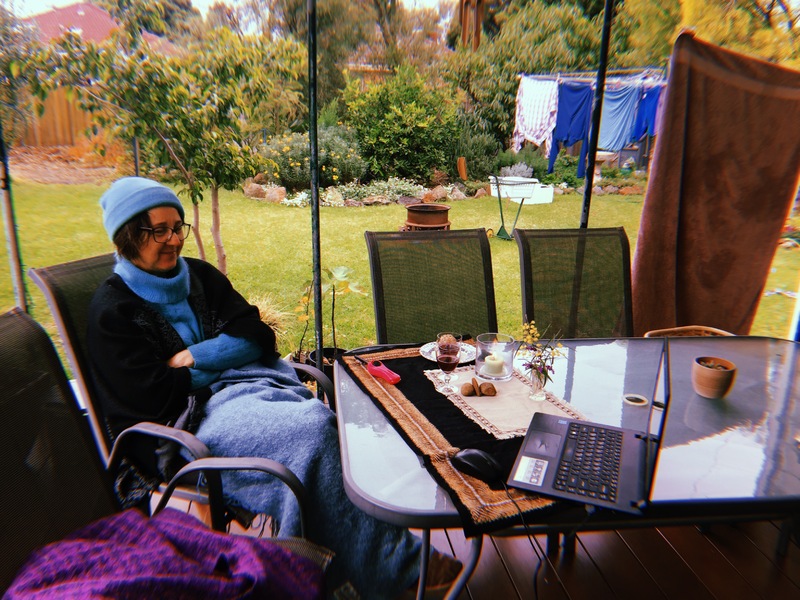
This photo was taken in May 2020, when Melbourne restrictions prevented religious gatherings from taking place. I attend Westgate Baptist Community church in Yarraville in the western suburbs of Melbourne, and it had transitioned to zoom for its church services by this point. On the day this picture was taken, we were meant to organise our own bread and wine for the ritual of communion. It was strange to source these elements on our own and even stranger to just pass them to each other instead of being given them by the pastor. It probably took some sense of gravitas and 'specialness' out of the ritual. At the same time though, it was evident that in a very precarious, unprecedented time, this community was really hanging on to such rituals for some normalcy and comfort in a sense of the divine's presence. We would not be back to in-person services until February 2021.
-
2020-05-03
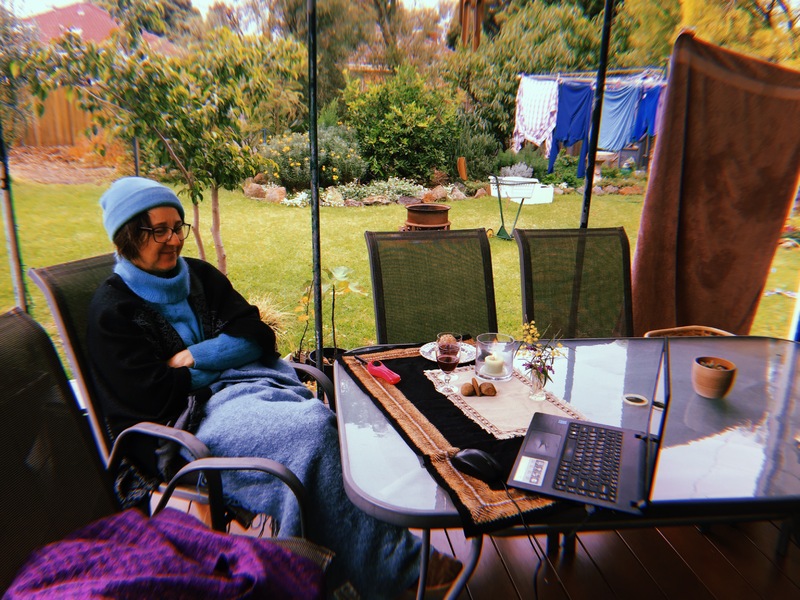
This photo was taken in May 2020, when Melbourne restrictions prevented religious gatherings from taking place. I attend Westgate Baptist Community church in Yarraville in the western suburbs of Melbourne, and it had transitioned to zoom for its church services by this point. On the day this picture was taken, we were meant to organise our own bread and wine for the ritual of communion. It was strange to source these elements on our own and even stranger to just pass them to each other instead of being given them by the pastor. It probably took some sense of gravitas and 'specialness' out of the ritual. At the same time though, it was evident that in a very precarious, unprecedented time, this community was really hanging on to such rituals for some normalcy and comfort in a sense of the divine's presence. We would not be back to in-person services until February 2021.
-
2020-09-18
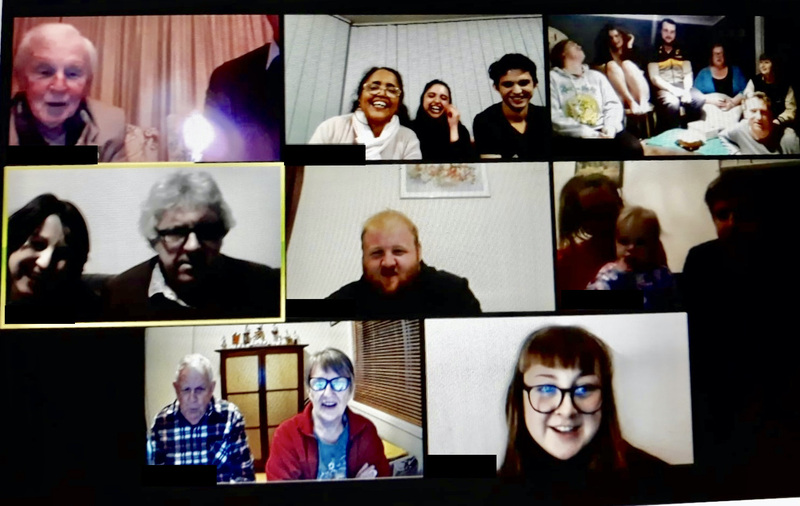
This screenshot was taken during a zoom call with members of my Dad's side of the family in September 2020, during Victoria's third COVID lockdown. At this point, we hadn't seen each other since early June of that year, which was unusual - in normal times, we would gather in person at least once a month, but lockdown prevented social gatherings with anyone outside one's household. We were zooming in from 8 different locations and with competing voices, technical difficulties and zoom-illiterate older relatives, it wasn't quite the same experience as catching up in person. One thing we realised very quickly was that it was impossible to initiate more intimate, one-on-one conversations with people on zoom. Instead, each screen in the call got a chance to give an update and we missed the more personal conversations. It was also strange seeing families grouped together in this
virtual family gathering. In person, certain people in the family would naturally form groups based on age and gender and families wouldn't appear so much like a unit as in these calls. Although it was good to see people's faces again, I think we would all agree zoom calls are a poor substitute for the real deal.
-
2021-10-31
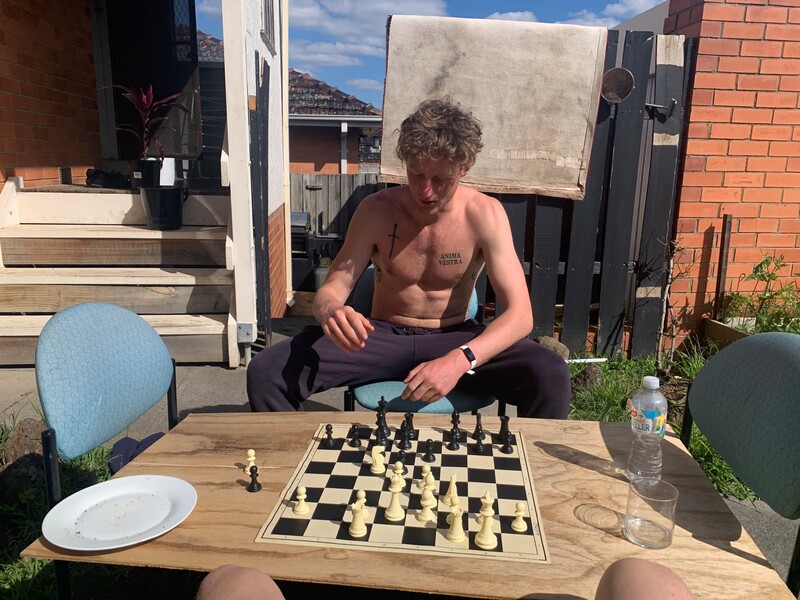
HIST30060. How do you pass the time during a 5km radius lockdown with only four reasons to leave? Chess. After watching the Queens Gambit, my housemates and I spend a few hours a day playing multiple games of chess in person, or on Chess.com. Chess is a great way to pass the time because each game is unique. Every game has thousands of variables that allow alternative moves to ‘one-up’ your opponent. We started off with little no knowledge of the game but built our fundamentals through Youtube tutorials. This has increased a skills rapidly and allowed us to challenge people across the world using Chess.com. Online chess, in fact, is the most used online game in the world and continues to rapidly grow during the pandemic.
I like this image because it captures the way my housemates and I have been living whilst full-time students with limited time to earn income. Note the piece of ply we use as an outdoor table, sitting on chairs we found on the side of the road. We managed to furnish our whole house like this, which I think is impressive but really dingy.
-
2020-07-10
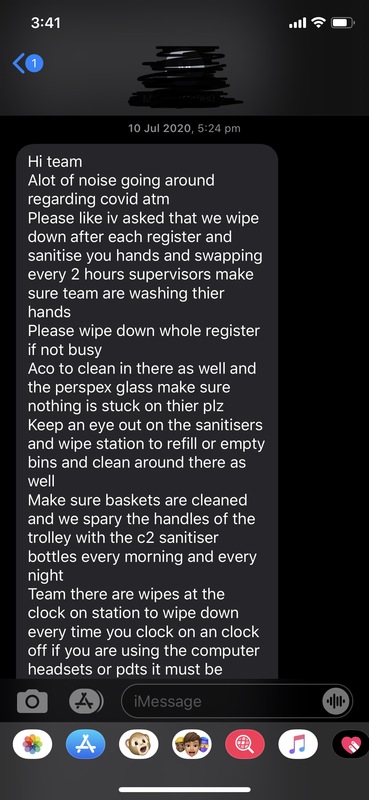
These are screenshots of text messages sent from a supermarket manager to a group chat of service team members of a major Australian supermarket in Altona North, Melbourne. They detail the new cleaning regime that became part of the responsibilities of working in a supermarket during the pandemic. These include instructions about wiping down surfaces with sanitiser and keeping 1.5m distance from coworkers. These texts came a few days after Victoria's third lockdown was announced. I worked at the supermarket at the time and it was an extremely chaotic period, made more hectic by ever-changing restrictions and developments in COVID-safe practices. We would get texts like these quite frequently during this third lockdown because it was so important that supermarket essential workers kept abreast of COVID developments and worked to make supermarkets as safe as possible.
-
2021-03-01
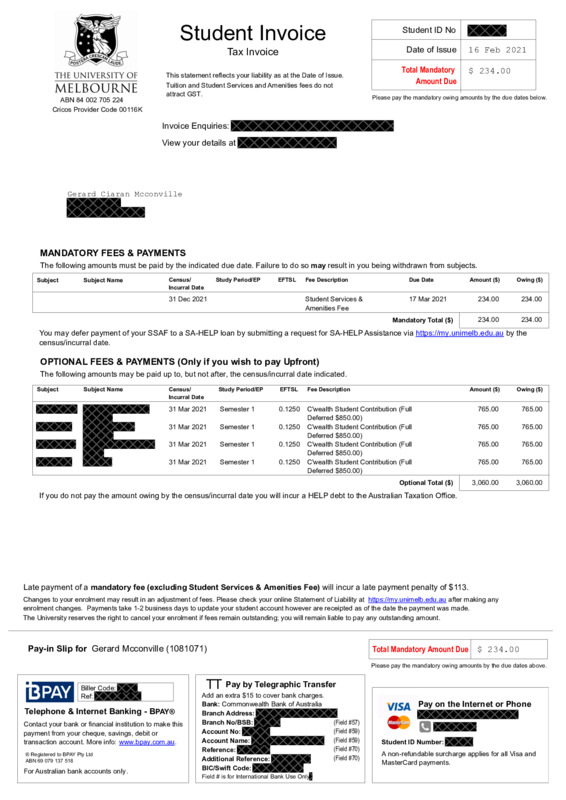
Despite not having been able to attend my university campus for the prior year and not being able to attend it in the coming year as a result of lockdown restrictions, I was still forced to pay an amenities fee to the university. This meant that I had restricted access to the amenities that I was still paying full price for. This combined with losing my job made the payment difficult to make.
-
2020-04-20
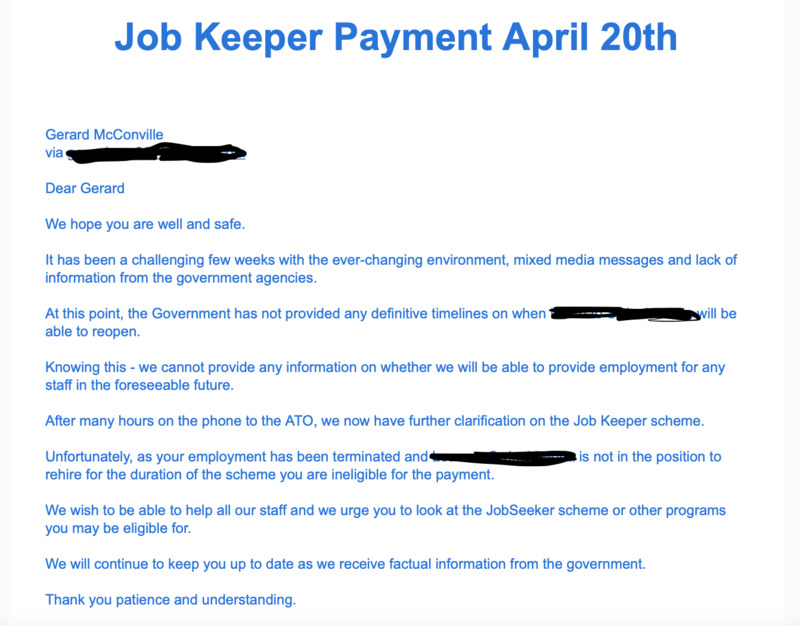
After losing my job the prior month I attempted to find financial support through the Jobkeeper program that was being run by the Victorian Government at the time. Unfortunately as a result of being terminated the prior month as well as having a casual status at the job I was unable to receive support from the government or the company that I worked for. This meant that I was out of work and money for a period of 6 months in 2020 before finally being able to find another job.
Personal information relating to myself and the business have been marked out in order to protect privacy.
-
2021-08-01
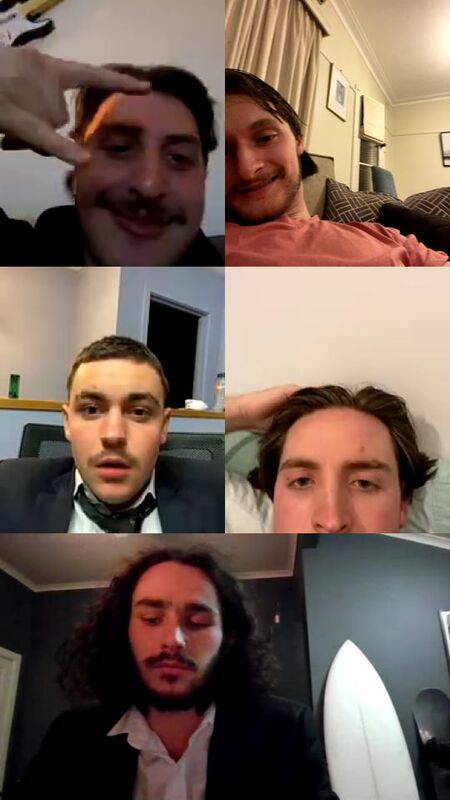
During each of the lockdowns the popular way for my friends and I to stay in touch was through video calls to each other on the Facebook messenger app. Pictured here is myself and four other friends on a Saturday night all talking to each other. Two of the participants were wearing suits as they had previously attended a video call for a football presentation. It was not uncommon for people to jump in and out of calls as the calls themselves could last a number of hours.
-
2021-10-22
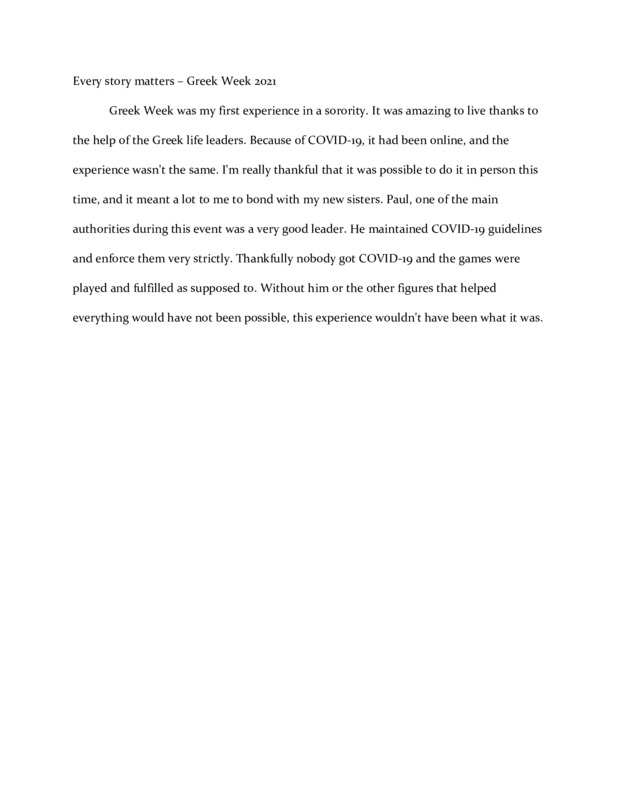
Greek Week was my first experience in a sorority. It was amazing to live thanks to the help of the Greek life leaders. Because of COVID-19, it had been online, and the experience wasn't the same. I'm really thankful that it was possible to do it in person this time, and it meant a lot to me to bond with my new sisters. Paul, one of the main authorities during this event was a very good leader. He maintained COVID-19 guidelines and enforce them very strictly. Thankfully nobody got COVID-19 and the games were played and fulfilled as supposed to. Without him or the other figures that helped everything would have not been possible, this experience wouldn't have been what it was.
-
2020-03-01
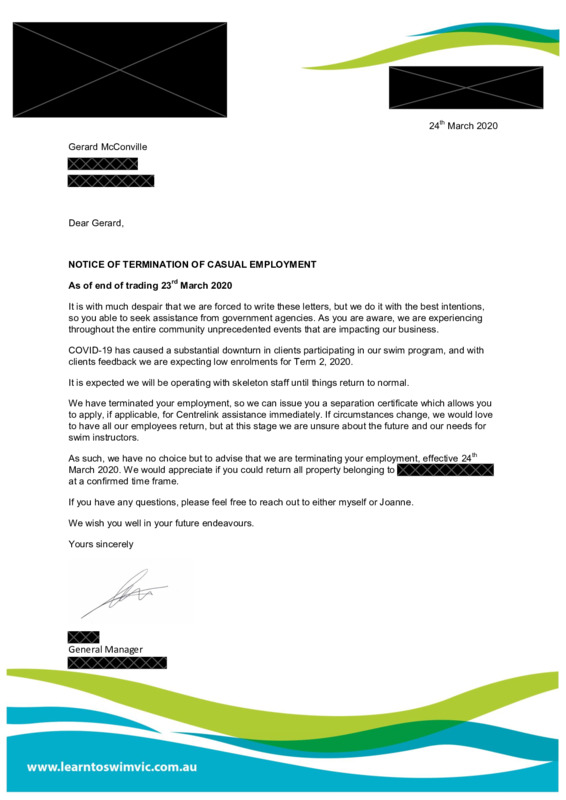
In March 2020, my former place of employment was forced to close down as a result of lockdown restrictions. This was the only communication given to employees about being let go. I had worked at the company for four years at the time from the age of 16 through to the time I was 20. I have redacted some of my own personal information as well as information that could give the company away. The swim school did not manage to reopen at full capacity for almost a year and many staff did not return to the school as they found other employment.
-
2021-10-08
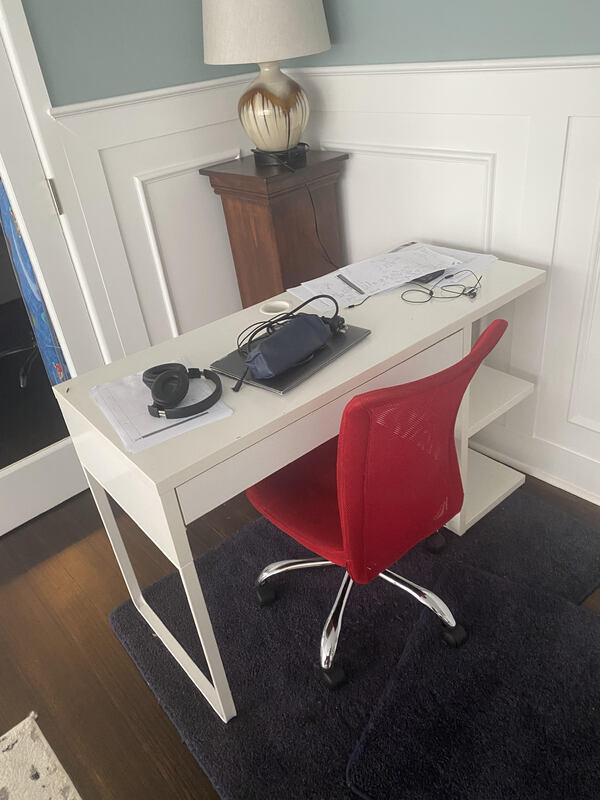
During the lockdowns, my younger brother had to study at home, as such he asked for mum to buy him a desk that he could use to study on. He ended up using this desk for the entire 5th and 6th lockdown in Melbourne. Often times his desk was filled with sheets of paper and open books, pictured here is the desk in a far more cleanly state.
-
2020-05-21T22:21
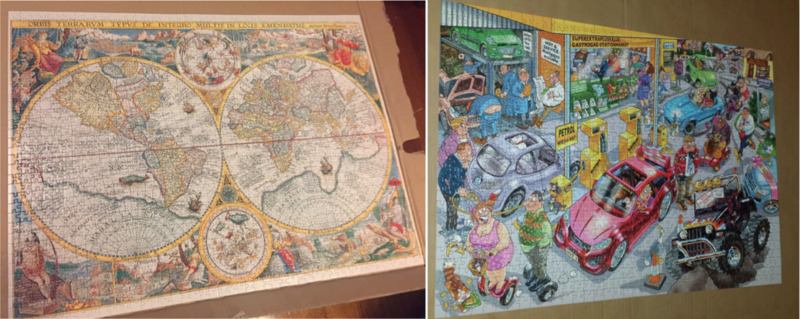
One of the ways that my family and I relaxed in the evenings during the first COVID-19 lockdown was by doing jigsaw puzzles. Here are just two examples
of the many we completed throughout 2020. We set up in the living room using a board of sorts (cardboard from the box our television had been in) to do it on so that all the pieces would stay within one area and the whole thing would be portable if we needed the table back. The map one (left) had 1500 pieces and was the first one we completed in May. The second puzzle pictured here (right) was a particular struggle because it did not come with a picture of what the finished puzzle looked like. We all worked on our own little sections before figuring out how they all came together. It was an incredibly satisfying moment to see the puzzle completed finally knowing how each of our little parts fit together to create it.
Jigsaw puzzles have been something that have helped me relax for years. There was often one at my high school library that I would do to have a break from my studies in order to take my mind off things. As it was in the library multiple people would join in making it very much a collective effort. Thus, doing jigsaws with other people, in this case my family, during these hard times was one of the things which helped keep me relatively sane during 2020. It was a very rewarding activity that allowed for greater engagement with one another than simply watching television for hours on end.
-
2021-07-24T14:50
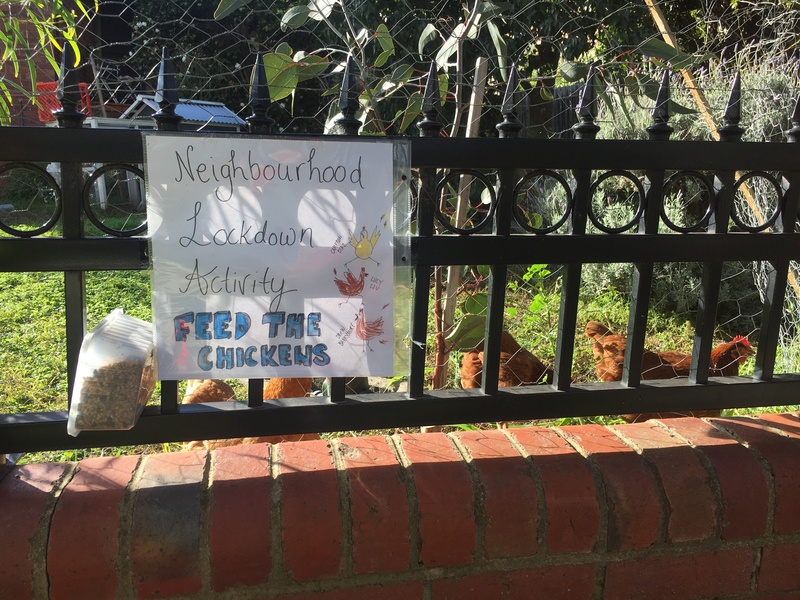
In July 2021, while on one of my afternoon walks, I discovered this local lockdown activity of chicken feeding. A local household was offering people the chance to feed their very friendly and excitable chickens. I am unsure when this activity first started as I do not usually walk the way that would take me past them. However, it was an amusing and relaxing thing to be able to do amidst the chaos of a global pandemic. The chickens were really very cute, despite not the brightest creatures I've ever known. I have visited them with my family regularly ever since that first time and have noted that other people, often local children, have also relished the opportunity to interact with live animals. In a small way, I believe the chickens have brought the neighbourhood a little closer together and given local children the opportunity to interact with animals they would not normally get a chance to.
Sadly, due to old age and the presence of urban foxes the number of chickens has decreased and only one of the original trio remains (as of October 2021). However, she has a new friend now and is very keen to establish her authority. The sign and container of dry food has been removed but we often bring them other food- they are particularly fond of sowthistle.
-
2020-11-24
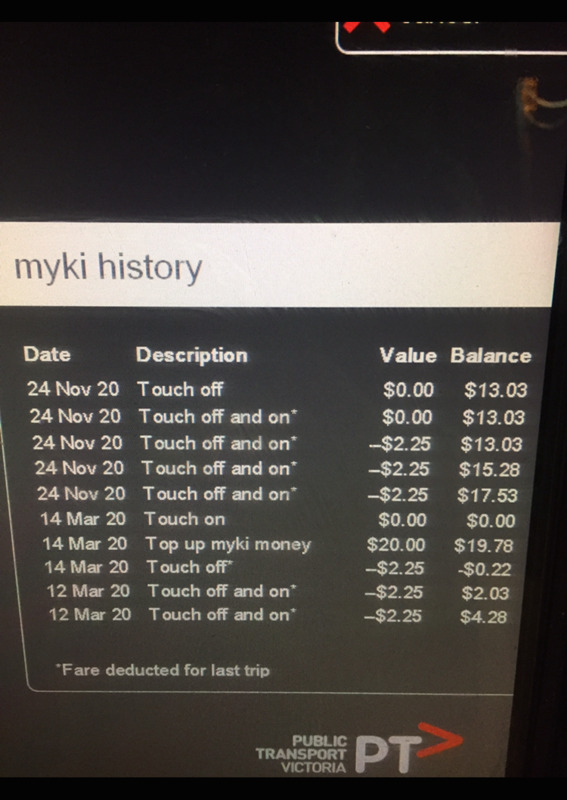
The COVID-19 pandemic has changed the way I travel on a local level. Before the lockdowns in Melbourne I would frequently (several times per week) travel via public transport, mainly on trams. However, the lockdowns meant that all the things that I would use public transport to get to were moved online. As a result, for over eight months I did not use public transport at all. The increased exposure sites on trams meant that even when restrictions eased in various periods, I was reluctant to use them. The few times I have been on trams since I have felt anxious as there were often other passengers that did not wear facemasks properly, if at all. As a result, I now tend to use other forms of transport such as cycling and walking to arrive at destinations.
-
2020-03-15
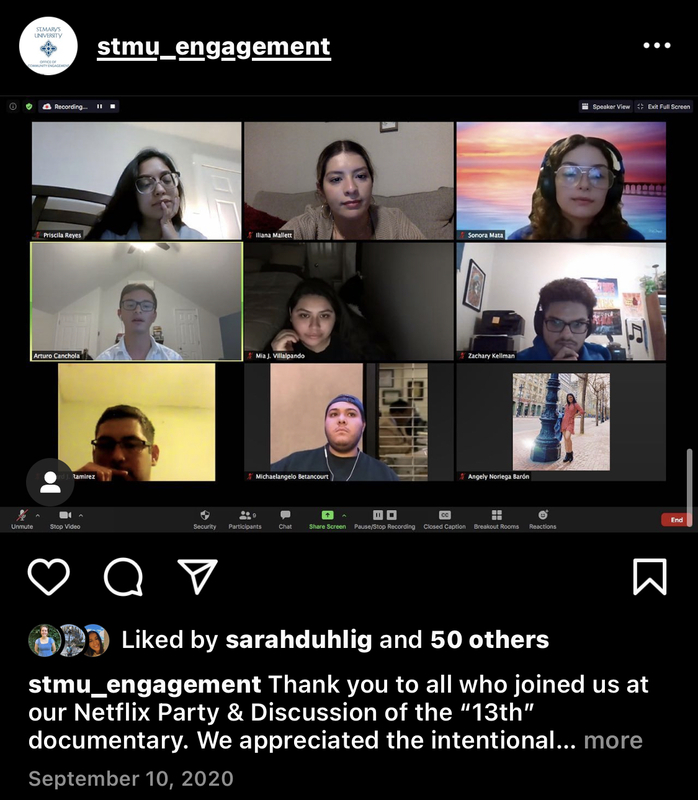
Previous to COVID-19, everything related to community engagement was hands-on, face-to-face, and in-person. However, right after spring break in 2020, everything changed because of COVID-19, and new ways of interacting with the community and each other were used. To demonstrate this I uploaded for this item a screenshot from the Instagram page of the Community Engagement Office of St. Mary's University. Almost none of us were used to zoom and in a couple of weeks zoom turned into the number one platform used by businesses and schools as a means of communication and our community engagement was not the exception. One of the activities that were made during COVID-19 was a Netflix Party through zoom with many students engaged through the network. As a personal experience, I was part of a group/class called Empower: Ecuador that was very focused on personal relationships and community building, and transitioning to zoom was not easy. However, we were able to culminate our semester and encounter new ways to connect with each other through zoom and other social platforms in meaningful ways while keeping each other safe from getting sick. It was a matter of caring for each other so deeply that connecting in person was no longer an option, but our intentionality to connect and interact with each other grew in many other creative ways to achieve the goal of community engagement despite all the difficulties that we were all going through.
-
2020-09
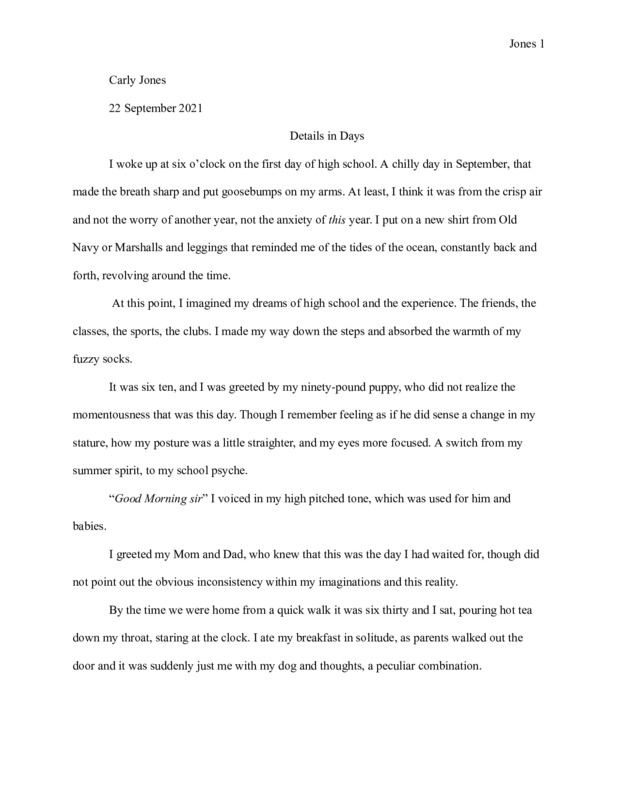
I was in the tail end of my eighth grade year when COVID uprooted the world. This story describes my experience as a Freshman in high school through a computer screen.
-
2021-05-28
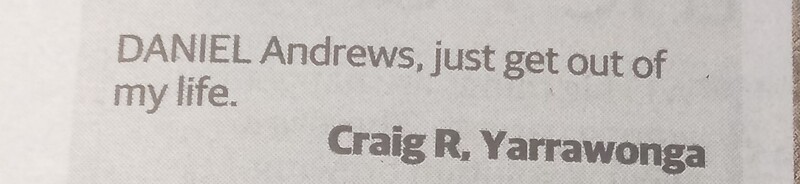
This is a short sentence sent into the Herald Sun newspaper just after another lockdown had been announced, that says quite simply 'Daniel Andrews, just get out of my life.' This sentiment has grown throughout the course of the pandemic, as people feel very frustrated with their freedoms being restricted, if only temporarily. Thus, this item reflects the debate around pandemic restrictions- while some see them as necessary to stop the spread, others question either the need for them or their harshness.
-
2020-03-07
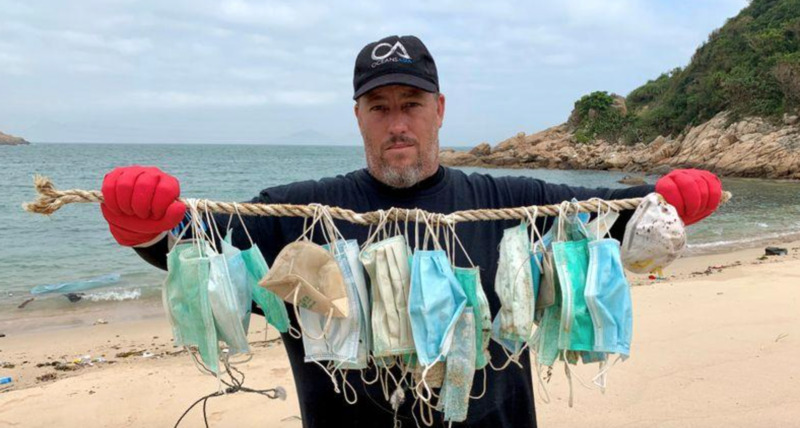
This photo shows a large amount of waste in the form of face masks that were found washed up on a beach in Hong Kong. While the pandemic has been argued to have brought some environmental benefits, namely from the reduced pollution that comes with fewer cars on the road, this photo shows that our efforts to protect ourselves are harming our oceans. Discarding of our disposable face masks responsibly is something we should all keep in mind in the course of the pandemic.
-

2021-10-29
Image licensed under creative commons fair use.
-
2021-10-01
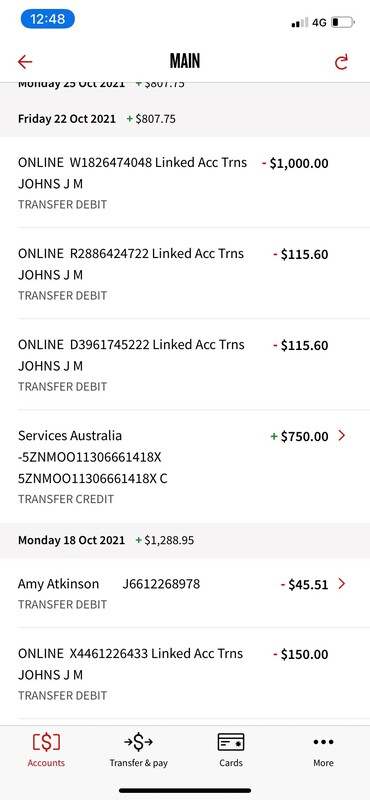
HIST30060. The COVID-19 Disaster Payment, given to workers unable to earn income due to COVID-19 state or territory health order, was given to construction workers during the two-week construction shutdown in Victoria. Traffic control in the construction sector has been my casual job alongside university for the past three years. The recent construction shutdown, however, allowed me to receive the $750 a week from the Disaster Payment without working at all. My housemates and I called this “getting paid to study”. This was especially true in the lead up to exams were we spent the majority of time at home with very little excuse to do anything other than “hit the books”.
-
2021-10-29
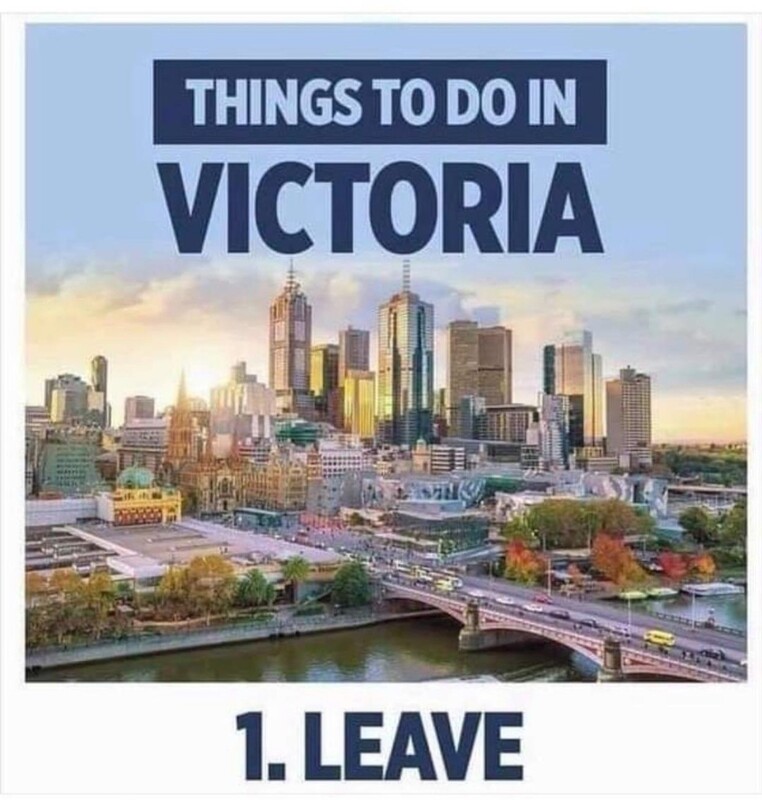
HIST30060. This meme highlights how many Victorians felt after enduring the longest duration of lockdowns in the world. Between March 2020 and October 2021, 254 days in total were spent in some form of lockdown in the pursuit of ‘elimination’ – the attempt eradicate COVID-19 from society completely. Whilst seemingly satirical, this meme alludes to a hidden truth. 43,000 Victorians left the state during the two-year pandemic according to the Australian Bureau of Statistics (ABS). Whilst seemingly small relative to Victoria’s 6.6million population, the amount of people that left Victoria was the equivalent of the entire City of Wodonga leaving the state. No other state or territory recorded a reduction in population, especially on this scale.
-
2021-09-21
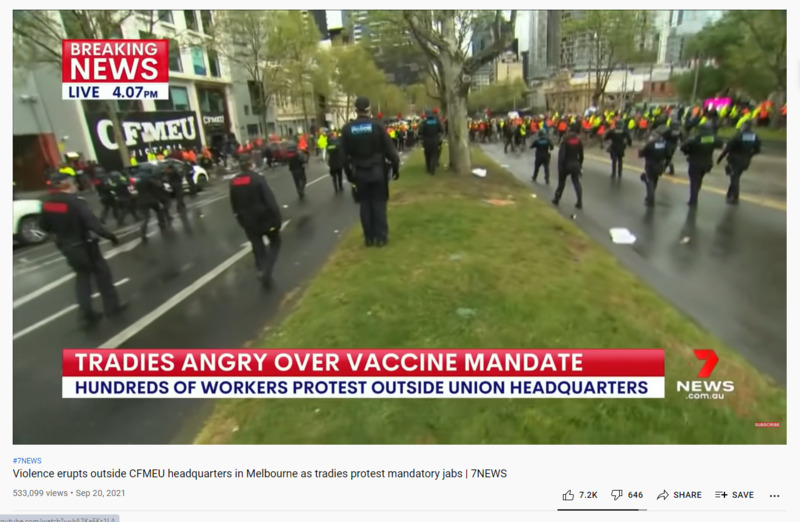
HIST30060. Following a state-wide construction vaccine mandate on the 20st of September, 2021, the CFMEU headquarters was violently ransacked. 'Tradies' or construction workers believed the CFMEU had not stood up for their rights. Violent scenes erupted between CFMEU leaders inside the headquarters and union members who had turned up to protest the vaccine mandate. Many Victorians watched the events unfold on livestream via Facebook and YouTube. Commentators noted that these protests were hijacked by far-right agitators attempting to destabilize the state through protests, especially during a pandemic where large gatherings are considered dangerous and illegal. Ultimately, the Andrews Government responded to the event by shutting down the entire construction sector for two weeks. This functioned as catalyst that pushed thousands of construction workers to protest for many days in the CBD. Ugly clashes between protestors and Victoria Police removed any validity or standing they may have had. Most people in the community heavily criticised those present, especially when other sectors (e.g. retail, hospitality, entertainment) had not been able to work for over 18 months.
-
2021-10-01
The COVID-19 Disaster Payment, given to workers unable to earn income due to COVID-19 state or territory health order, was given to construction workers during the two-week construction shutdown in Victoria. Traffic control in the construction sector has been my casual job alongside university for the past three years. The recent construction shutdown, however, allowed me to receive the $750 a week from the Disaster Payment without working at all. My housemates and I called this “getting paid to study”. This was especially true in the lead up to exams were we spent the majority of time at home with very little excuse to do anything other than “hit the books”.
-
2020-04-11
For many experiencing the pandemic in Victoria, the intimate partner clause meant that our girlfriends, boyfriends, or partners were the only persons many young people were able to see - well at least legally that is. Initially, the intimate partner clause did not exist, which was heartbreaking for many couples that lived apart, facing the prospect of not seeing their partner for an unknown amount time, during an unsettling and unprecedented period. When the clause was introduced, it was a saving grace for couples. For others, it legally introduced a sneaky way to meet people inside their bubble, particularly after connecting online. I was lucky enough to meet my girlfriend during what was her first and my last on-campus class for the last two years - before lockdown was a thing. After facing the scary prospect of not seeing each other during the first stages of Melbourne's first lockdown, the intimate partner clause allowed us to spend every day for months and months between houses, happily isolating in our shared bubble and growing incredibly close.
-
2021-08-17
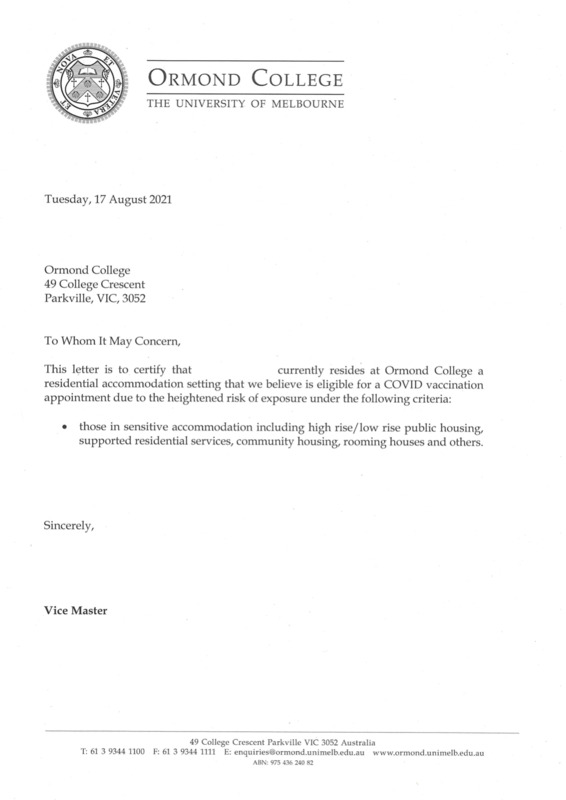
This document is an example of evidence given to students at Ormond College as proof of eligibility for the Comirnaty (Pfizer) vaccine. With a push for widespread vaccination happening in the second half of 2021, there were various reasons for eligibility which were introduced in order to manage the rollout. This letter indicates that an Ormond College resident is eligible due to their residence in ‘sensitive accomodation’ – namely ‘supported residential services.’ Many identical letters were distributed to students in order to encourage vaccination, and thus reduce the chances of a serious outbreak on campus. HIST30060.
*Names and personal information has been redacted.
-
2021-10-28
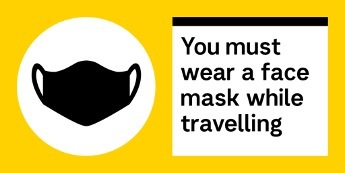
(HIST30060) This is a digitised version of a poster that I saw every day on public transport on my way to work. It's bright, unambiguous, and yellow and it reads: ‘You must wear a face mask while travelling’. This text is accompanied by a simple outline of a mask in black. Being without a car during the pandemic and being an essential worker meant that I had to make frequent trips on public transport. Before the pandemic I used to enjoy my tram rides, take the time to unwind and mindlessly listen to podcasts. However, now when I am on the tram, I feel vigilant. If someone sits down right next to me on an empty tram I move seats. This poster highlights the importance of following public health advice on public transport.
-
2020-06-08
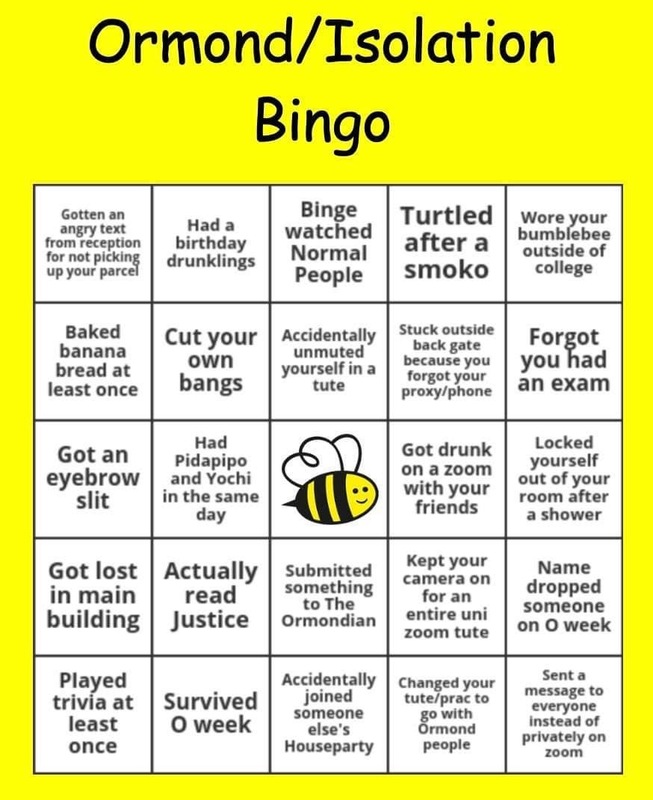
This game of bingo is an example of many of the online activities which were introduced as a form of entertainment during the various lockdown periods. Separated from friends and wider communities for long periods of time, innovative methods were necessary in order to encourage continued connection and interaction. This particular game is targeted towards members of the Ormond community, and refers to a number of specific scenarios that many residents would have experienced. While some are related to a ‘non-COVID’ semester at Ormond (such as ‘Survived O Week’ or ‘Got lost in Main Building’), many relate to the lockdown experience (like ‘Kept your camera on for an entire uni zoom tute’). In reminding readers of familiar scenarios, this seeks to inspire a continued relationship between members of the institution, and to reduce feelings of isolation. HIST30060.
-
2020-11-01
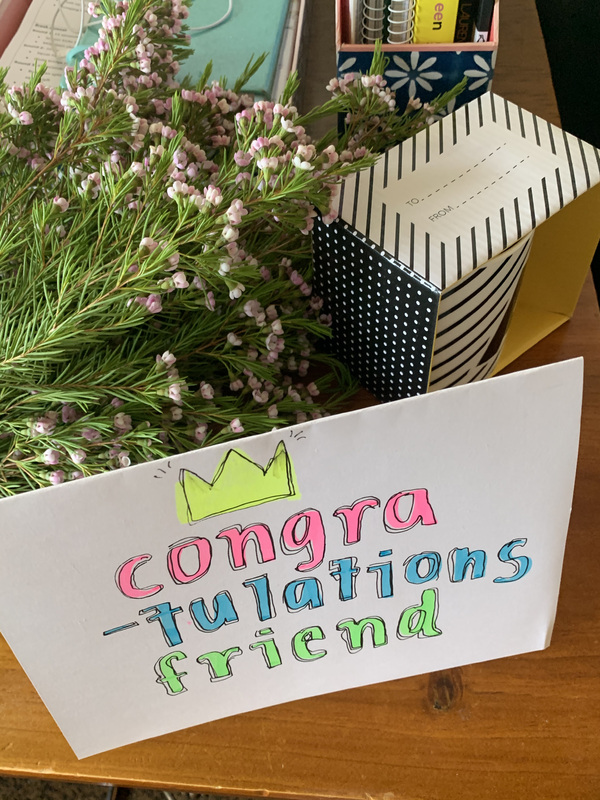
With the cancellation of mass gatherings during the lockdown periods, many university students completing their final semester were sadly unable to attend their formal graduation ceremonies. This photograph, taken in November 2020, shows a congratulatory card and gift which were given to a friend after completing her Bachelor of Agriculture degree. University is a difficult time, and was made even more difficult by the unprecedented pandemic regulations. While very different from the traditional formalities, we still wanted to add a bit of excitement with this token of our appreciation. Small gestures such as this are an example of the innovation and creativity which many had to utilise, once denied access to many regular systems. Furthermore, it represents the importance of reaching out to friends and family whilst in isolation. Something as simple as a card acts as a reminder that there are people who support, care about and are proud of them. HIST30060.
-
2021-07-20
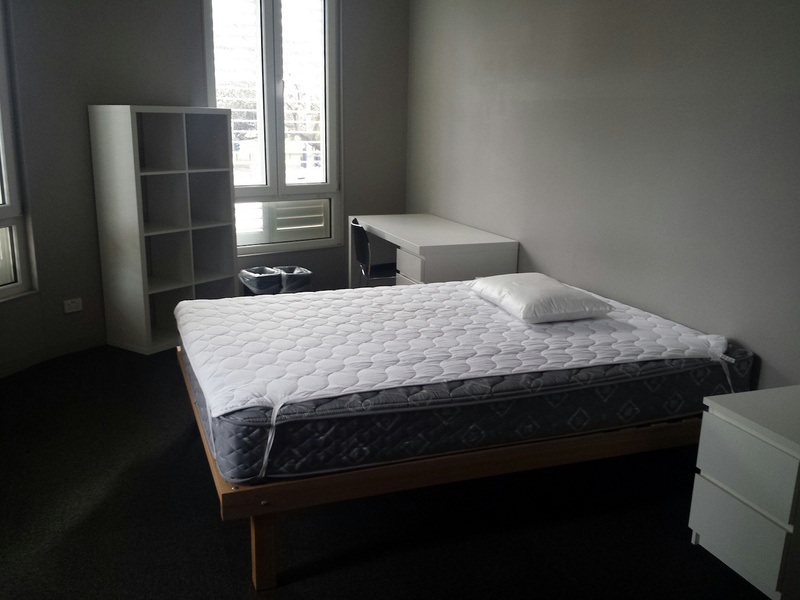
This is a photo of the Ormond College bedroom I spent my isolation period in after getting tested for COVID-19. Due to the majority of students at the college staying in a shared building, with shared kitchen and bathroom facilities, a self contained residence such as this was seen as necessary to limit contact with other residents. Any student who showed flu-like symptoms, had interacted with a close contact, or had visited an exposure site, were therefore required to stay in a room similar to this one. Food was delivered to your door for the duration of your stay, and you were able to return to the college upon providing proof of a negative COVID result. The need for such isolation spaces was a result of living in a COVID society, and provided a solution to a unique challenge presented to the college. HIST30060.
-
2021-03-03
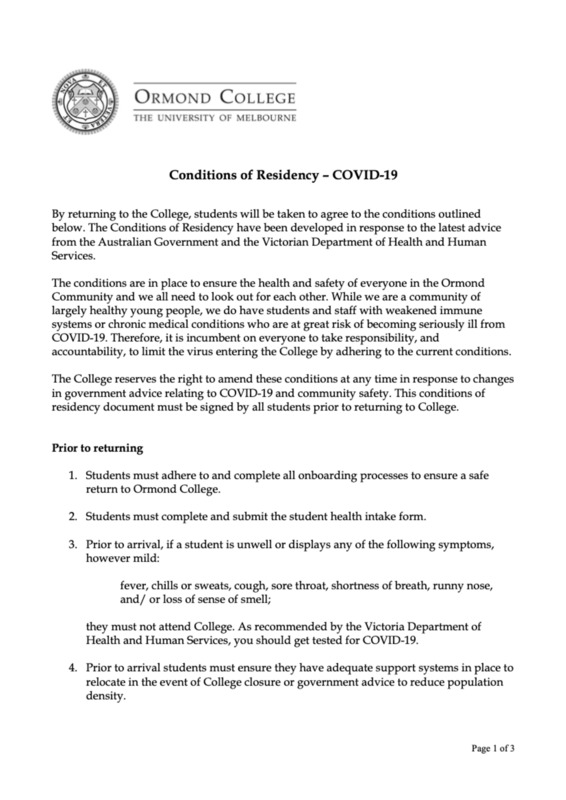
This three-page document is an agreement that all residents of Ormond College had to sign upon their move in at the commencement of 2021. It details a number of expectations of behaviour of all students living on campus– including testing and self isolating when experiencing flu-like symptoms, ensuring social distancing is maintained, and acknowledging that any breach of said conditions could result in being asked to leave the college. Such a document indicates the changing nature of residential institutions, and the systems needed in order to limit the chances of an outbreak. While many of these conditions would have been unimaginable in early 2019, in 2021, many of them were simply seen as the norm for a communal living institution. HIST30060.
-
2021-10-10
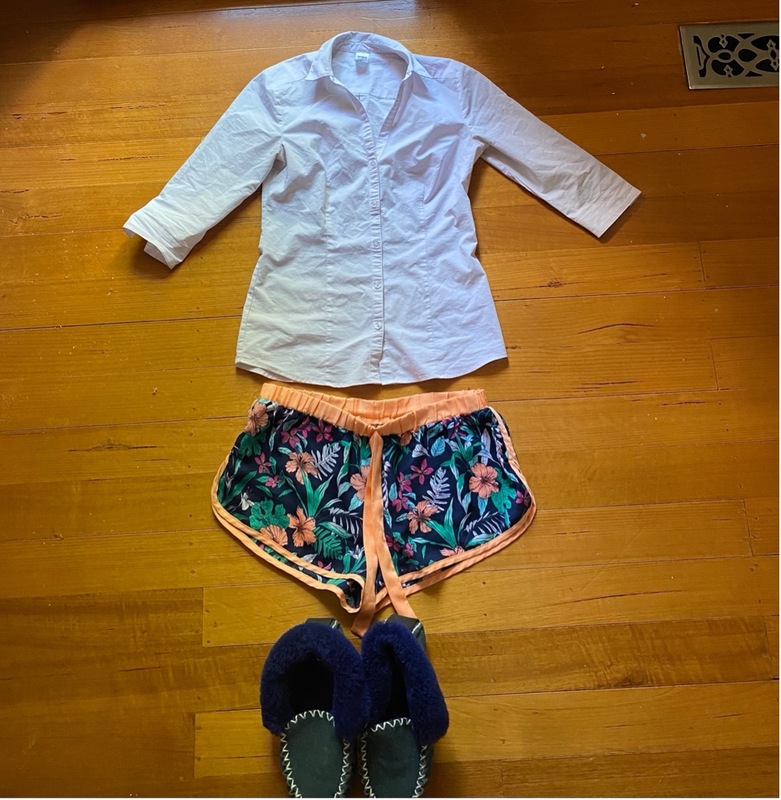
(HIST30060) This is a photo of what I wear during Zoom meetings; a button-up top and pyjama shorts paired with moccasin slippers. Although talking about wearing pyjamas has become somewhat of a cliché during the pandemic, it does not make it any less true. When Zooming with friends and attending online university tutorials, I tend to make an effort from the waist up and opt for comfort from the waist down. I figure if wearing pyjamas all day is one of the small glimpses of joy I can get from an otherwise tough situation, then I’ll take it.
-
2021-10-01
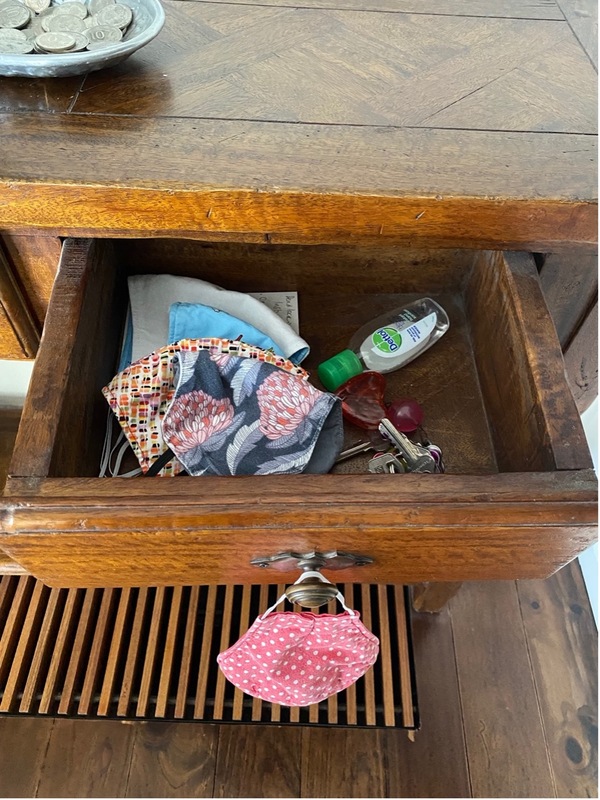
(HIST30060) This photo depicts the contents of my hall table draw which is located near the entrance of my house. Inside the draw are the essential things I can grab before rushing out the door. Prior to the COVID-19 pandemic, the draw was just for my keys, but now (as we can see in the photo) it also houses my family's spare masks and hand sanitiser. I thought this photo was important to share as it captures what I now cannot leave my house without. The mask no longer feels strange or new, instead, it feels like a second skin that I feel bare without.
-
2020-03-24
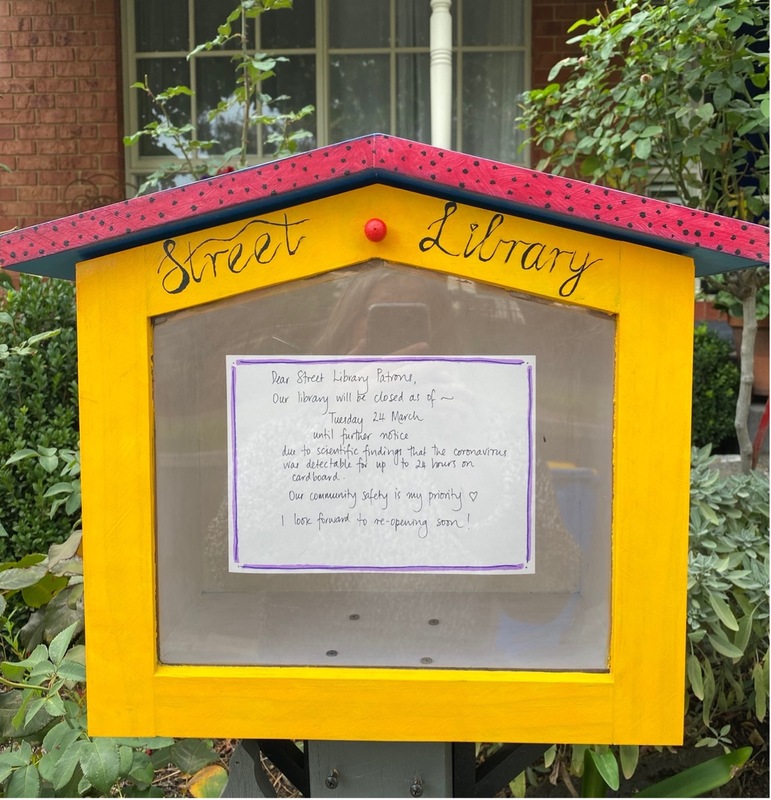
(HIST30060) This is a photo of the closed sign my Mum and I put on our street library after we found out about the pandemic in 2020. It reads:
Dear Street Library Patrons,
Our library will be closed as of Tuesday 24 March until further notice due to scientific findings that the coronavirus was detected for up to 24 hours on cardboard. Our community safety is my priority <3 I look forward to re-opening soon!
We made the street library in 2019 so the community could share our love of books. People could take a book, read it and, if they wanted to, put their favourite book back in. It made us sad to close the street library but after the lockdown was over we started it back up again!
-
2021-10-01
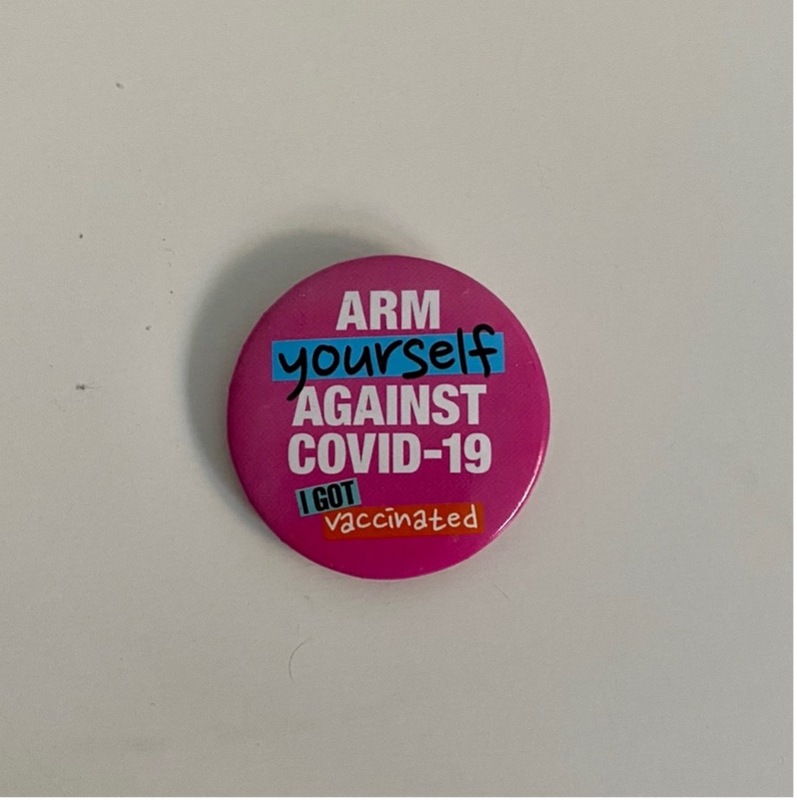
(HIST30060) This is a photo of the badge I received after getting my second dose of the Pfizer vaccine. I currently work as a medical receptionist at a GP clinic that has been running vaccination sessions – this is where I was vaccinated and received the badge. The badge reads: ‘Arm yourself against COVID-19…I got vaccinated’. The badge is colourful and eye-catching, and the pun is…punchy. I think it acutely captures the typography, tone and gist of the recent government advertisements urging people to get the vaccine.
-
2021-08-24
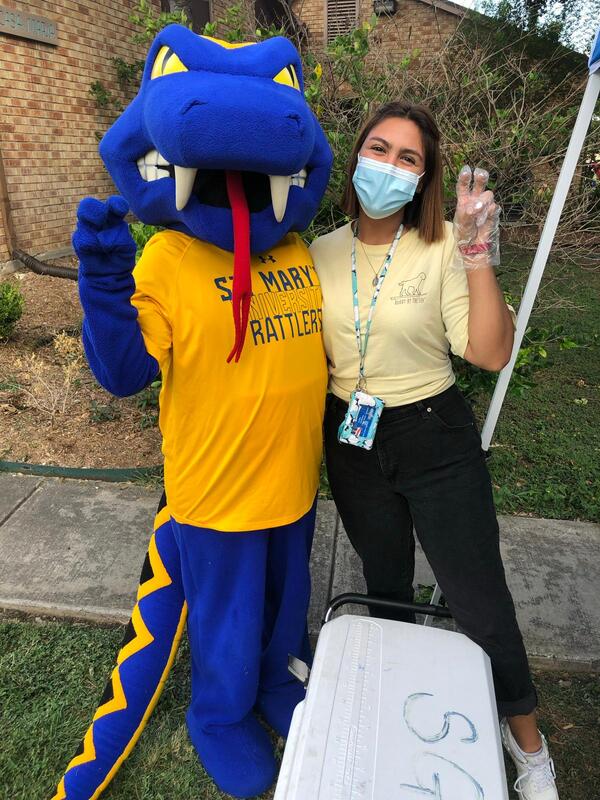
Burgers with the Brothers is a tradition at St. Mary’s University. Once a year the students and the Marianist brothers get together to build community and enjoy some delicious burgers made by the brothers and students. For 2021 authorities made it possible after a year without it and made students and brothers able to make memories once again. The Marianist Leadership Program made also a contribution to Burgers with the Brothers. MLP is an organization of servant leaders that are willing to help wherever help is needed. As a student doing service with the Marianist Leadership Program, I am happy with how the event took place. As students, we were able to connect with the brothers and other students while using facemasks and gloves to serve the burgers, give out chips and water bottles. I am thankful to live experiences like this one because even if it is not like it used to be, it helps St. Mary’s Spirit be alive and be in continuous connection with the university. Burgers with the Brothers is a very special event for students and brothers to connect and have a little bit of fun on campus. Because it is a tradition is very important for older generations and younger generations to feel the community and experience the Marianist environment.
-
2021-09-07
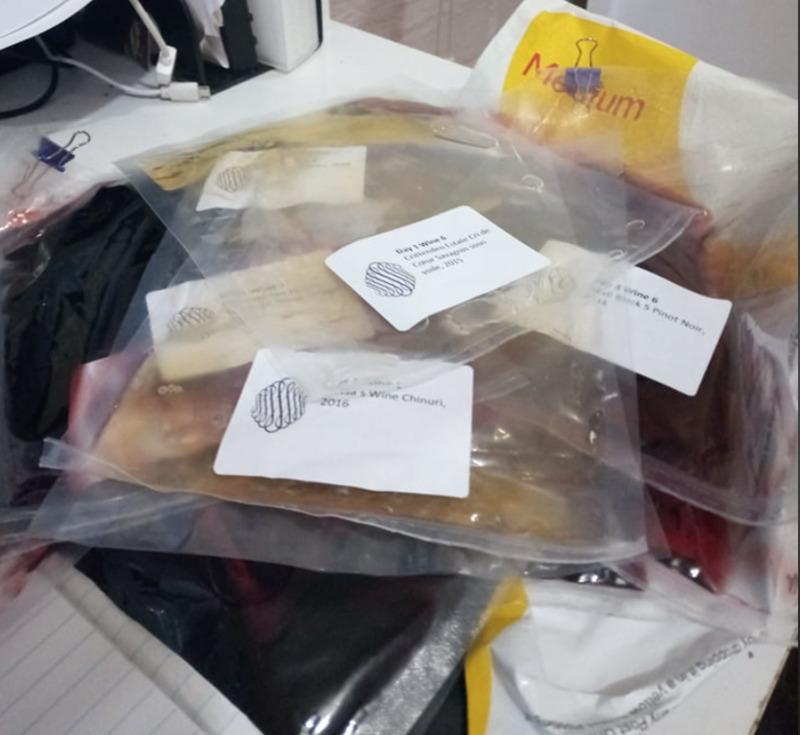
This year, I completed an intensive subject called Wines of the World at university. It was postponed many times due to restrictions, and the subject coordinators eventually decided that they would have to host the course entirely online. A key component of the subject was wine tasting, and this photo shows how this was made possible at home. Wine tastings in sous vide bags were posted to each student's house, a quite exciting and novel experience. This photo thus reflects how educators have had to be flexible around restrictions, and come up with new ways to facilitate learning.
-
2021-10-07
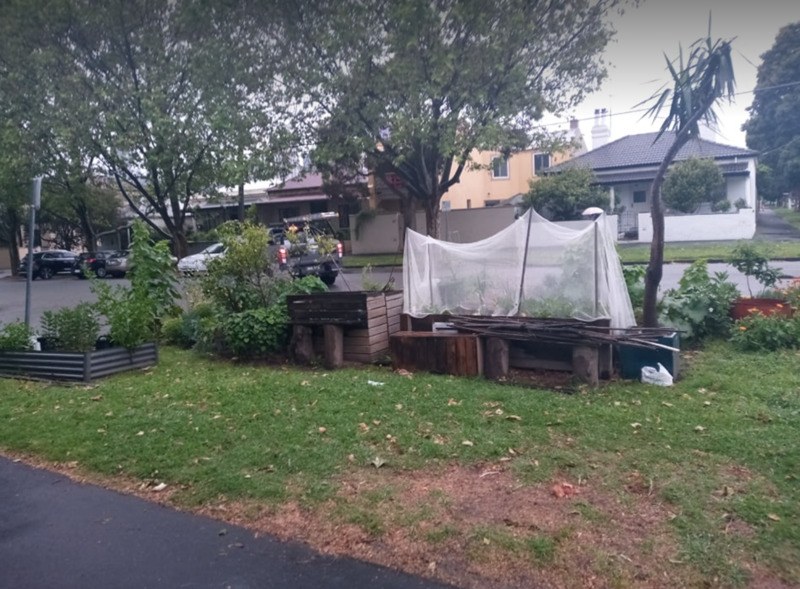
This is a photo of a community garden at a park very close to me. Although this project existed before the pandemic, it has flourished much in this time to become a beautiful large garden with many different plants. I think this reflects some of the positive effects of the pandemic, as for some people, it gave them the chance to focus on things they might not normally have. Community engagement and connection in this way has provided hope for many people during this time.
-
2021-09-10
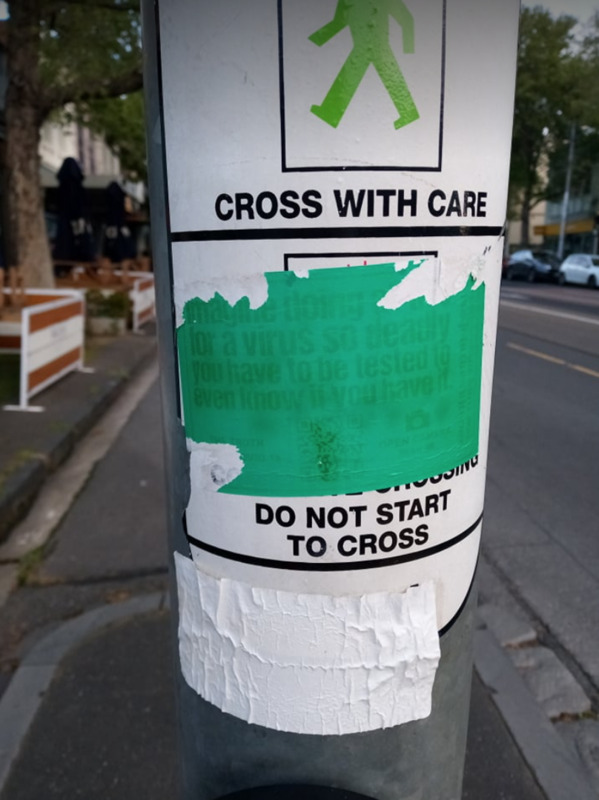
This is a sticker I saw on the street that says 'imagine having a virus so deadly you have to be tested to even know if you have it.' It appears as though someone has attempted to peel it off. I think this image reflects rather well the differing opinions and theories about the origins and seriousness of the virus. That someone has attempted to remove it signals the rather heated and emotional nature of the debate, as those who question what we have been told about the virus are regularly labeled 'conspiracy theorists.' In my view, that there is differing opinions on the virus, no matter how controversial, is part of the free speech that makes this country so great, and that we can debate these issues somewhat freely should not be taken for granted.
-
2021-10-27
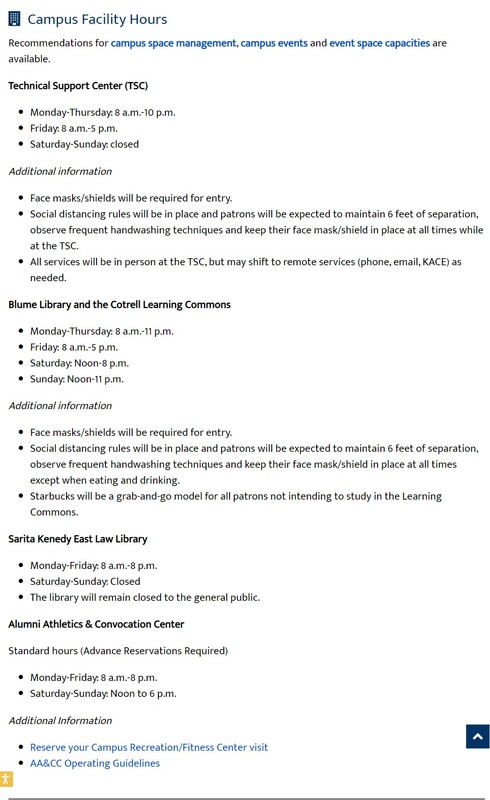
The pandemic brought a lot of changes in our work environments and that includes the changes in business hours. At St. Mary's University, these screenshots show the hour alterations to on-campus facilities, since January, and the new rules that are to be followed by all.
-
2021-10-27
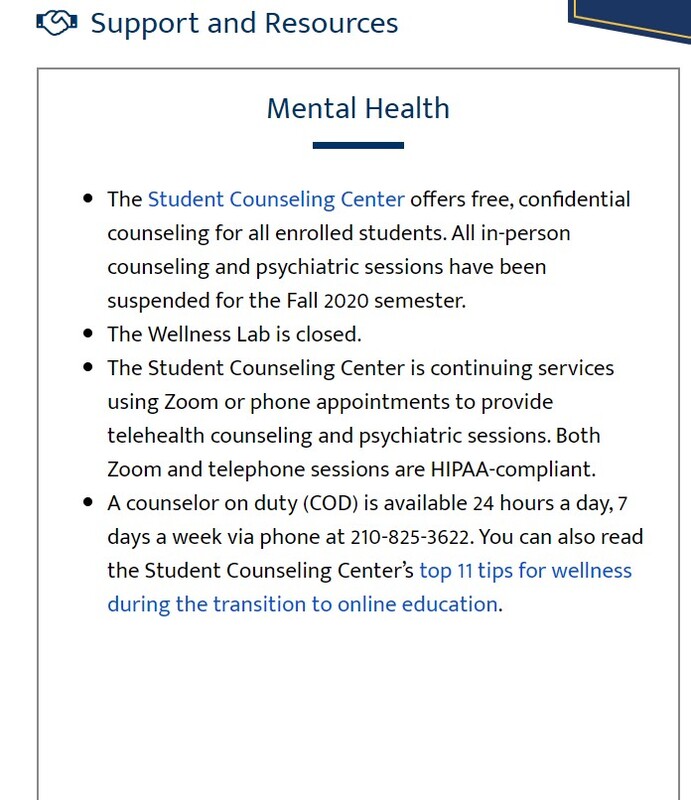
The pandemic no doubt brought a lot of mental stress into student's life. The result of this stress was the mental health support, via St. Mary's University, reaching out to the student population, as well as the ministry aiding in the mental health of students.
-
2021-10-27
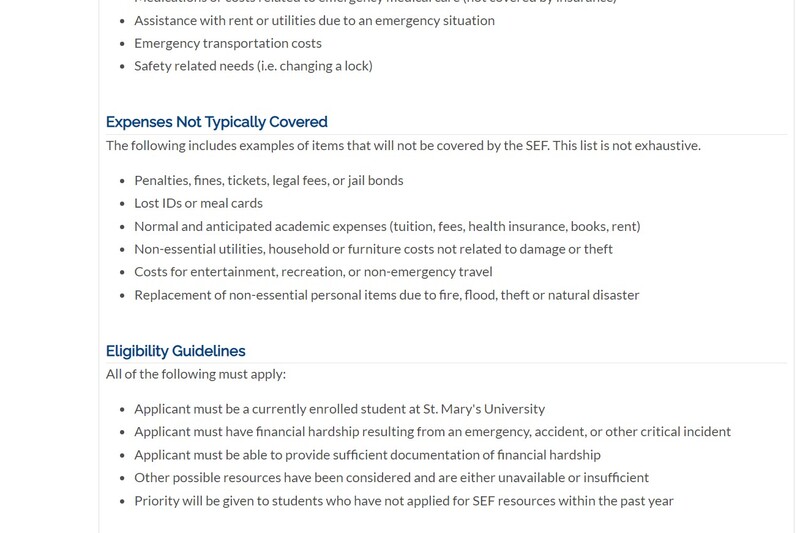
The Student Emergency Fund at St. Mary's was part of an economic relief through the CARES act; where students got financial support via the university. I personally used this fund to help pay for school and basic necessities, like food and bills. It was a relief that students, like myself, were able to obtain this financial support throughout the pandemic and it's still available for all students.
-
2020-08-11
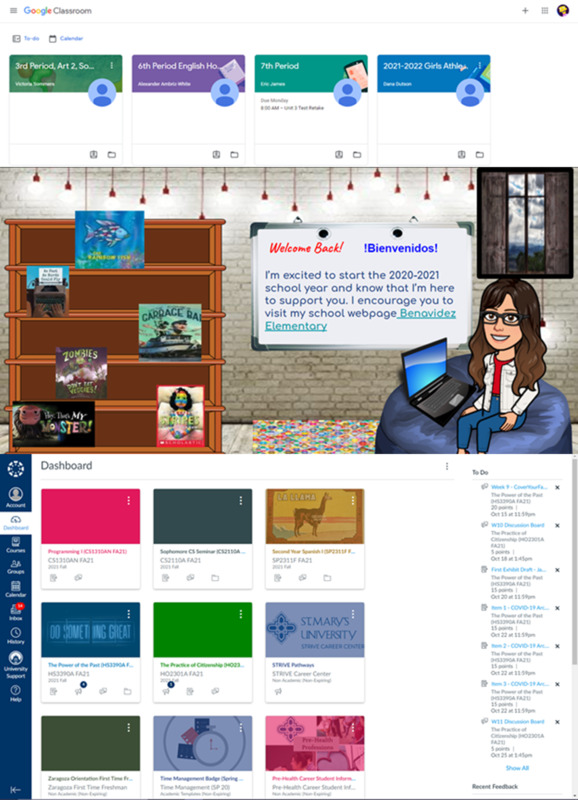
Online was the new way of providing lessons, assigning classroom activities, and laying out information for students across all ages. Sites like google classroom, canvas, blackboard, and seesaw suddenly became teachers and professors only way of providing students with a "classroom". In the first picture we see an example of an elementary school platform, in the next image is a middle school layout, and the final image is of the new college format. All three platforms provided students with a visual way to remain in contact with their educators in a time where we couldn't meet. They were our way of adjusting to the new situation we were all stuck in. However, despite providing us with the benefits of being connected without having to meet in person, there were still a few shortcomings. Because of the lack of in person class we couldn’t form connection with each other. That was a struggle for kids and teachers/professors alike. There remained a barrier between each other.
-
2020-08-11
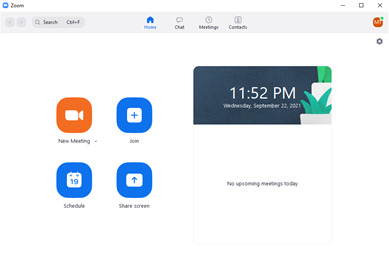
From my senior year in high school to my Freshman year in college, the way I would attend class had drastically changed. However I wasn't alone in this change. Students, teachers, and professors all around the world found themselves having to adapt to a new form of teaching. A tool that we all had to learn to use was zoom. Unable to attend in person class led to the development of this so-called new “classroom”. Across the world we would now find ourselves logging in to zoom on our computers to attend class. For many of us, me included, the college experience had simply become waking up in my room.
-
2021-08-02
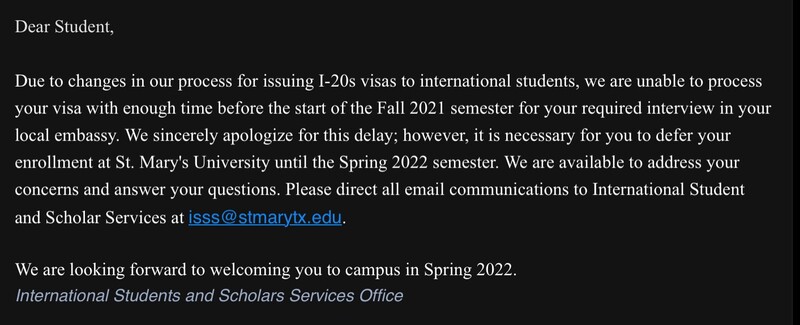
In the Center of International Programs, during Summer 2021, some decisions had to be made in the office. Due to internal changes, some applications could not be processed, and I-20s could not be developed. Between 10 to 20 undergraduates and graduate students had to be deferred to have more time to issue their visas. This impacted students as some had already made arrangements to come and each case had to be taken into consideration and also be taken personally. The Center of International Programs has over 20 students preparing to go to the university by Spring 2022.
-
2021-08-09
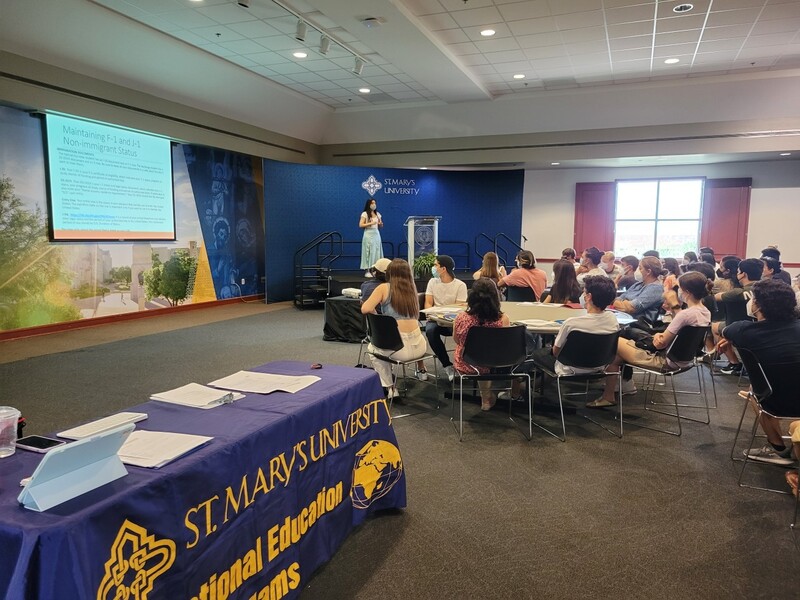
On August 9th, 45 students (approx.) came to the first international student orientation. During the session, they explained how to maintain the visa status, more information about working in the university, and health recommendations and guidelines. They were also asked to leave their documentation for the following scanning and complete some forms during the session. This session was the first one after COVID-19 appeared in the US.
-
2021-06-11
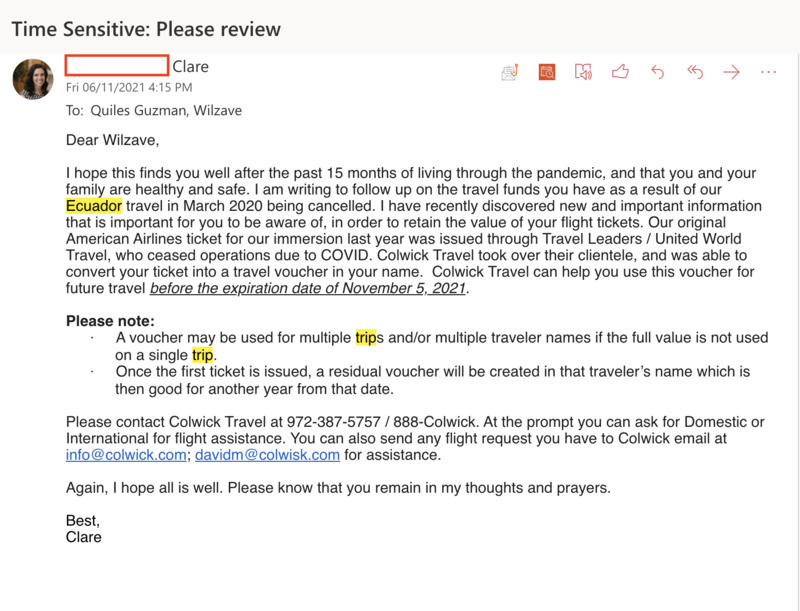
Each of the members of the flight to Guayaquil, Ecuador, was deeply connected with the purpose of traveling which was to be present with the neighbors in Ecuador. Some of us thought that the main purpose of the course, Empower: Ecuador, was to travel. To some extent it was, but after the trip cancelation, we realized there was also another greater purpose. The greater purpose was to grow in vulnerability, spirituality, and in self-reflection. To learn how to be vulnerable with others and share your journey in life and understand how God was working through all the messiness was really hard, but through this course, it happened. The trip cancelation was very sad but because of it, we learned how to be connected despite the distance. Letters were sent from us to each of the neighbors in Ecuador, zoom meetings were held with the team in different ways, and journals were written with our most inner thoughts and reflections. Additional to this, each of us got a voucher to travel for the rest of the year, which in my case I used to travel to see my loved ones in Puerto Rico and Arizona. Seeing my loved ones probably wouldn't have happened if it was not for this voucher and I was very grateful for it. Yes, it was bad that our trip was canceled but many blessings came out of this. During COVID-19 many bad things happened and are happening, however, many blessings and good things also happened and are happening. I think it is very important to also share those good things to motivate others and push each other up out of all the darkness. To express this story I am sharing a screenshot of an email that confirmed the trip cancelation and that also announced to us that we were going to have a voucher to travel. The email was from our leader Clare.
-
2021-06-08
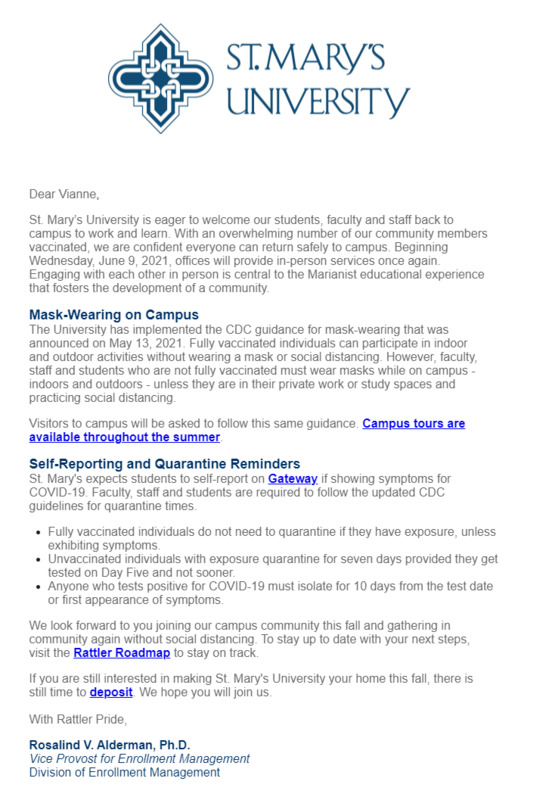
With the distribution of the vaccine everyone thought things were going back to normal. The pandemic seemed like it was coming to a close. Institutions were beginning to lift the indoor mask-wearing requirements for vaccinated individuals per the CDC's announcement. St Mary's University was one of these of these places. Unfortunately with the rise of the Delta variant St. Mary's had to revoke their decision regarding masks a few weeks later. It was back to "normal" mask-wearing policies no matter what your vaccination status. I, like many others, was disappointed by masks being required again. Too often I had been made late by trying to find a mask to take or even running back to my house or car because I forgot mine. Or ran embarrassed out of a store because I forgot to wear one the entire time I was shopping. I also missed putting on makeup below my eyes, a ritual that helped me feel more put together. They're simple, silly reasons for not wanting to wear a mask anymore but to me they represented normalcy.
-
2020-03-12
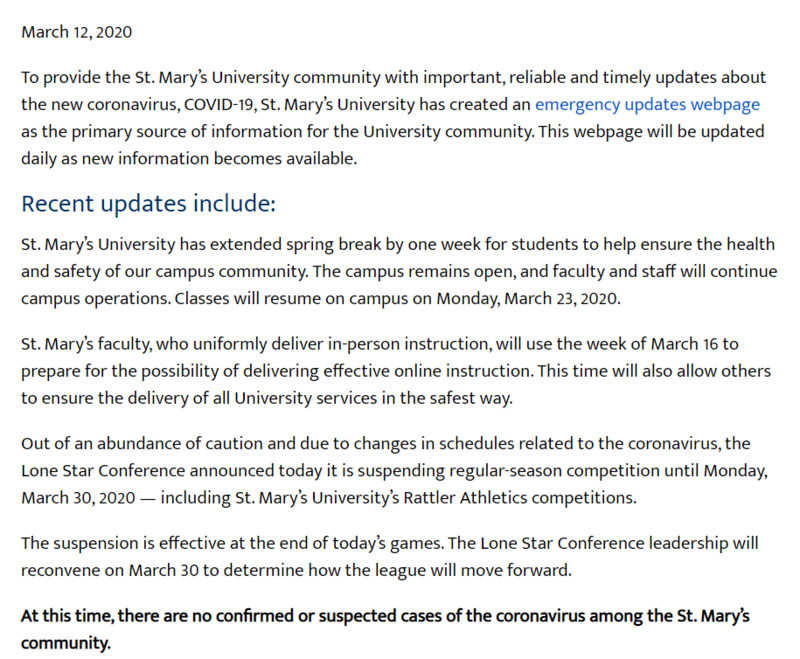
This image shows how much almost everyone underestimated the pandemic. It also highlights the uncertainty it brought. Most thought we were just getting one extra week of staying home. We would be heading back to campus after that so we were grateful for the extra vacation time. Little did we know that there would be no end in sight for this pandemic for almost two years. No one knew how long it would last or exactly how much it would affect our everyday lives. Procedures constantly changed as institutions tried to figure out the best way to respond to this unprecedented situation.
I think this image would spark student memories of the reaction they had to similar school announcements. Many people were on vacation and came home to a total shift in society like panic buying. My family was in Mexico at the time and in the middle of the vacation the hotel switched from open buffet and people roaming to encouraging people not to interact with others. Before my family left my stepdad had bought some nonperishables to store. I didn't know why he did this and thought this was silly and just a habit from his Red Cross responder days. It turns out he was correct in predicting people would flock to the stores once institutions started practicing preventive measures. This image is just one of the many that demonstrate how people's lives began to change during this time.
-
2021-10-14T19:40
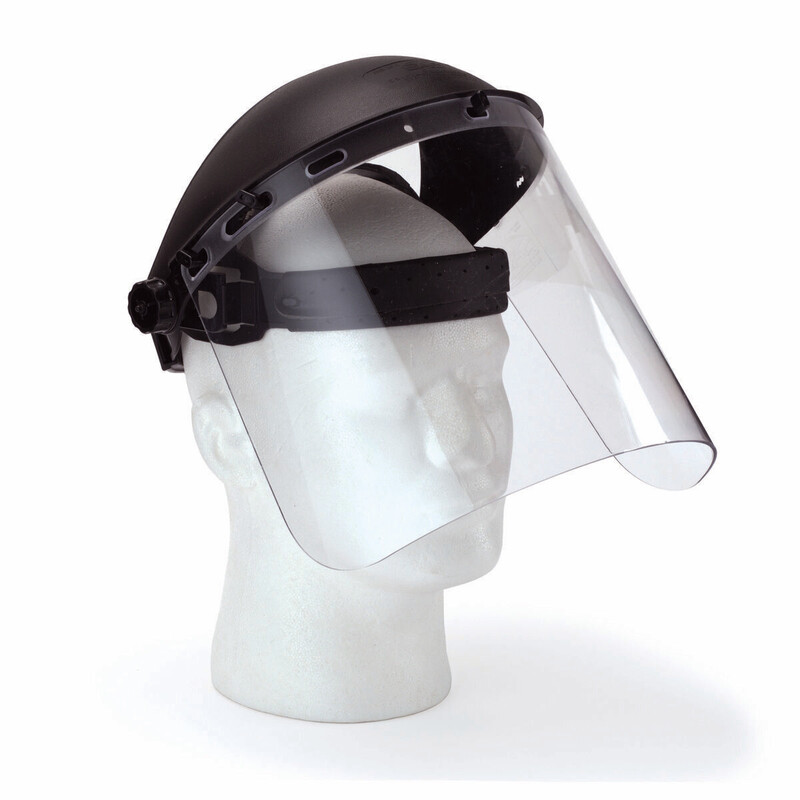
I personally worked as a COVID 19 screener for South Texas Veterans Affairs. During that time we as COVID screeners were required to wear face shields and masks on our face for more than eight hours a day. After reading the article I posted from the CDC -- it now does not seem like it was a requirement at all for health workers to wear the face shields. I preferred to wear the ones that were much lighter. They were also face shields, but they were not in a shape of a helmet, they were lighter, and easier to handle as we screeners went from one job station to another. During the pandemic, while employed as a COVID 19 screener-- if we were caught without wearing the helmet (face shield) our jobs were threatened. We were only allowed to take the face shields off intermittently, for example, while at lunch.
-
2021-09-09
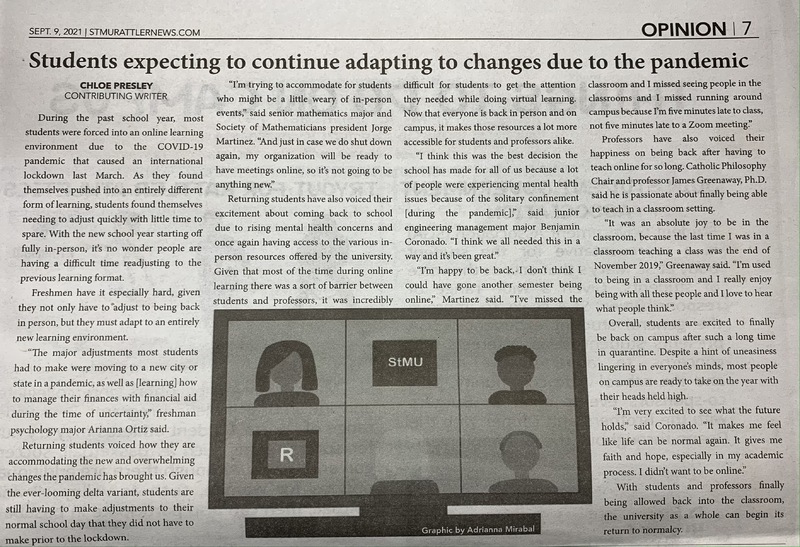
These text stories are from St. Mary University's Rattler Newspaper. These articles relate to the pandemic and my theme because they are discussing how students are adapting from the previous year(s), whether it be dealing with changes to online vs. in-person lectures, new policies to promote safety, or anything else. This theme is important to me because I was still in high school during the start of the pandemic, so I had to go through lots of adaptations, not only because of my transition into college but also because of the ongoing pandemic. When I decided to attend St. Mary's, lots of things were still uncertain, for example, whether or not class will be held in person or virtually, mask and vaccination mandates, etc. Chloe Presley is the contributing writer, and Adrianna Mirabal is responsible for the graphics.