-
2021-02-01
I've always wanted to get a cat. I've only had pets while living with my parents, at first I had a black cat and then a pug. After moving out from my parents' home, I dreamt of getting a cat again. But right after moving out (I was 18 years old at the time) I didn't have the time or the money for a pet. Fast-forward a couple of years later, when the pandemic hit us all: I've had so much time on my hands to think about life in general while staying at home. I realized that I was finally ready to get a pet (or, as it turned out, two pets). I had a lot of time to research how to properly prepare myself as a pet owner and how to appropriately take care of animals. And - as a lot of us during 2020 - I spent much more time at home than usual, which was perfect to welcome a pet to its new home. I was lucky and found two happy and healthy kittens. But sadly, during the pandemic, a kind of "black market" for pets developed in Berlin and other big cities. The market for pets was bigger than ever in Germany, and a lot of them were in bad conditions and/or sold at very high prices. Often times I saw people offering kittens and puppies, who were way too young to be separated from their mothers. It was really heartbreaking to see how bad the situation was. The only bright side was that all the animal shelters in Berlin had no problems to find pet owners for the dogs and cats there.
-
2020-04-16
I was a member of the class of 2020 at what I believe is the most incredible school imaginable. Perhaps after thirteen years I am far from unbiased, but the sense of community offered by my beautiful, 1,200 student Pre-K through 12th grade school is unmatched. Now, envision a girl who walked this campus with her childhood best friends, siblings, and cousins, and, rather frequently, her mother who made an effort to lead the Parents Association countless years. Overlay a history of homesickness and a global pandemic, and the product is March 2020 me when this blissful chapter of my life was abruptly ripped away, propelling me prematurely towards college at a school I had already decided could never fill the shoes of my high school. This tear stained entry was written on April 16th, when my state governor officially shut down all schools for the remainder of the school year. I had spent the last four weeks with a countdown on my iPhone tracking the days until I could return to school. The countdown had to be adjusted at one point when “coronacation” was extended from one to three weeks. Yet I remained the voice of naive optimism, unwilling to entertain the unfortunate reality that everyone around me had already accepted. This may seem dramatic and theatrical. But this same optimist in me hopes that, should anyone stumble upon my story, they will “respect what [they] cannot know” (Saidiya Hartman). There is much more to this story and my history than could ever be relayed to another person. But with the right lens, great value can be extracted from every story, no matter how many dried tears dot its pages.
Hartman, Saidiya. "Venus in Two Acts." Small Axe, vol. 12 no. 2, 2008, p. 1-14. Project MUSE muse.jhu.edu/article/241115.
-
2021-09
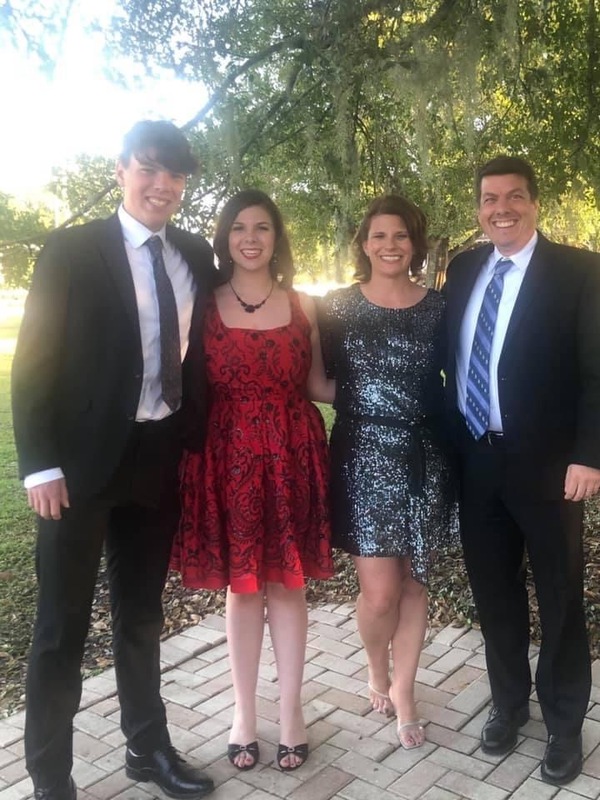
When reflecting back on my own experiences from the COVID-19 pandemic, there are a lot of things that come to mind: how my freshmen year of college was completely upended, how I did not feel safe to return to my part-tine job, and especially how nerve-wracking it was to watch world leaders navigate through a crisis we had yet to see in our lifetime. Acknowledging these difficulties that I personally faced, along with the challenges people across the world faced, is crucial because, unfortunately, fear is apart of this story that history will tell; however, I have always found myself someone who tries to remain rather optimistic, which I find myself doing as I share my story. Though I hesitate to call the COVID-19 pandemic a ‘blessing in disguise,’ it did open my eyes and help me to become much more grateful for one huge aspect of my life: my family.
I have been very privileged to have a close and loving family my entire life, though it took me a while to realize what a privilege this was. Sitting down each night to dinner and having a lively conversation with my mom, dad, and younger brother was the norm to me, so I rarely considered the notion that that wasn’t the same for everybody else. When the pandemic first struck and shut down life as we knew it, I – a 19-year-old college student – suddenly found myself back at home living every single day with my family. This was a very jarring shift for me after experiencing the freedom that college granted me, but I quicky began to see how lucky I was to have a loving and accepting family to get through this difficult time with. Of course, this is not to say I never got frustrated with constantly being around my family, but it made me appreciate all the good moments that we had together. Together, we formed a stronger bond as a family that helped us to get through the physical and mental toll the pandemic had brought. From trying new meals together, watching new shows/movies together, to creating wacky videos to share with our friends and family, and so much more, I began to appreciate all the little moments we had together.
As things somewhat begin to return to a state of ‘normalcy,’ I continue to reflect on this time I spent with my family, and I cannot help but feel a huge sense of gratitude. I truly have learned to appreciate everything they have done for me (and continue to do), as well as learned to appreciate many more facets of my life. Nowadays, I find myself much more cognizant of the seemingly simple things and not taking them for granted. It is strange to think that something such as a global pandemic can be the thing that really cements an idea or feeling in our minds, but that is what COVID-19 did for me and my appreciation for my wonderful family.
-
2021-09-15
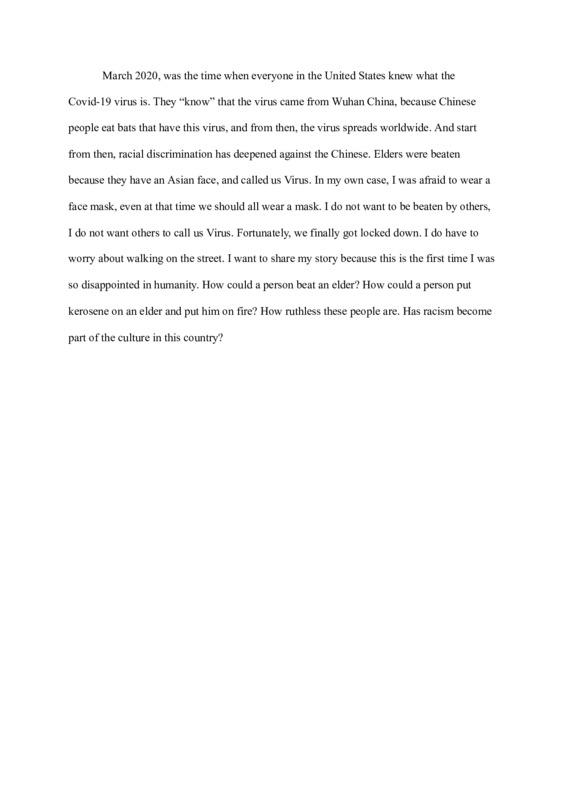
I will share my story that is about racism because of Covid-19
-
2021-03-12
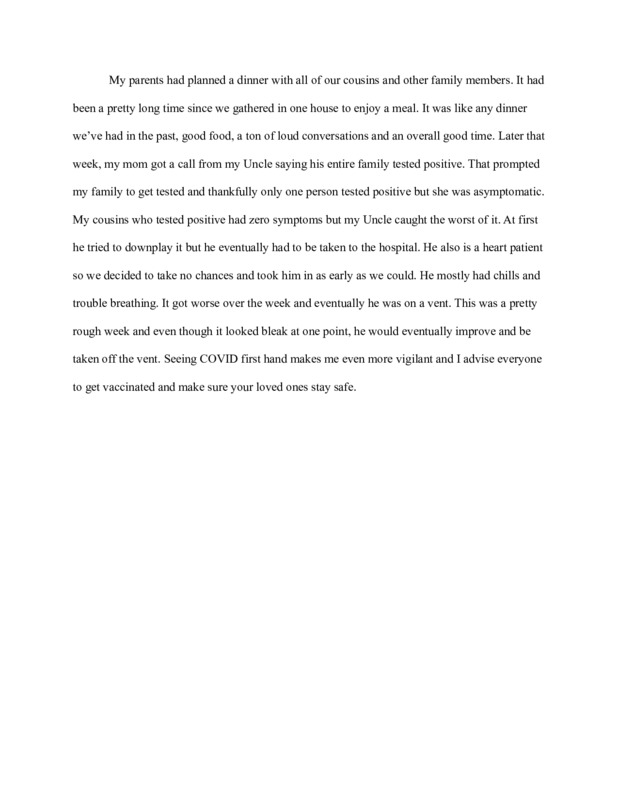
Text Submission about my personal experience with COVID.
-
2021-09-14
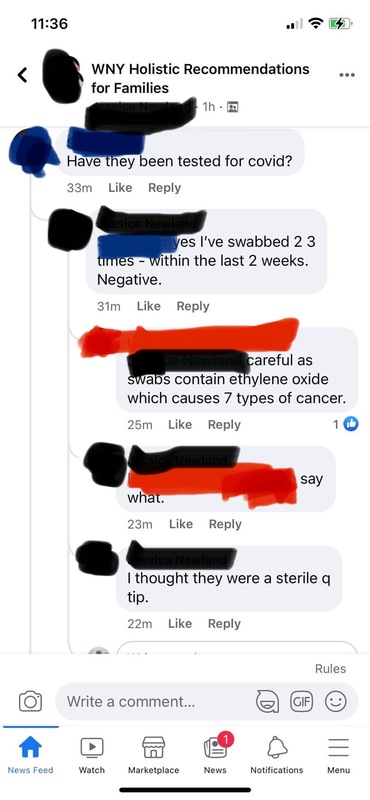
This is a screenshot from a group several friends are in. The group is holistic-minded which, in itself, is not anti-science but folks who are into holistic medicine seem to be particularly vulnerable to the misinformation and disinformation out there. This screenshot shows one person asking the OP if they’ve tested their child for COVID. The OP answers that they’ve swabbed their child several times. A third person warns the OP that sterile swabs contain ethylene oxide and so they cause cancer. Reuters did some myth-busting regarding this claim. (Link included). It’s so disheartening to see this rampant disinformation and misinformation, especially in communities I formerly felt a part of.
-
2021-09-14
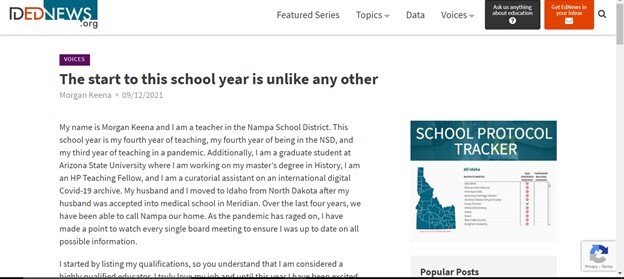
I wrote an opinion piece for Idaho Education News last week after the latest school board meeting in Nampa, Idaho. Since March of 2020 educators have worked tirelessly to ensure that our students continue to receive a quality education. Initially, educators were seen as 'heroes' of the pandemic. However, over the last 9 months, the rhetoric surrounding schools and teachers has turned nasty. Yet, teachers continue to show up every single day and offer learning experiences to all children. At last week's board meeting, the discussion focused primarily on a mask mandate for our district as hospitals in our state began rationing care given the soaring number of Covid-19 cases. There was an even split between the trustees who were in favor of masking and the trustees who were against masking. This split did not come as a shock to me. However, the line of one trustee hit me in my gut, "I guess I go back to the mission statement. I'm here for the kids, so I'm not going to worry about the adults." The mission and vision statement the trustee is referencing states that teachers offer "exceptional learning experiences" for every child. Given the largely unvaccinated population of our community, the high numbers of teachers out sick, and the alarming number of students out sick as mask mandate seemed like a simple request. However, the board did not vote in favor of helping teachers ensure we are able to provide 'exceptional learning experiences.' Are masks the only answer? Not necessarily. Last year, students attended school 4 days per week while the 5th day was reserved for students to connect with students who were in quarantine/sick and unable to attend school. This year, all of those requirements are gone. That being said, students and teachers attend school 5 days per week and there is no time allotted for teachers to connect with students who are quarantined or sick. Given the latest numbers, about 25% of our entire district is out sick. That is 25% of students who do not have access to their teachers.
The article was published on Tuesday, September 14, 2021, and Idaho Ed News shared it on their Facebook page as well. Shortly after 7 pm MST the post has over 160 comments (mostly in favor of teachers), 250 reactions, and over 50 shares. In addition, I have received numerous private messages and emails from other teachers who thank me for giving them a voice during this 'unprecedented' time. While I am still a fairly new teacher with only 3 years of experience, there are veteran teachers who are being pushed to the brink. Many would like to think this is an Idaho problem but the reality is that teachers across the country are feeling unsupported and unappreciated by the communities they serve. I am fearful this will be my last year teaching - I LOVE my job. I remain hopeful that this year turns out to be something amazing.
-
2021
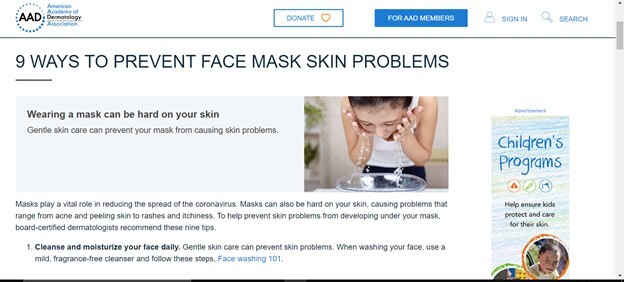
Masks play a vital role in reducing the spread of the coronavirus. Masks can also be hard on your skin, causing problems that range from acne and peeling skin to rashes and itchiness. To help prevent skin problems from developing under your mask, board-certified dermatologists recommend these nine tips.
1. Cleanse and moisturize your face daily. Gentle skin care can prevent skin problems. When washing your face, use a mild, fragrance-free cleanser and follow these steps, Face washing 101.
Dry skin is a common face mask skin problem. Applying moisturizer adds a protective layer that can reduce dryness.
You want to apply moisturizer immediately after washing your face. To get the most benefit from a moisturizer, board-certified dermatologist Carrie L. Kovarik, MD, FAAD, recommends using a moisturizer with one of the following ingredients:
-Ceramides
-Hyaluronic acid
-Dimethicone (which can also create a barrier that helps reduce irritated skin)
You can prevent breakouts from your moisturizer by using a moisturizer formulated for your skin type. When selecting moisturizer, follow this guide:
Oily skin (or when weather is hot, humid): Gel moisturizer
Normal or combination skin: Lotion
Dry to very dry skin: Cream
If you have acne or tend to break out, you can still use a gel moisturizer.
Apply moisturizer before and after wearing a mask.
Moisturizer can prevent problems, especially if you have dry or sensitive skin.
(Tip courtesy of board-certified dermatologist Carrie L. Kovarik, MD, FAAD)
2. Protect your lips by applying petroleum jelly. Dry skin and chapped lips are common face mask skin problems. You can prevent chapped lips by applying petroleum jelly to your lips:
-After washing your face
-Before you put on your mask
-Before bed
To prevent breakouts, take care to apply the petroleum jelly only to your lips.
3. Skip the makeup when wearing a mask. Beneath a mask, makeup is more likely to clog your pores and lead to breakouts. If makeup is necessary, use only products labeled “non-comedogenic” or “won't clog pores.”
4. Avoid trying new skin care products that can irritate your skin. Wearing a mask for even a short time can make your skin more sensitive. To reduce skin problems, avoid trying harsh products, such as a chemical peel, exfoliant, or retinoid, for the first time, says board-certified dermatologist Daniela Kroshinsky, MD, MPH, FAAD.
5. Use less of certain skin care products if your face becomes irritated. When you cover your face with a mask, some skin care products that you’ve used in the past may irritate your skin. If this happens, Dr. Kroshinsky recommends cutting back on products that can irritate your skin, such as:
-Leave-on salicylic acid
-Retinoid you apply to your face
-Aftershave
6. Wear the right mask. To reduce skin problems, look for masks that offer the following:
-A snug, but comfortable fit
-At least two layers of fabric
-Soft, natural, and breathable fabric, such as cotton, on the inside layer that rests against your skin
Wearing a mask that offers a snug, but comfortable fit helps to protect you and others from the coronavirus. You want a snug fit across your nose, on the sides, and under your chin.
A snug, comfortable fit also reduces skin problems. If the mask feels too tight or slides around on your face, it can irritate your skin. You’re also more likely to adjust a poorly fitting mask. When you touch your mask, you can transfer germs to your mask and your face.
The fabric is also important. Avoid synthetic fabrics, such as nylon, polyester, and rayon on the layer that rests against your skin. These are more likely to irritate your skin and cause breakouts.
For more tips on selecting a face mask to prevent the spread of COVID-19, visit the Centers for Disease Control and Prevention at CDC.gov/coronavirus.
7. Take a 15-minute mask break every 4 hours. Health care workers on the frontlines of the coronavirus pandemic have found that this helps save their skin. Of course, only remove your mask when it’s safe to do so and after washing your hands.
Safe places to remove your mask include:
-Outdoors, when you can stay at least six feet away from people
-Inside your car when you’re alone
-At home
8. Wash your cloth masks. Many health care organizations now recommend that you wash a cloth mask after each use. Washing it also removes oils and skin cells that collect inside the mask, which could lead to a skin problem.
You can wash a cloth mask in a washing machine or by hand. Both ways remove germs and other particles. Just be sure to:
-Follow the washing instructions on each mask.
-Wash the masks in hot water unless the instructions say otherwise.
-Use a fragrance-free, hypoallergenic laundry detergent.
After washing your mask, check its shape. If a mask no longer fits snugly (and comfortably), it is less protective.
9. Continue the treatment plan that your dermatologist created for you. If you have a skin condition, such as acne or rosacea, it’s especially important to follow your treatment plan. This can help keep the condition under control.
-
2021-09-16
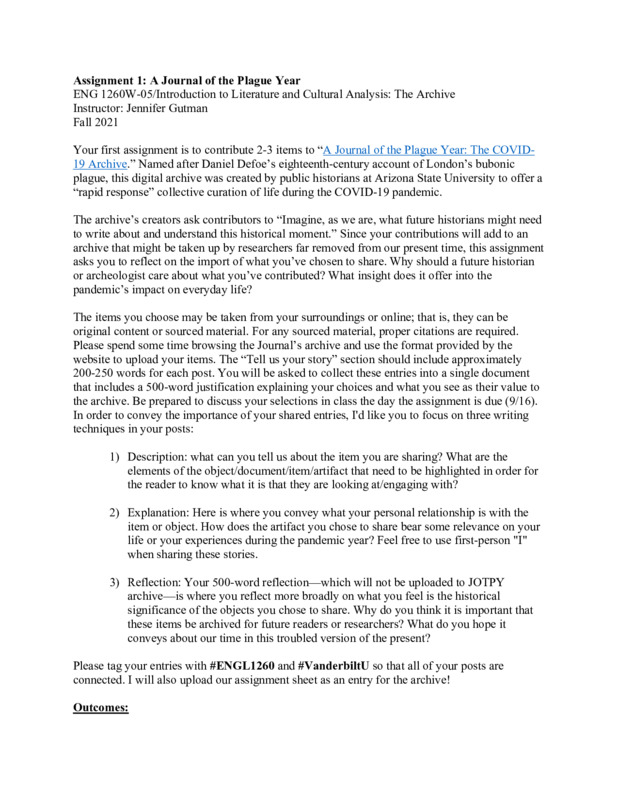
I'm sharing an assignment sheet for my "Literature and Cultural Analysis" class at Vanderbilt University for the Fall 2021 semester. The class, themed "The Archive," is designed to encourage critical thinking around the concept of the archive and its material practices and embodiments. While we think of the ways in which archives enable research and help to cultivate new knowledge and stories, we also consider how archives encode structures of power and act as sites of forgetting as much as remembering.
I've asked my class of twelve students to contribute to the COVID-19 digital archive as their first writing assignment for the semester. This assignment is designed to introduce them to an existing and regularly updated archive and ask them to think critically about processes of archiving and the decisions that go into selecting, categorizing, and framing the importance of a cultural artifact. My students have been asked to choose 2-3 items from their experience of the pandemic year to share in this public forum. Their contributions will be tagged to sync up with this assignment sheet.
-
2020-04-24
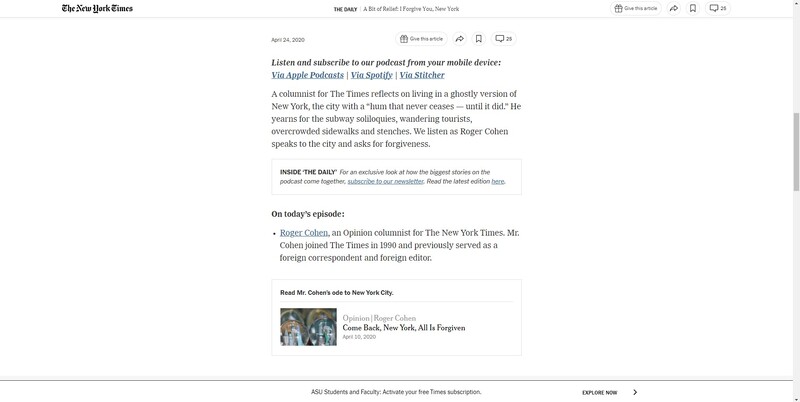
I remember listening to this episode when it first aired during the peak of the pandemic. I am certain I am not alone in the ways this very raw and heartful lamentation of New York City when the city's fate was uncertain.
-
2021-09-13
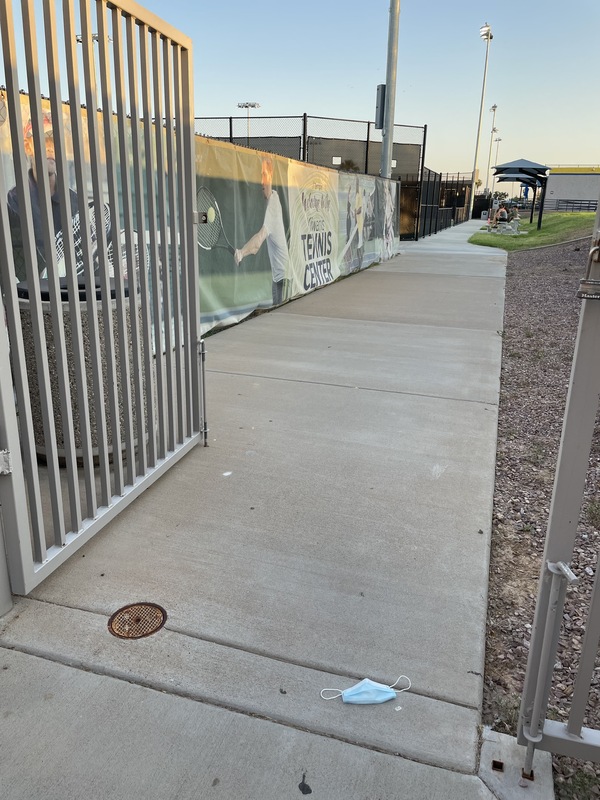
I took my daughter to play tennis at 5:00 PM. When we left at 6:00, this disposable mask had made its way to the ground, right by the entrance to the tennis courts.
This photograph is part of the mask trash series.
-
2021-09-12
This interview contains two personal accounts of the COVID-19 pandemic. The questions discussed cover multiple aspects of the pandemic, and how it has shaped our lives as high school/college students.
-
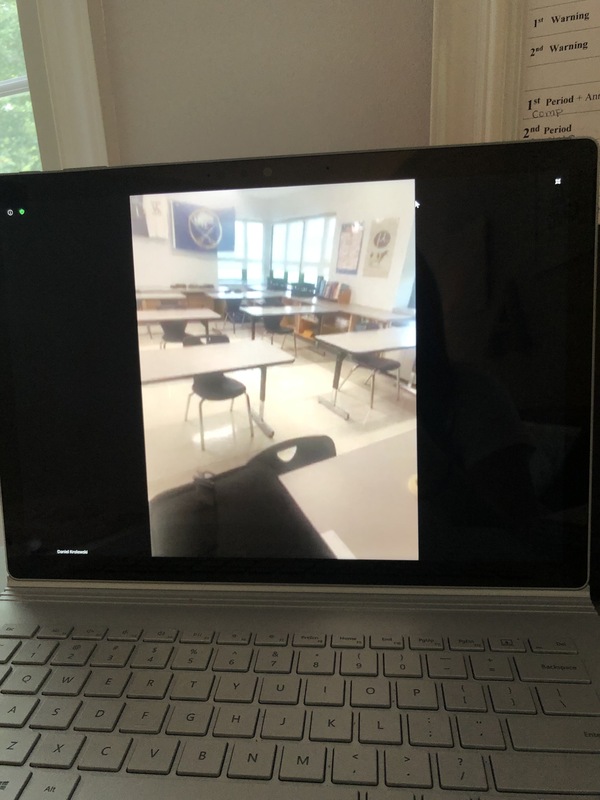
2021-09-09
After being in school for 12 years you get use to the way things. Once covid had hit it was a whole new change and something to get used to. The desk had all been separated from each other, lines in the hallway telling us where to walk to divided us so we weren't so close. Only so many students going on one day to school and the others on the opposite days us. You kind of felt like a freshman in that sense.
-
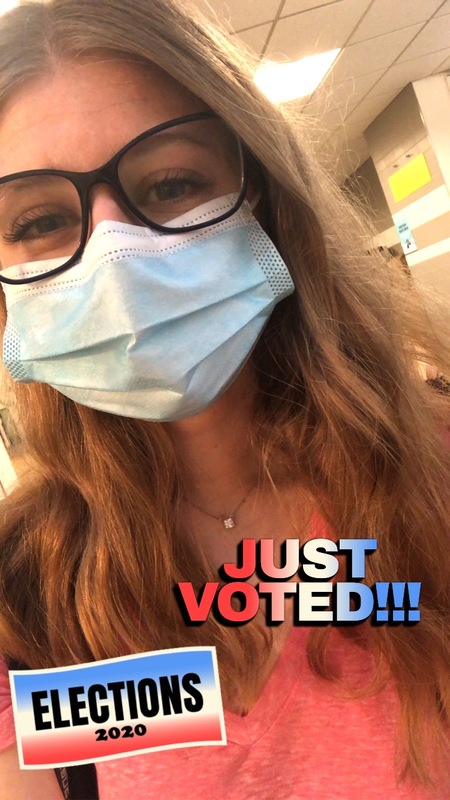
2020-10-08
The picture above is a photo that I took of myself after mailing my absentee ballot for the 2020 election. This was something that was especially exciting amidst the difficulties that Covid-19 had caused in the United States and around the world. Due to the pandemic, most in-person voting was not happening that year. Instead, most people mailed in ballots. As a college student, I needed to register for an absentee ballot in order for me to vote in my home state of New Jersey. I remember that I did this while I was stuck at home over the summer. For me, during the summer of 2020, I did not feel as though I was accomplishing anything. Registering for my absentee ballot was one of the only things that I actually accomplished during this time. In addition, there was much unrest in the country, as well as on social media, that motivated me to register as well. As a 20 year old, this was the first Presidential election that I could vote in, which made it especially important for me. During the summer, with all of the unrest in the country, I was interested to see the areas in which I agreed with my parents, and the areas in which we disagreed. In such a disaster of a year, I wanted to be able to say that I had voted in the election, at the very least. It is my civic duty after all.
I think that this photo is extremely interesting because it is a true time capsule. I am wearing a mask, which characterizes the Covid pandemic. The filter proudly states, “Just Voted!!!” and “Elections 2020”. There is a joy that is evident on my face; there is something exciting about being able to vote in your first presidential election. Throughout my life, I have learned about elections and have always wanted to take part. In the 2016 election, my high-school peers and I, who were nearly competent citizens, were forced to watch from the sidelines. There is also something particularly interesting about an election in an extremely difficult time. It felt important in a way that regular years might not.
-
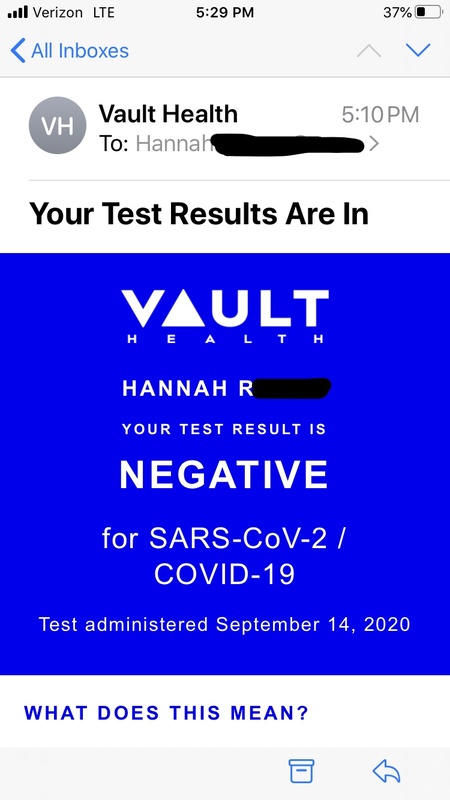
2020-09-16
This photo is a screenshot of an email that I received during the Fall 2020 semester at Vanderbilt University. Throughout the semester, I received many emails that looked exactly like that one. The email is proof of a negative Covid test result, which every Vanderbilt student had to receive each week during the fall semester in order to remain living in their dorm. If a student tested positive, they would be taken from their dorm into quarantine housing. For some context, in March of 2020, all Vanderbilt students were sent home early due to the coronavirus. From March onward through the summer, Vanderbilt students worried about their fate as students. Would we be allowed to return to Nashville in the fall? Would we be subjected to more online “college”, trapped in our childhood bedrooms? This anxiety physically ate away at me, keeping me in a constant state of unease. When we finally heard that we would be coming back to campus, it felt as though an immense, invisible weight had been released from my shoulders. We were told, however, that there would be restrictions to college life. At that moment, I did not care an ounce. I would happily take any variation of college, as long as I would be able to live on campus. One of my major stressors entering that year was that we would be kicked off campus a second time. Callous students loudly proclaimed that this was inevitable, there would be no way that we would last this upcoming year. Comments like this brought the anxiety right back to the pit of my stomach. As a student who was going to be living on campus, what would I do if I was kicked off? Where would I go? I did not even want to think about that as a possibility. But that was the energy that charged the air at Vanderbilt that year: there was a fear and a deep distrust that Vanderbilt would stay open.
One of the key differences between this year and other years at Vanderbilt was the weekly Covid testing (In the spring semester, the Covid testing was twice weekly). Students were required to enroll in times in their schedule when they would trek over to the Rec, or the large gym on campus, to spit in a tube. At the beginning of the year, I would go with my friends during our allotted time. We soon learned, however, that it did not really matter when you went, as long as went sometime during the week. While this was in some ways comical, to walk into the Rec center, with pop music blaring, and spit alongside your college peers, there was something stressful about it as well. It was like constantly turning yourself in; if you did have the misfortune of having Covid, you had willingly given yourself over for the school to come and take you away. Especially at the beginning, fear of Covid was rampant. Even if you felt fine, a scratchy throat may seem like your doom. At the beginning of the semester especially, waiting for the emailed results felt like eternity. And we all knew what would happen to people who tested positive, or those unfortunate enough to be contact traced: they were shipped off in a golf cart for everyone to see, and were banished from the rest of campus. But this was worth it, all of it was worth it for us. The stress of getting tested and the fear of being quarantined was a miniscule price to pay for being able to be on campus, with our friends. It was an escape from our summers of restriction. Or at least, it was for me. And for that, I give Vanderbilt tremendous credit for opening and following through successfully with the covid-testing of all the students each week.
-
2020-03-11
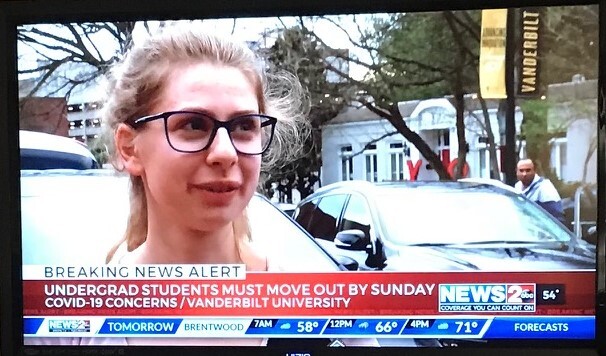
This is a photo of an ABC news segment that was aired on March 11th, 2020, at the very beginning of the pandemic in the United States. The photo shows an interview of a Vanderbilt student (me!). The caption reads “Undergrad Students Must Move out by Sunday”. The interview was taken on a Wednesday, which had been the day that the students were notified that they would need to vacate the campus. The Monday of that week, March 9th, had been our first day after spring break. That same day, we received the first email about the Coronavirus. It stated that classes would be cancelled for the next two weeks. At that time, some students and parents began to panic. Some students decided to leave campus for those two weeks, and believed that they would simply return after those two weeks. These students only took the belongings that they would need for those two weeks, and many of them left the majority of their things in their rooms. Two days later, on the Wednesday of that week, the students received a second email that we would all need to leave campus, and that we had until that Sunday to move all of things out entirely. Naturally, mass chaos ensued as students struggled to figure out how to move all of their things. Most students did not have any help from parents or family, as many people were afraid to travel. This time was a blur of stress, fear, and sadness as students mourned the year that was left unfinished. It was a charged frenzy of packing and moving, but despite this, all around the Vanderbilt’s campus, friends could be seen hugging and crying, particularly the graduating seniors. It was truly surreal in the worst way possible.
For me, this picture represents that entire, horrific, move-out experience. On the day that I found out that we would need to leave for the remainder of the year, I was in a practice room in my dorm with one of my friends. He had just been telling me how he had been fighting with his father over whether or not to leave during the two weeks without class. He, of course, wanted to stay on campus, but his father was convinced that he needed to come home. I had already conceded to my parents on that battle, and had plane tickets to come home for the Friday of that week. I, like everyone else, thought that I would only be going home for two weeks like the email had explained. I also was willing to be home for the two weeks to see my family, as I had been in the UK over spring break, which had caused major tensions with my parents. Wednesday’s email confirmed our worst fears: we would all be forced to leave for the rest of the year. I remember feeling completely numb. I walked out of the room to call my parents, while my friend called his. As I spoke to my mom, I realized that I would need to pack up all of my things extremely quickly. She advised me to go to the UPS store to get boxes; as soon as my friend and I were both off the phone, we went straight there, buying up many boxes each to begin packing. While we tried to smile and be upbeat, both of us were still in utter shock. With every ounce of my being, I did not want to leave. It was my sophomore year, and college finally seemed to be mine; I had a phenomenal group of friends who I loved deeply, I was involved on campus, and I loved my classes and professors. The tragedy of it all reverberated through me in waves. As devastated as I was, I had a more imminent task to focus on: moving out. Once we had bought our boxes, we realized that we could not carry them back to campus, and ordered an Uber. As I struggled to carry my boxes from the Uber, I noticed a news crew stationed outside of my dorm.
“Could we ask you a few questions?” they called to the pair of us as we labored with our boxes. My insides swirled with anger and frustration about the whole situation, about the unfairness of it all.
“Yeah, for sure!” I responded. Maybe someone would actually listen to us, and understand the insanity that we were experiencing. While I don’t remember the exact questions asked, I remember telling them that we had just picked up boxes as we were required to leave campus later that week. I attempted to communicate how upsetting this was to the entire student body. While I have never actually seen this news clip, a friend of mine sent me this picture of me being interviewed. For me, this picture captures how surreal the move out was. I was on the news, and I forgot all about it. It honestly meant nothing to me in that moment, as my world was pulled out from beneath me.
-
2020-03-20
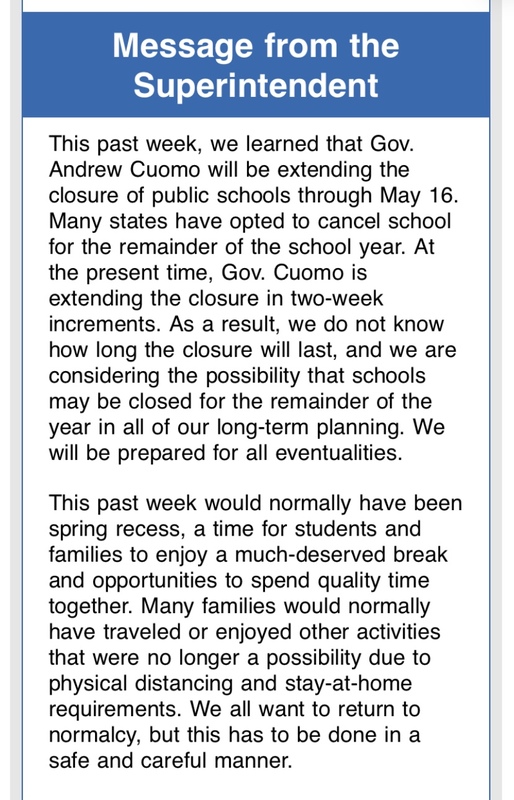
Most people thought that we were getting an extra two weeks off of school and that this covid "thing" would blow over. Everyone thought this was short term and nobody expected to not be in schools for a year and a half and have their lives rearranged.
-
2020-04-19
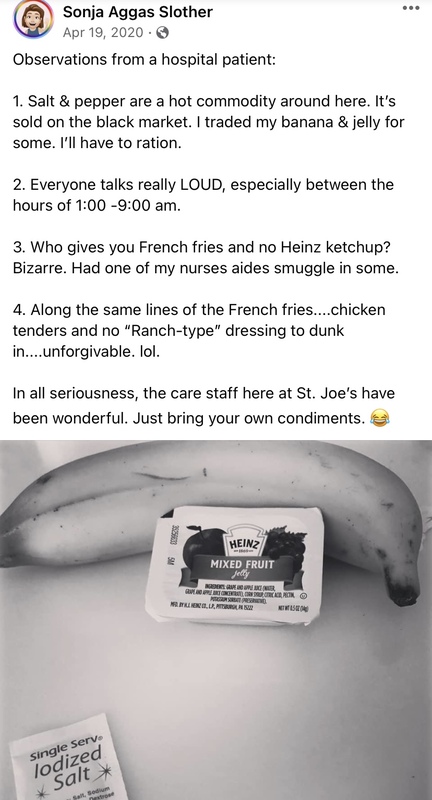
This is a post that my Mom shared on Facebook while she was in St. Joseph's in Cheektowaga for Covid 19 care. My mom discusses her observations as a Covid patient in a Covid hospital in April of 2020.
-
2020-04-10
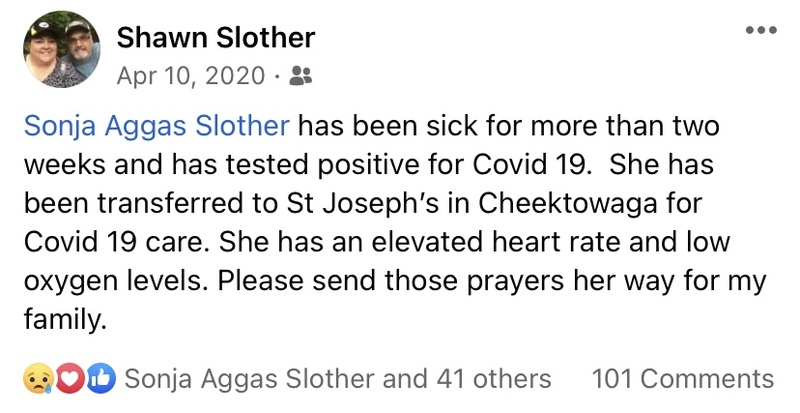
My mom had been sick for more than 2 weeks at my house at the end of March-early April. One morning she woke up and could barely catch her breath or breathe. My dad took both her and my brother who has similar symptoms to the emergency room. They transferred my mom to St. Joseph's for low oxygen levels and an elevated heart rate. My brother was sent home as his symptoms and current levels weren't enough to get him admitted due to the over crowding in the hospitals at this time.
-
2021-05-21
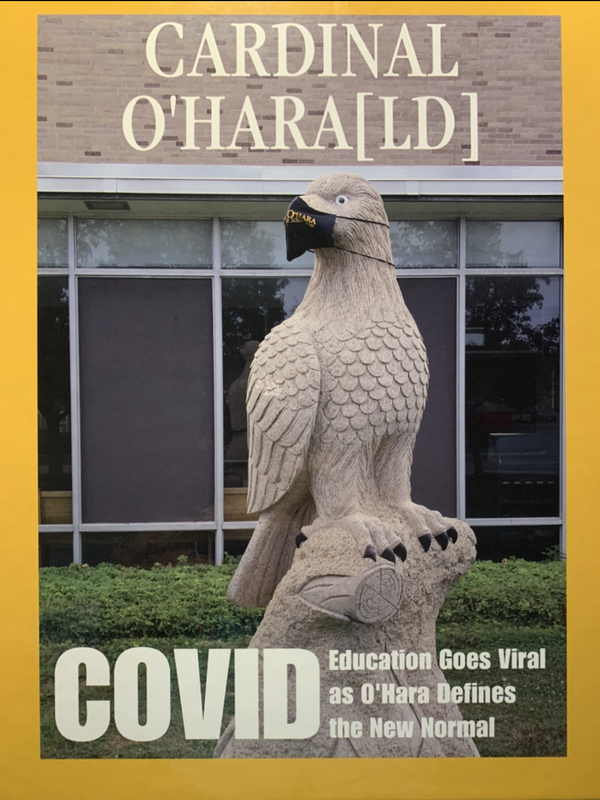
Being one of two editors for a school-wide yearbook is challenging enough, but when COVID hit, it changed the way that we were able to record our schools history. Events were cancelled, and those that weren’t imposed limited attendance policies, which made it more difficult to take photographs and conduct interviews. To aid with this, we sent out requests to the student body, asking them to submit photos for the yearbook. This relieved some of the pressure, as we now had access to more content, but it still posed challenges. Even with the photos that we were able to obtain, the subjects of the photos were always wearing masks, making it more difficult to identify who was present. Despite these numerous struggles, we were able to complete the yearbook and publish it for the student body to enjoy. To capture the year as a whole, we chose to theme the book after the most prominent event of the school year; COVID.
Each page in the book was designed to reflect COVID in one way or another. Although this implied a more serious tone to this book, my co-editor and I strived to add humor where and when we could. Of these, my favorite was a poem that I wrote, titled “ ‘Twas the Night Before COVID-MAS”, a parody of “ ‘Twas the Night Before Christmas”. While some lines of the famous poem remained the same, I added my own touches to most of them, to better reflect these troubling times. With this story that I have now shared to the world, I have also included an audio reading of this poem. I hope it brings you a few laughs.
-
2020-10
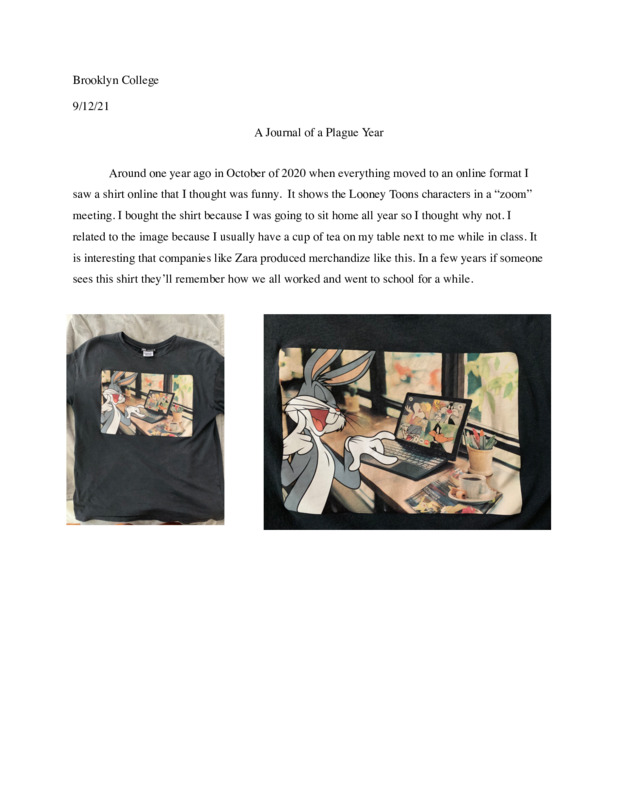
The object I am uploading shows us how fashion is also impacted by Covid, it is really interesting.
-
2021-09-10
My husband and I bought a little secluded farm in Vanleer, Tennessee in 2013. We had this idyllic notion that we could grow our own food, live off the grid, and have a sense of privacy we never had living in the city. But, were were awful at it, nothing ever grew, our house was the ultimate "fixer-upper" and we were far from everything. In the last two years or so, we started to long for living in the city again, being near conveniences, and not commuting over one miles a day.
Then, the pandemic came and my job sent us all home to work remotely. I am museum curator and what I do is very hands on, so that took some clever adjustment and reinvention. We also have the world's slowest internet, but I made it work by duct taping the jetpack to the only window where it worked. As the months went by, I read so many accounts of how the isolation and seclusion of shelter in place orders led to depression. Some of my friends who lived in apartments in the city described feeling claustrophobic and trapped. I realized, that despite other uncertainties caused by the pandemic, that I was happier than usual and felt completely peaceful in our little secluded twelve acre homestead. I could roam around my own land, take my dogs for walks, work on the never ending house projects, or just sit on the porch and appreciate the sunset.
When things started to return to normal and we began going back into the office, I broke my foot while trail running and that added another seven months of completely remote work to my job. Physically, my recovery was grueling, but mentally I was doing well thanks to the time already spent quarantining during the pandemic.
I have a new love and appreciation for this little farm that won't grow anything now. Both my husband and I have no desire to move back to the city and we have even made peace with the fact that we will never finish all the fixer-upper chores. The gratitude I feel for this beautiful place is immeasurable. I am one of the lucky people who could quarantine and not feel like I was suffering. During the pandemic, we built a small A-frame cabin down near the front of our land and offered it up as a refuge for people who needed to leave the city for a day or two. Now, it's my little yoga cabin and a place where I can sit and be thankful for my little home in the forest.
-
2020
When the pandemic started, I was told that we were staying home for two weeks. My first thought was “Sweet. An extended spring break.” I thought I would have to come back to school after those few days and continue on with my life as it always has been. I was wrong. Days turned into weeks and weeks turned into months and before I knew it, I had lost an entire year of my life. I had no human contact outside of my family that entire time. I was kept in my room all day, everyday. After a while of online school and nothing else going on, I think that's when something had snapped inside of me. I experienced self reflection. With all of that time and no one but me, I just looked at myself, looked back into everything I have done and pondered on what I wanted to do with myself. I was already aware of how insignificant I was and how little I have done in life but I did not really understand just how little until I had that time to myself. I already had a list of things I wanted to change about myself and things I wanted to do so I think that is when I began working to be better. I spent a lot of time alone practicing how to act more patient and be friendlier. I practiced baking, I took care of babies a lot, I appreciated the little things I always have since I was young like a video game I play called Minecraft, I began documenting and recording everything I did, I studied foreign language, etc. Soon I started to make changes to myself. When I got mad, I would think of my nephew or I would imagine I am watching the kids and remember that I have to be patient with them. I practiced self love so when I got major depression episodes or anxiety attacks, I was able to comfort myself easier and walk myself through my struggles. I also cut back on the food I ate and the types of food I ate. I lost about 10 pounds in one week and I was super proud of myself especially since I was working out like every day. I was in really good shape and proud of myself for that. I had better stamina and my clothes fit better and I was getting a lot of foreign language practice in and I finished learning how to read and write korean as well as some simple vocabulary and sentence structure. I improved on writing since I wrote a lot more and helped develop my techniques and practiced some drawing. I spent a lot of that time sitting alone in my room and adjusting to that silence. I've improved as a listener and began to crave silence all the time. My life has not been peaceful in the least bit but I have been able to find peace within myself which has really helped in the long run so far. Having improved on myself and re-exploring hobbies and interests of mine, I was reintroduced to the loud and crowded public abruptly to which I responded with an anxiety attack but then I got more comfortable. I was super shy at first but now I feel generally happier all the time and I believe that has helped people around me relax and enjoy my presence more. I am glad I seem less threatening or mean because that is all I have been called my entire life. I am still weird and awkward and I am not anyone’s first option but I am glad I am not the last option now. My goal now is to enlist as soon as I can and go into community college. Once highschool ends for me then I will begin my life and I am super stoked about that. I have a few ideas of what I can do after highschool so I am just waiting it out now. At least this much good came out of quarantine.
-
2020-03-20
At the start of the pandemic, I was facing home insecurity and was living in a shelter for three months and special housing for 6 months. The city was the most empty I have ever seen it. Ive seen so many people, homeless people, because of the pandemic and it was devastating. It isolated people.
-
2020
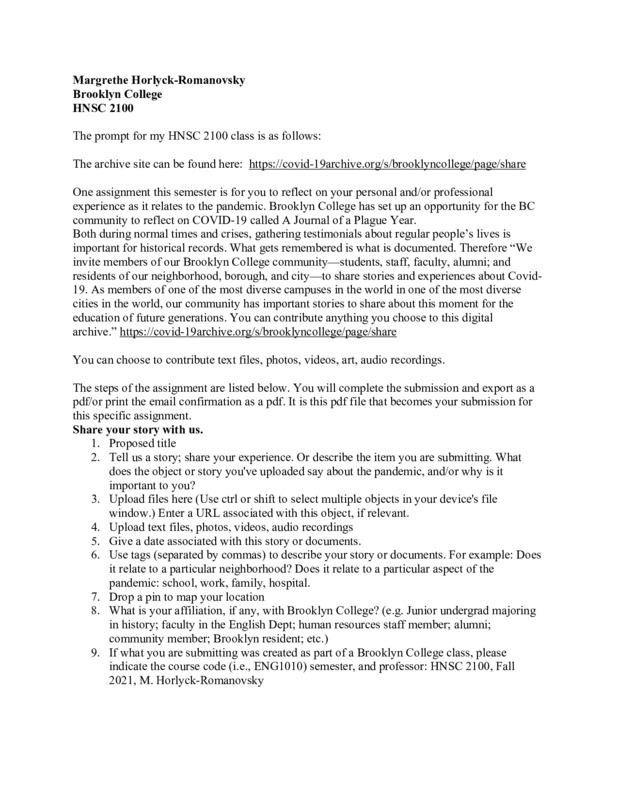
Brooklyn College HNSC assignment prompt, taught by Margrethe Horlyck-Romanovsky
-
2020-11-11
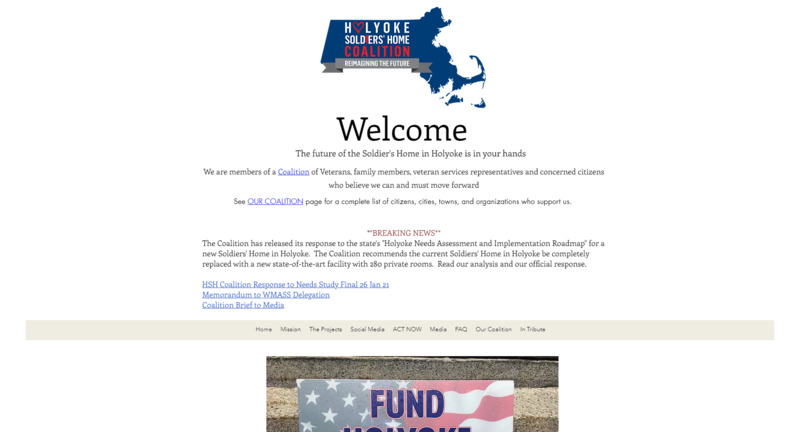
The Holyoke Soldiers' Home coalition created this website in response to the COVID-19 outbreak at the Holyoke Soldiers' Home in Holyoke, Massachusetts. It provides updates on the efforts to build a new facility, the motivation for constructing a new and larger facility, the need for more staffing, and the possibility of new programs.
-
2021-09-07
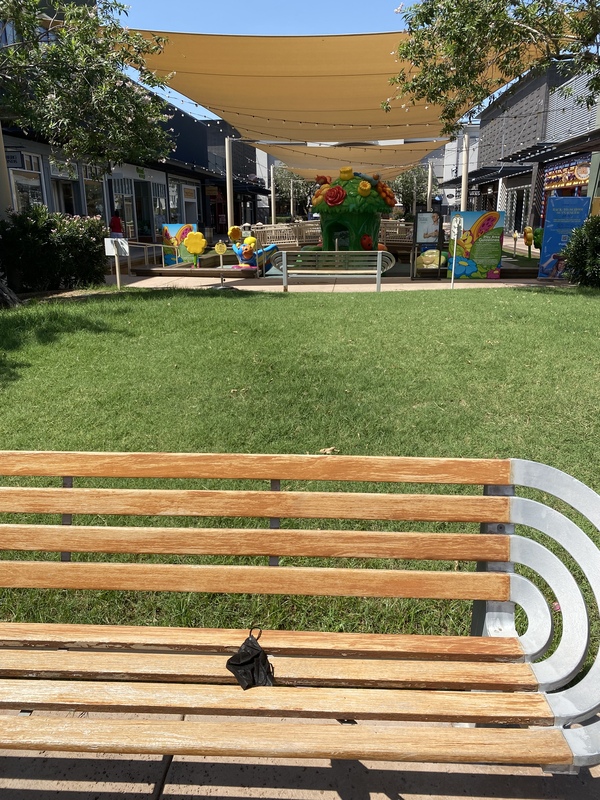
Mask trash has become so common over a year into the pandemic. This one was found on a bench in SanTan Village mall in Gilbert, Arizona.
-
2020-11-10
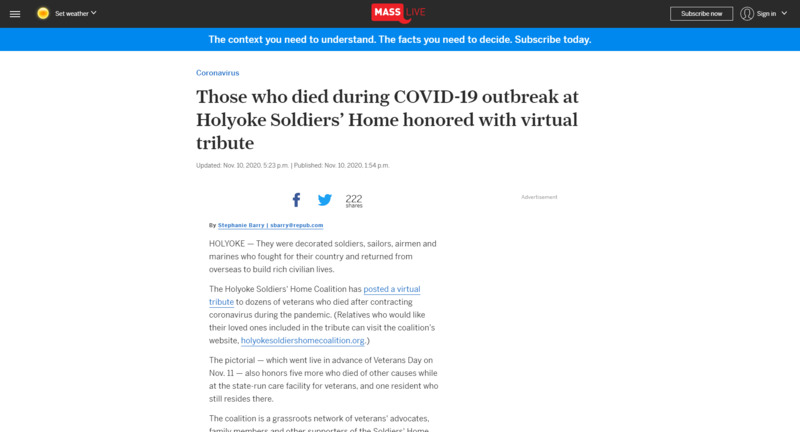
This MassLive article reports on a coalition attempting to memorialize the veterans at the Holyoke Soldiers' Home in Holyoke, Massachusetts, who had died throughout the pandemic, most of them as a result of contracting COVID-19.
-
2020-10-06
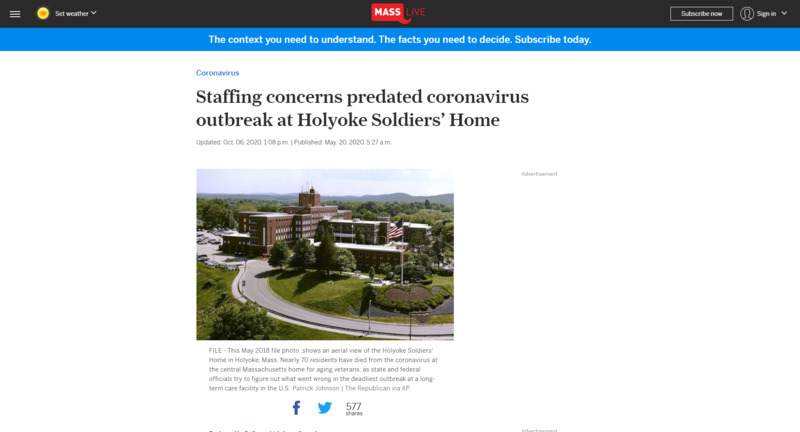
This MassLive article reports on a pre-existing staffing shortage at the Holyoke Soldiers' Home in Holyoke, Massachusetts, that influenced the gravity of the COVID-19 outbreak in the facility.
-
2020-10-20
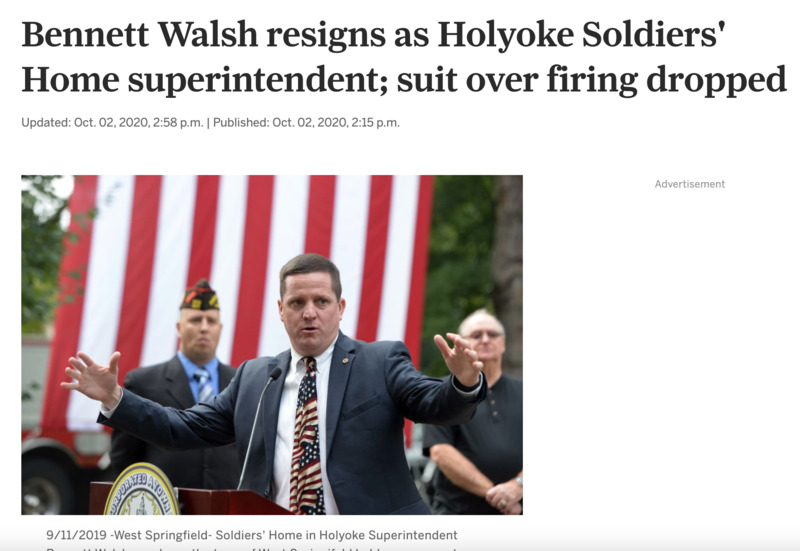
This MassLive article reports on Holyoke Soldiers' Home superintendent Bennett Walsh's decision to drop a law suit after Massachusetts Governor Charlie Baker had him fired in light of the facility's poor response to the pandemic.
-
2020-09-13
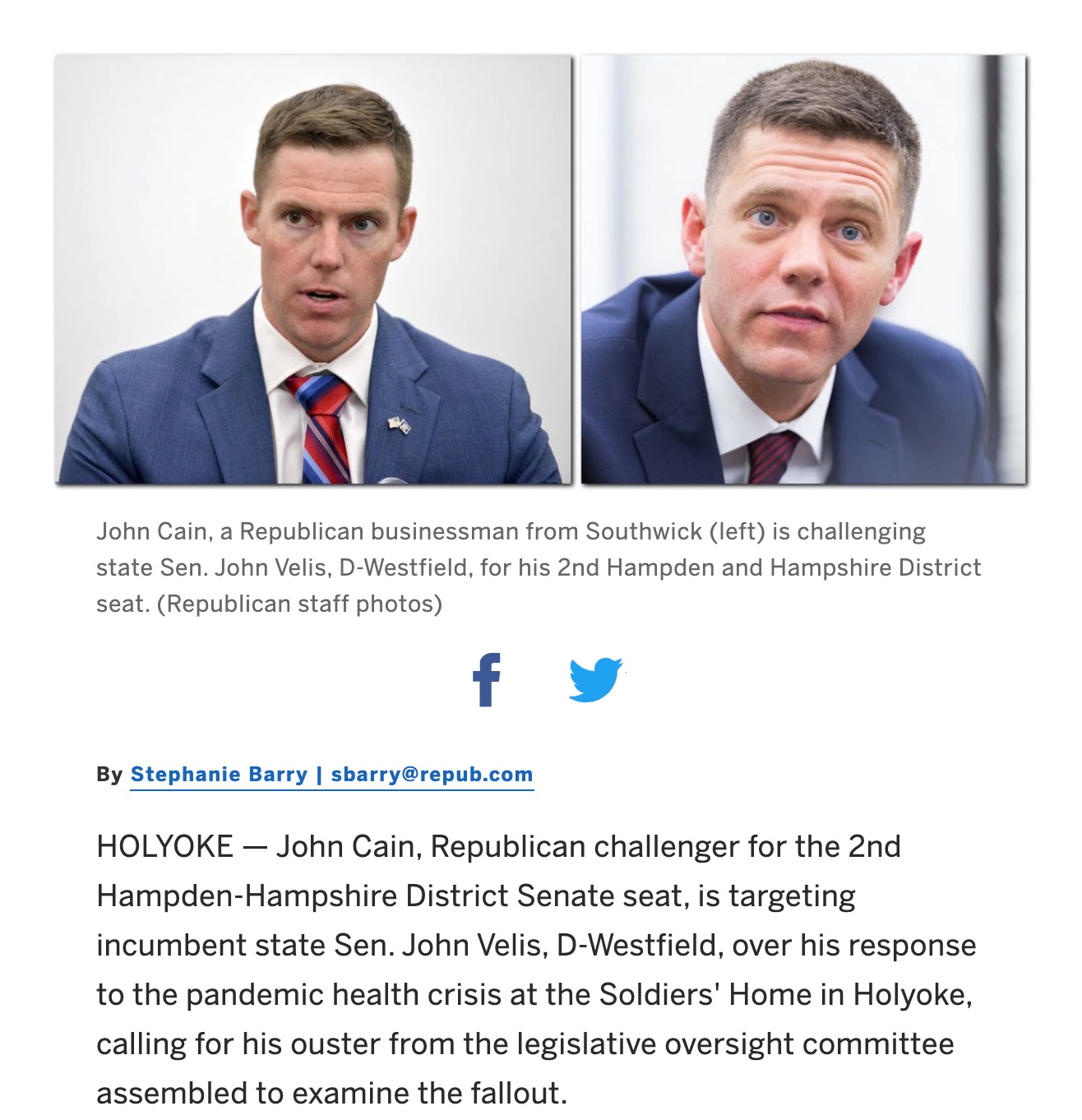
This MassLive news article discusses how a state senate candidate was using the poor response to the pandemic at the Holyoke Soldiers' Home during his opponent's term in office to gain popularity for himself.
-
2020-06-25
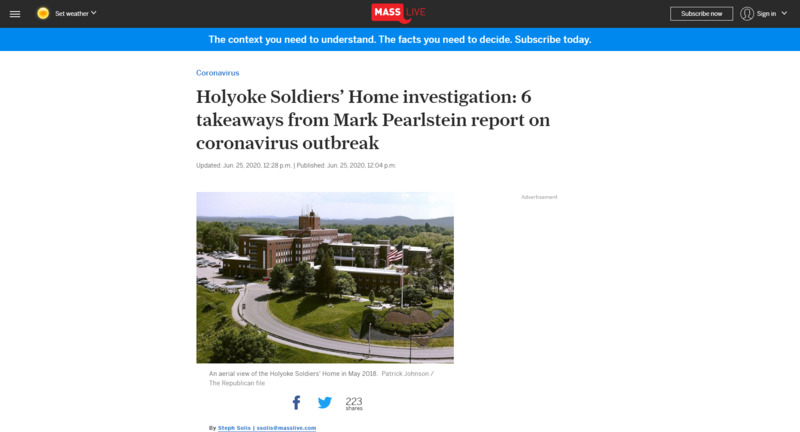
This article comes from MassLive and reports on the major takeaways from a report that documents where the Holyoke Soldiers' Home in Holyoke, Massachusetts, failed in its COVID-19 response.
-
2020-09-08
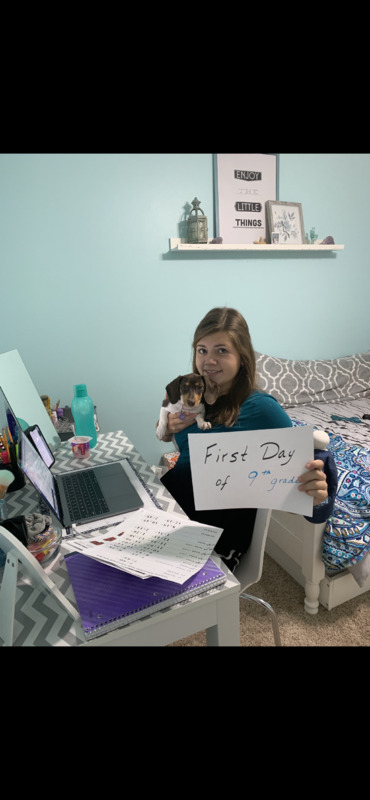
Before the pandemic had hit the United States my family and I had always been on the go between work, school and sports. A father who works crazy shifts a mother who works your typical eight am to five pm shift for her company then going to pick up her children for any after school activity that may have been going on at the time. We had family time but not enough, not like we had during the beginning of the pandemic. Once we were put into lockdown both my sister and I had been stuck at home, no more sports or clubs. While my mom also started working from home and still is today. It was kind of a blessing with the fact she wasn't driving an hour back and forth everyday. But my dad was still working. Even though my father had still been working on his days off, we had played many uno games, my sister and I had also learned how to play scatt a card game. But overall covid did bring us closer as a family, giving us time to really focus on each other. The photo I chose to send in is a photo of my sister on her first day of high school. High school to a ninth grader is already an unknown territory but going to classes through a computer at your desk at home is not ideal. Which I do have to say she handled it like a champ but it was something new, something so scary. From my experience it was unsettling to never know truly when you were going to go back to the classroom. The lack of interaction too just makes things worse. We got better as time went on but the Pandemic definitely had changed things, some things for the best and some for the worst.
-
2020-08-24
I’m in grad school now for the second time. I got my B.A. in 2009, and since it was right after the recession and collapse of the loan market, I panicked about jobs and went straight to an M.A. program. It wasn’t the best fit for me professionally or academically, but I didn’t have the life experience to identify that at the time. However, it was still valuable, and I met some of my best friends and professional connections I maintain to this day. Starting in 2012, I left academia and worked in a variety of jobs and fields before realizing I wanted to engage with archives and public history academically again.
I found out I got into my dream grad program in late January 2020, and I was elated! Almost a decade after leaving my first graduate program, I was ready to start the next step of my educational and professional career. The excitement of a new city, new colleagues and friends, and fresh intellectual challenges awaited. More than anything, I was thrilled that my program wasn’t online, as that is not my preferred mode of learning.
I don’t remember the precise dates, but COVID-19 came onto my radar around then. I know I tracked its progression through Washington state and then its spread to the rest of the country. Finally, it came to my town, and everything shut down. I ended up moving cross-country during the pandemic (another story entirely). Then, horror of horrors, classes began—online. The classes I’d been so excited for were moved to Zoom, my new classmates and colleagues nothing more than little squares. Some of them had pets, which was exciting, but in many ways, it felt like a waste of a year in terms of networking and developing camaraderie.
Shifting to what is essentially a virtual, full-time job was a unique challenge. I wore pajamas most days, which was fun. I read all the advice telling me to put on clothes that I’d wear to the office or to campus, but I struggled to summon the motivation to do so when I knew I wouldn’t be going outside. My schedule was interesting, at least until I got a teaching assistantship gig that required more set hours. (The sleep inversion that occurs when the only things you’re required to be at are evening classes is incredible.)
However, the lack of oversight meant some really great things! For the first time in my life, I was able to develop a reading/writing schedule that worked well for me. I had to, so I did. I was also able to put Netflix on in the background or play podcasts while I worked.
Most importantly, I conquered my unease with online education. While asynchronous courses are still not my preference, over a year of remote learning means that Zoom is old hat. I, an introvert, also have a much easier time reaching out to strangers or new acquaintances. As we’ve met in person over the last month, some of those people have become great friends! While virtual learning and teleworking still aren’t my ideal, I love the new possibilities they offer for more accessible work and educational opportunities.
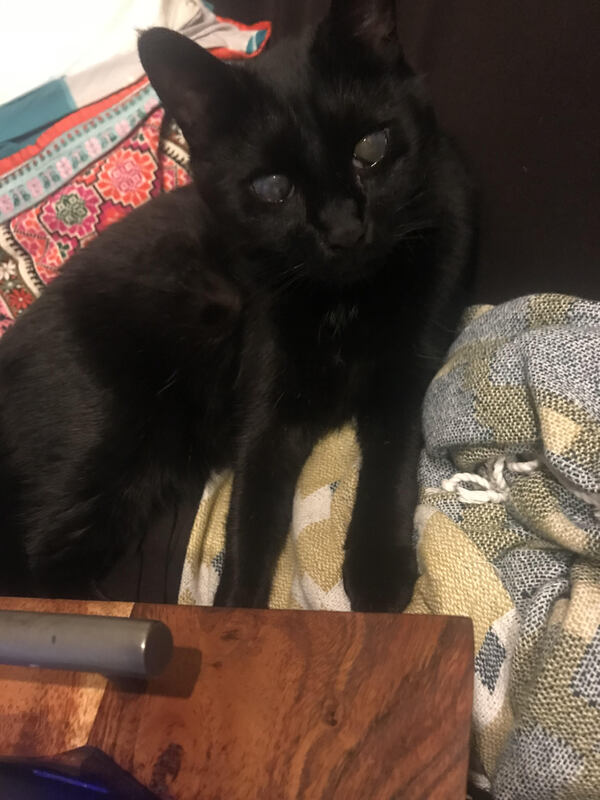
[cat pictures] My coworkers were pretty great, and they miss me a lot now that I’m back working and studying in person. I still see them, but it’s just not the same.
-
2020-04-28
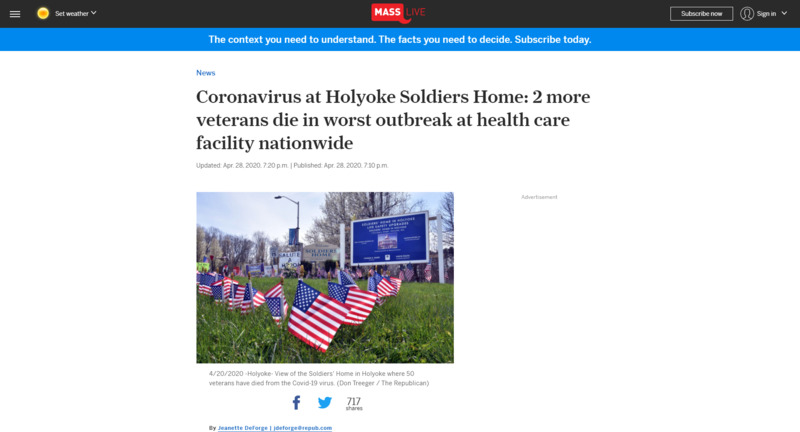
This article, published by MassLive, reports on the rising death count among residents at the Holyoke Soldiers' Home in Holyoke, Massachusetts. Nearly three-quarters of the residents had contracted COVID-19, and about one-third had died from it. The title is evocative of the scale of the tragedy.
-
2020-04-20
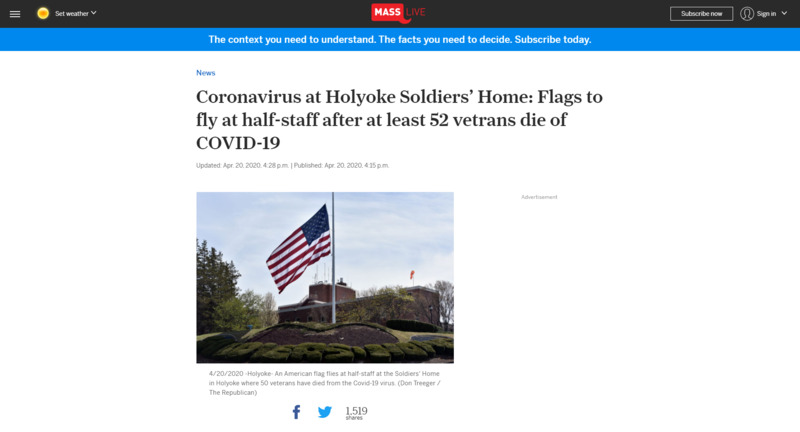
This article, produced by MassLive, reports on Massachusetts Governor Charlie Baker's decision to have flags flown at half-mast at the Holyoke Soldiers' Home in Holyoke, Massachusetts, to commemorate the veterans who had died at the facility from COVID-19.
-
2020-04-06
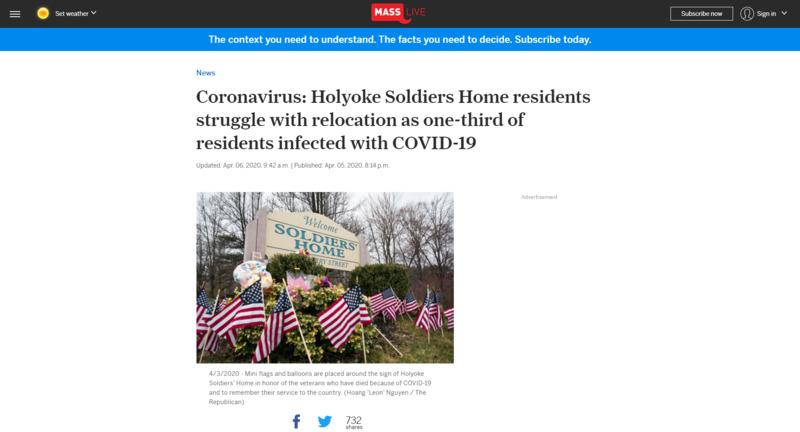
This article produced by MassLive reports on the efforts to relocate residents from the Holyoke Soldiers' Home in Holyoke, Massachusetts, to Holyoke Medical Center in attempt to mitigate the spread of the virus after 76 of the 210 residents had already tested positive. The article also discusses the continued investigation into the COVID-19 situation at the home.
-
2020-04-03
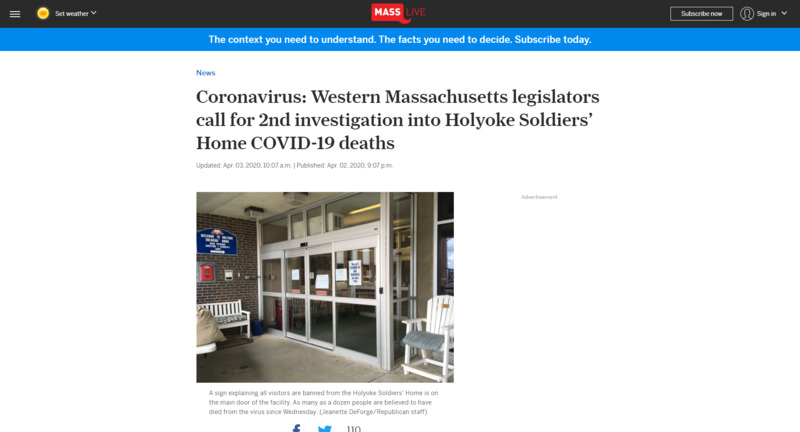
This article published by MassLive reports on local legislatures' desire to issue a second investigation into the COVID-19 response at the Holyoke Soldiers' Home in Holyoke, Massachusetts, in light of the number of deaths among residents and the number of cases among residents and staff.
-
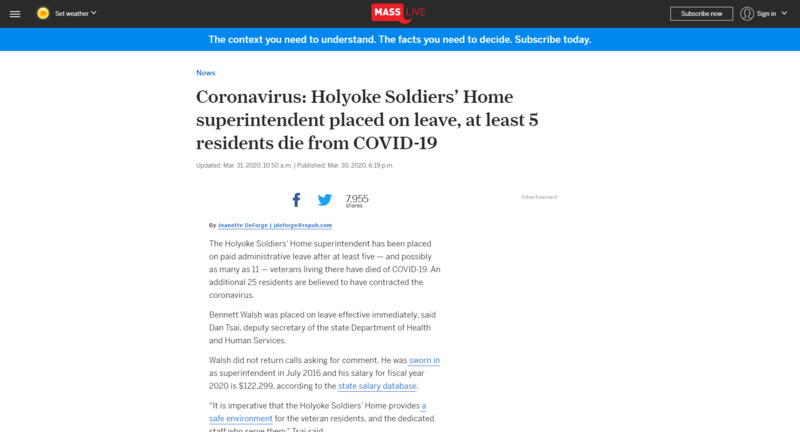
2020-03-31
This article published by MassLive.com reports on the suspension of the superintendent of the Holyoke Soldiers' Home in Holyoke, Massachusetts, after several residents died and numerous other residents and staff members tested positive.
-
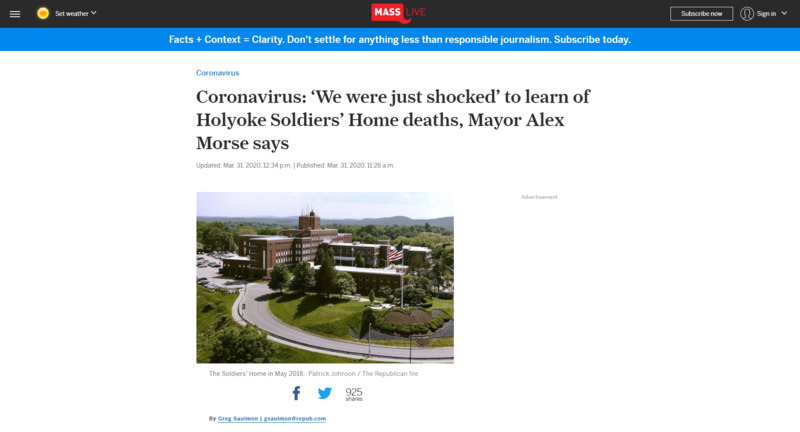
2020-03-31
This article describes Holyoke mayor Alex Morse's reaction when he found out about the magnitude of the COVID-19 situation at the Holyoke Soldiers' Home.
-
2020-03-12
This article appeared on MassLive on March 12, 2020. It discusses the safety precautions that went into effect at the Holyoke Soldiers' Home in Holyoke, Massachusetts. The article acts as context for the tragedy that would unfold at the home within the first few months of the pandemic.
-
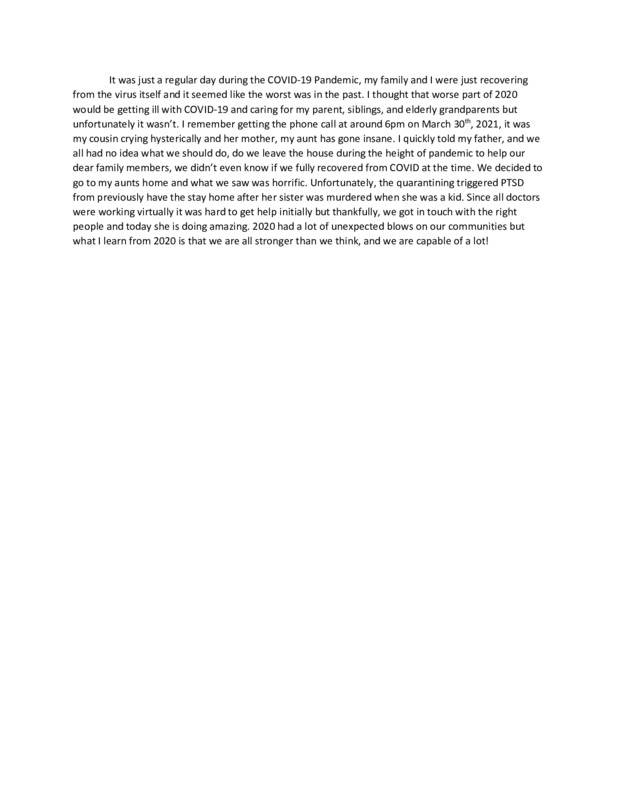
2021-03-30
I'm going to be discussing how the COVID 19 pandemic affected me and my loved ones.
-
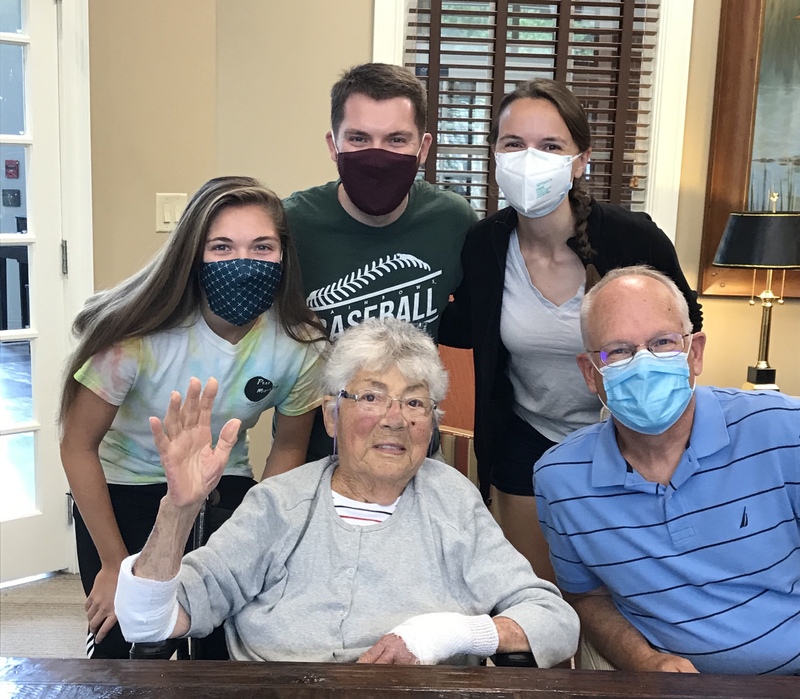
2021-08-28
This photograph is from when my mom, dad, brother, brother's fiancé, and I flew to Georgia to visit my declining grandmother. For my entire life, my grandma, my mom's mom, lived in the next town over, only about seven miles away. However, as she aged and as the isolation from the pandemic set in, my family decided that it would be best for her to move to Georgia to live with my aunt, my mom's sister. Although we tried to take care of my grandma from the start of the pandemic through when she left in October of 2020, we lived in perpetual uncertainty and fear of exposing her to the virus. Every time we had her come over for dinner, we were afraid that we were taking a gamble, especially when the pandemic was just starting. My grandma moved to a care facility in Georgia in April. Since my grandma, my family, and I were all vaccinated, we planned a short trip to make sure we got to see her one more time. Although we were masked and only had a limited amount of time, getting to see us again meant a tremendous amount to my grandma.
-
2020-10-31
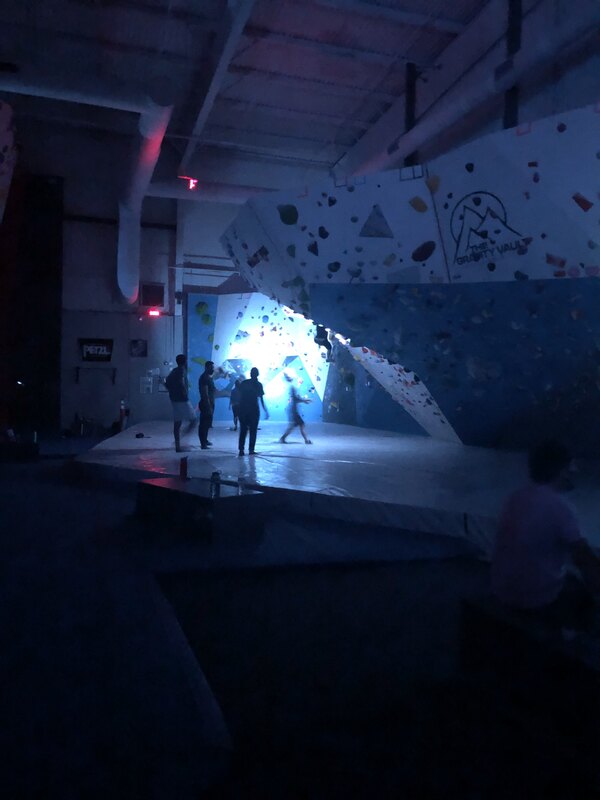
Just prior to the pandemic, I got seriously into rock climbing. For me, not only it was a much more fun way to work out, but it is absolutely a social sport. Everyone at the climbing gym was and continues to be extremely friendly, and you can simply strike up a conversation with anyone by simply asking what routes they are working on so that you can help one another find the most efficient way to reach the top. As all the routes are graded, just watching yourself improve and working on harder routes is an amazing feeling. With the outbreak of the pandemic, however, the gym closed until September, and I felt like such an important piece of my life went missing. While it was hard losing an activity and social outlet like that, I like trying to find silver linings in the difficult times. Even though it took me a while to come to this conclusion, I realized that it took the pandemic and losing it to truly appreciate the people there and sport itself. Ironically, I can almost contribute the pandemic to my continued obsession with climbing, even if it did rip it away from me for a few months.
Attached is a picture of the first event back at the climbing gym, which was a lights-out event for Halloween where you could only use headlamps to see where you were going.
-
2020-11-01
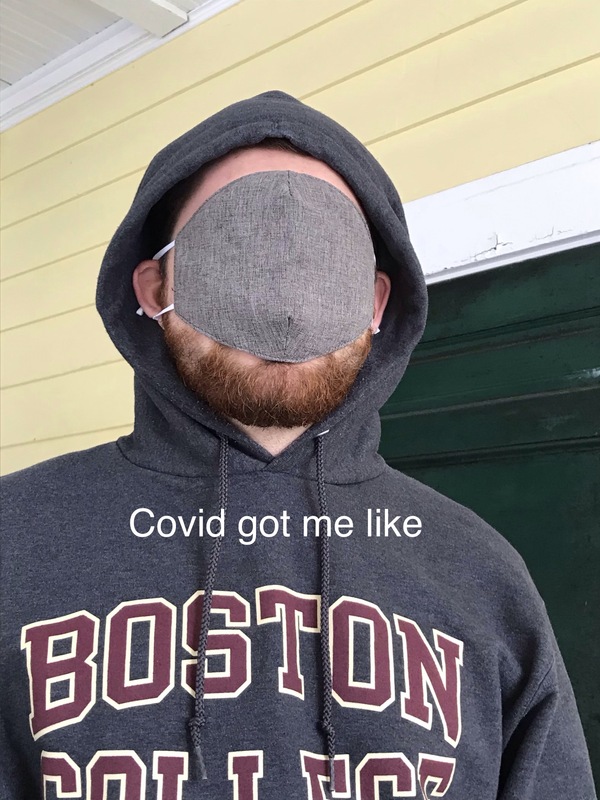
I took this photo of my brother when I went to visit him while he was living in Concord, Massachusetts, and I was studying remotely at home in West Springfield, Massachusetts. We had just come back from visiting Walden Pond for the first time. My brother was living with his best friend's grandfather at the time, and even though my brother did not leave the house much, he still wore a mask inside the house as a precaution. After he finished eating, my brother went to put his mask on again, except he aimed a little high. Thinking it looked funny, I took a picture and made it into a meme. I felt like having the mask cover his entire face was similar to a face-palm or banging one's head against the wall, somehow symbolic of the grind that pandemic life had become.
-
2021-11-24
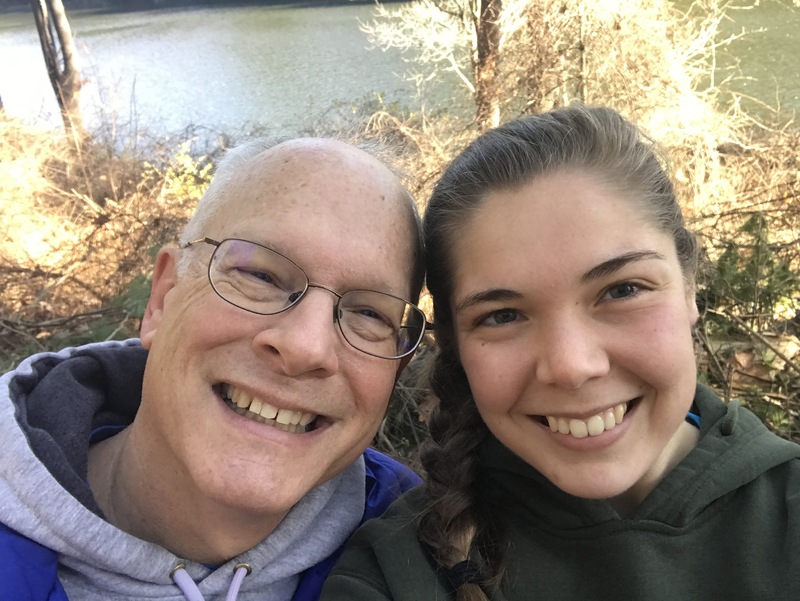
I took this photograph with my dad when we went for a walk one day at Bear Hole, the reservoir in my town. Since the pandemic started, my dad and I would go for walks with each other, exploring new places and talking about life. My dad had recently gotten laid off, and I had made the decision in early October to study remotely instead of on campus, so we both had some extra time on our hands. We had our set of usual places that we would go to walk, but the pandemic allowed us to venture to some new spots. Even though we knew Bear Hole was so close by, neither one of us had gone to explore it much. We would plan our walks around my class and work schedule, being sure that we made time for each other a few times a week. Although making the decision to study remotely was a difficult decision because I was a senior and would be away from my friends and professors, I got to spend time with my dad in a way that we were never able to before.
-
2020-06
Before Covid-19, I only knew the basics of cooking, and for the most part, I stayed away from the kitchen. However, once the lockdowns began, I started to force myself to cook more. I tried to learn new recipes (which my sister usually taught me) and gradually I began to improve my abilities. One of my favorite foods to make now (which I learned in the summer of 2020) was Chicken Tikka Masala.
-
2020-06
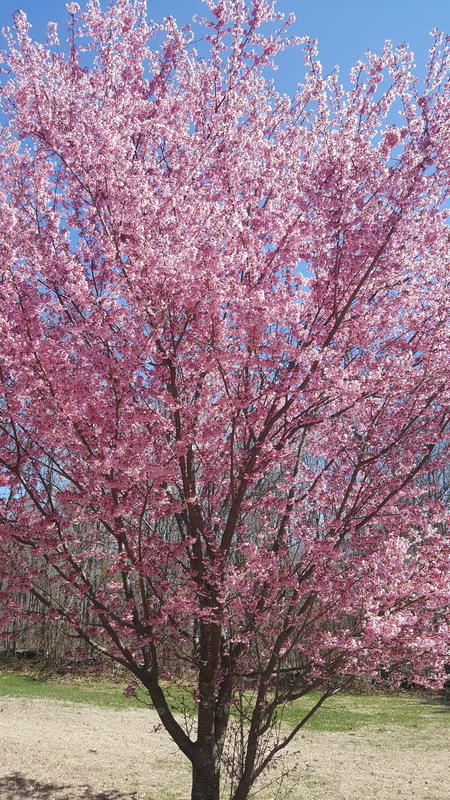
While there were a lot of terrible things that happened as a result of Covid-19, I feel that one positive was humanity's return to nature. With so many places closed down, people were forced to go outside and enjoy forests, beaches, yards, etc. I was one of these people, and I discovered a talent for gardening. I enjoyed gardening before Covid-19, but the hobby really took off during the 2020 lockdowns. I grew potatoes, onions, flowers, herbs- anything that could be planted, I planted!
-
2020-03
I lived in a rural part of Connecticut during the 2020 Covid lockdowns. Despite the widely publicized nature of the pandemic, at least half of the citizens in my town didn't believe the disease was real. There was a real divide over wearing masks and closing down schools/work because many people felt the disease was over-blown, not deadly, or simply wouldn't strike a rural place as hard as a city. While my town didn't suffer as much as places like New York City did, we still had Covid cases and deaths across the county. It was frustrating to live in a rural place during the outbreak, because even though we were "safer," than city-dwellers, nobody took measures to preserve that safety. This mindset continued when vaccines became available, and the latest rage in rural areas is using Ivermectin (horse medicine) instead.
-

2021-08-28
I attended an indigenous festival at the end of August 2021 called Schemitzun. Called the "Feast of Green Corn and Dance," the powwow took place on Mashantucket Pequot grounds and hosted various tribes competing in music and dance. My family and I attended as audience members and we were truly struck by the spirit of the event. The main announcer explained at various points during the festival that this year's powwow was very special, since Covid-19 had canceled the event the year before. He explained that events like Schemitzun keep the indigenous community connected and vibrant, and this year's event was meant to be a celebration of perseverance and survival. I found it incredibly powerful that indigenous communities continue to thrive and grow despite centuries of struggle, and managed to survive the Covid-19 pandemic on top of that.