-
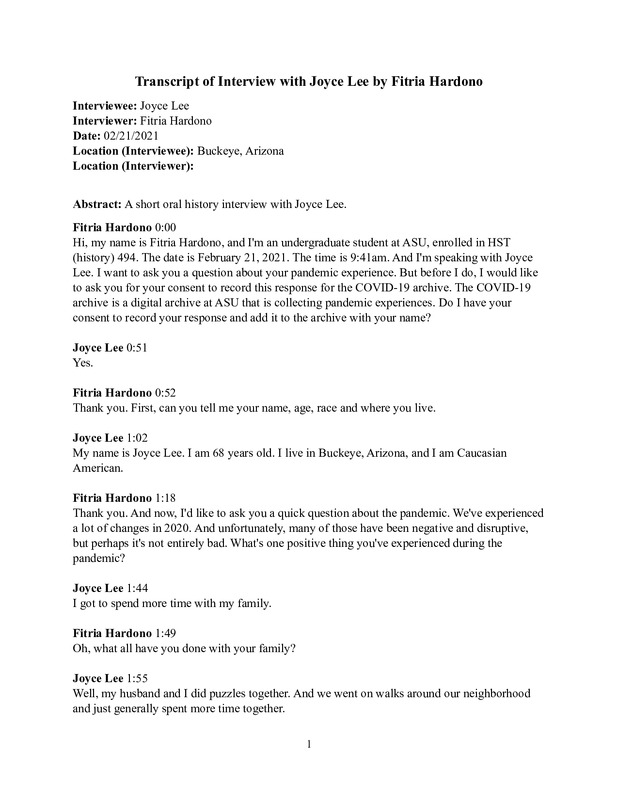
02/21/2021
Mini Oral history interview with Joyce Lee
-
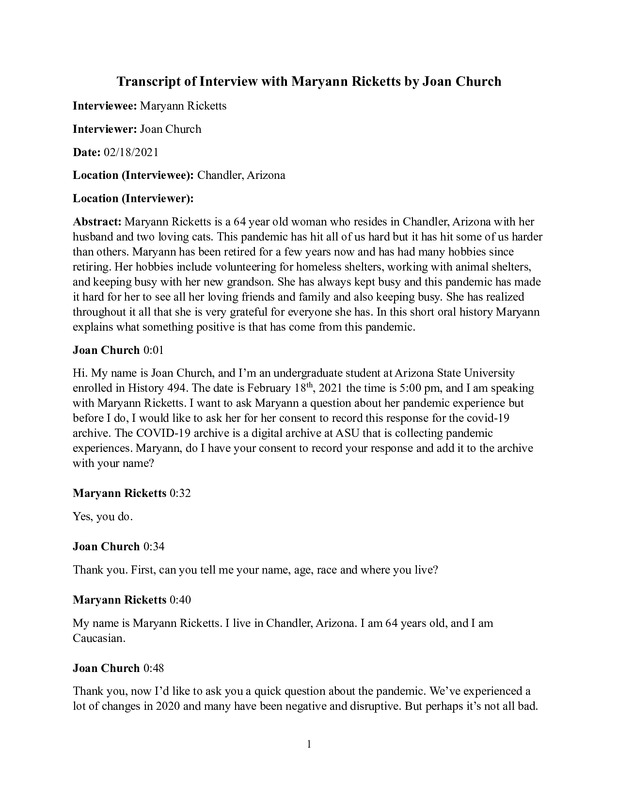
02/18/2021
Maryann Ricketts is a 64 year old woman who resides in Chandler, Arizona with her husband and two loving cats. This pandemic has hit all of us hard but it has hit some of us harder than others. Maryann has been retired for a few years now and has had many hobbies since retiring. Her hobbies include volunteering for homeless shelters, working with animal shelters, and keeping busy with her new grandson. She has always kept busy and this pandemic has made it hard for her to see all her loving friends and family and also keeping busy. She has realized throughout it all that she is very grateful for everyone she has. In this short oral history Maryann explains what something positive is that has come from this pandemic.
-
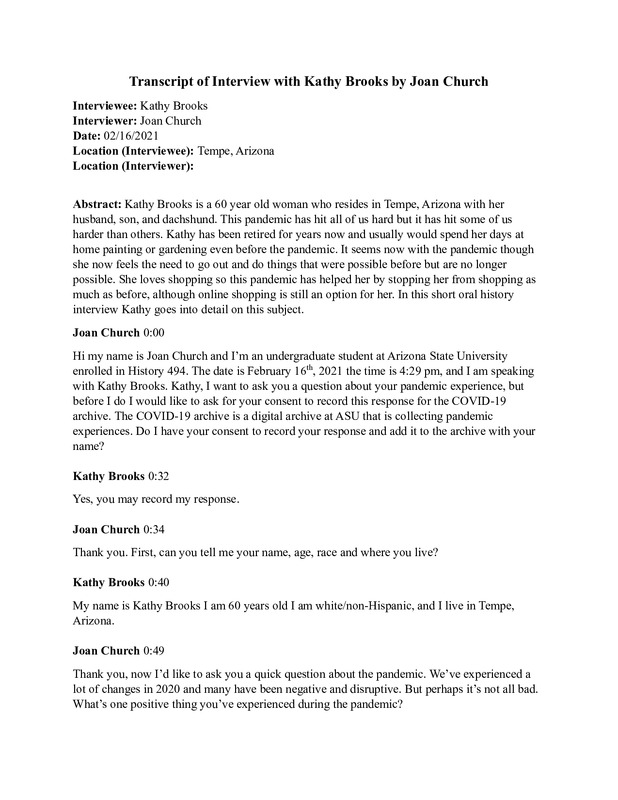
02/16/2021
Kathy Brooks is a 60 year old woman who resides in Tempe, Arizona with her husband, son, and dachshund. This pandemic has hit all of us hard but it has hit some of us harder than others. Kathy has been retired for years now and usually would spend her days at home painting or gardening even before the pandemic. It seems now with the pandemic though she now feels the need to go out and do things that were possible before but are no longer possible. She loves shopping so this pandemic has helped her by stopping her from shopping as much as before, although online shopping is still an option for her. In this short oral history interview Kathy goes into detail on this subject.
-
02/21/2021
At 0930 hours on 02-21-2021, I asked my stepmother for her perspective a positive outcome of the COVID-19 pandemic.
-
2020-03-15
This story is an ongoing experience for me as my family and I try our best to continue bearing with the lockdown. I wanted to share how things are at home because not every family is taking this situation with the same positivity.
-
2020-04-05
Funeral home in Newfoundland was linked to a superspreader event
-
02/21/2021
On 02-21-2021, I sat down with my mother-in-law to ask about the positive experiences she had since the beginning of the COVID-19 pandemic.
-
2020-03-24
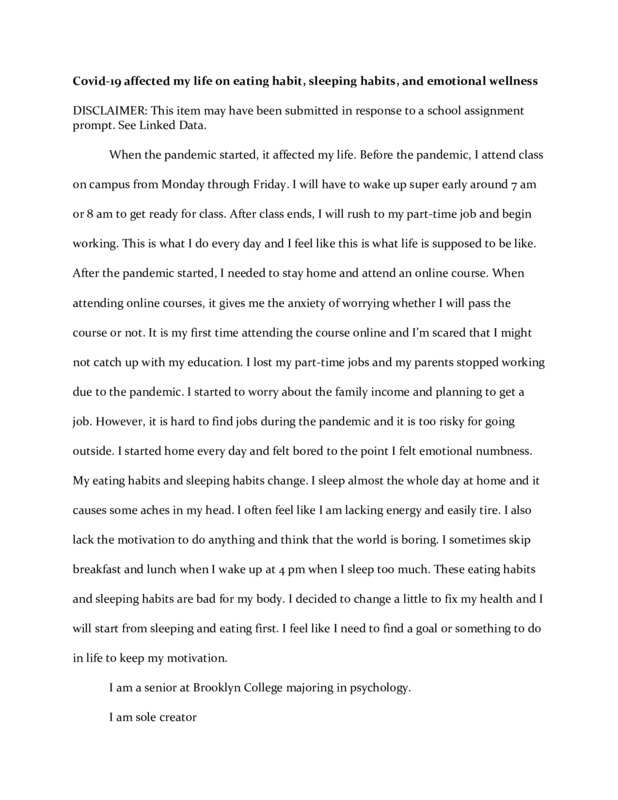
When the pandemic started, it affected my life. Before the pandemic, I attend class on campus from Monday through Friday. I will have to wake up super early around 7 am or 8 am to get ready for class. After class ends, I will rush to my part-time job and begin working. This is what I do every day and I feel like this is what life is supposed to be like. After the pandemic started, I needed to stay home and attend an online course. When attending online courses, it gives me the anxiety of worrying whether I will pass the course or not. It is my first time attending the course online and I’m scared that I might not catch up with my education. I lost my part-time jobs and my parents stopped working due to the pandemic. I started to worry about the family income and planning to get a job. However, it is hard to find jobs during the pandemic and it is too risky for going outside. I started home every day and felt bored to the point I felt emotional numbness. My eating habits and sleeping habits change. I sleep almost the whole day at home and it causes some aches in my head. I often feel like I am lacking energy and easily tire. I also lack the motivation to do anything and think that the world is boring. I sometimes skip breakfast and lunch when I wake up at 4 pm when I sleep too much. These eating habits and sleeping habits are bad for my body. I decided to change a little to fix my health and I will start from sleeping and eating first. I feel like I need to find a goal or something to do in life to keep my motivation.
-
02/17/2021
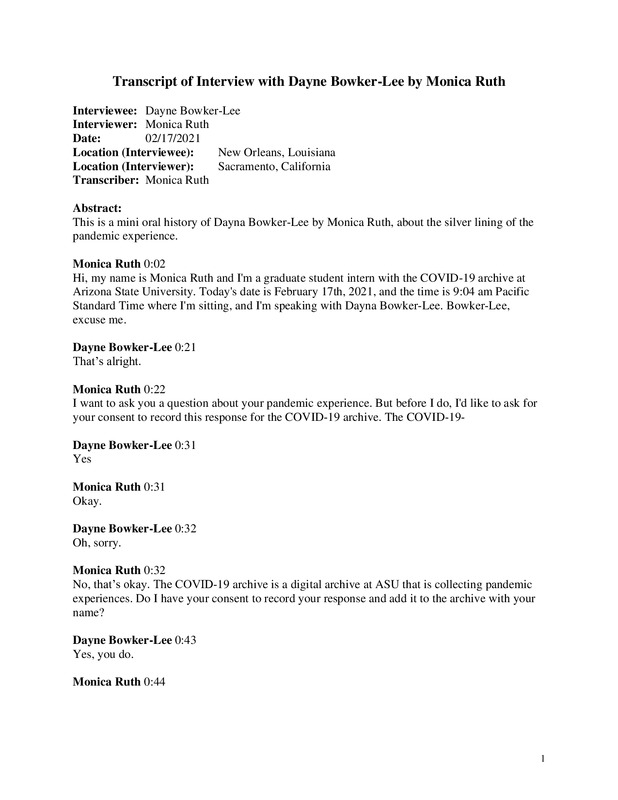
This is a mini oral history of Dayna Bowker-Lee by Monica Ruth, about the silver lining of the pandemic experience.
-
02/19/2021
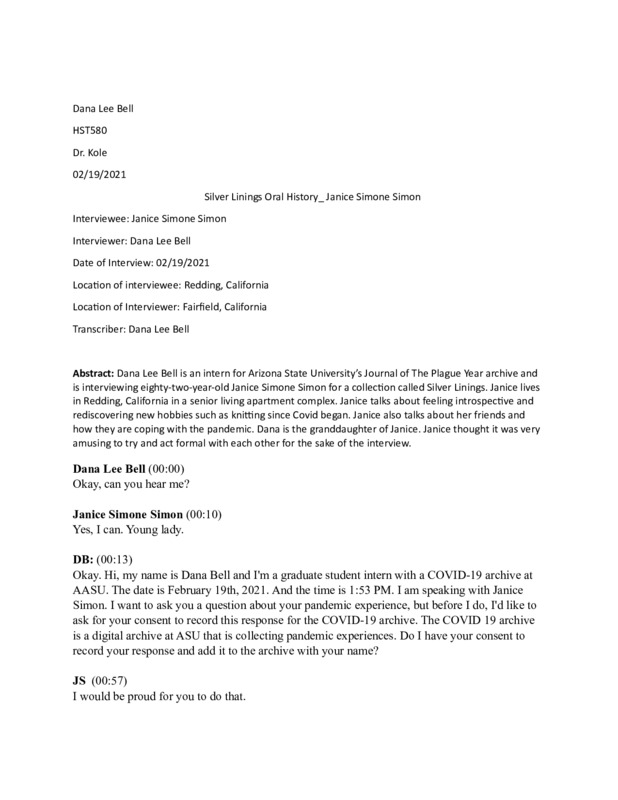
Silver Linings Oral History with Janice Simone Simon
-
2020-02-19
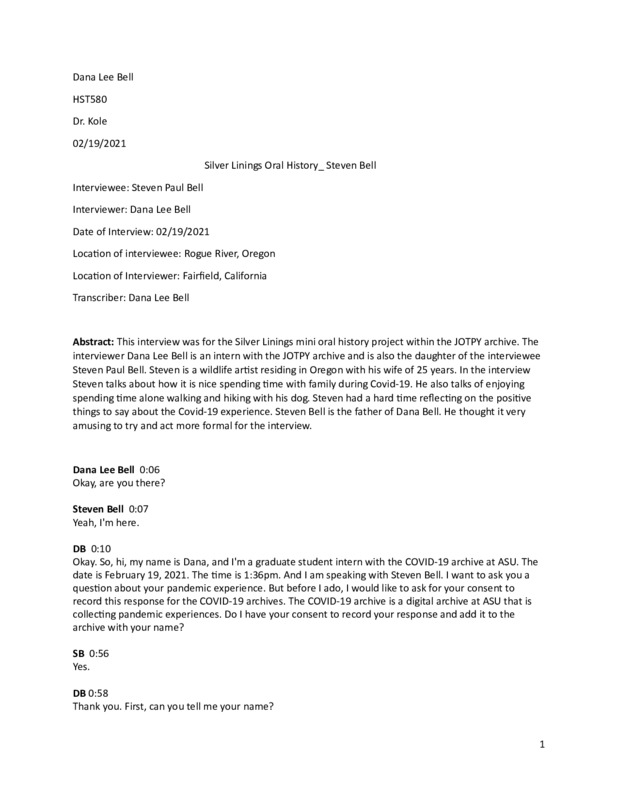
Silver Linings Oral History_ Steven Bell
Interviewee: Steven Paul Bell
Interviewer: Dana Lee Bell
Date of Interview: 02/19/2021
Location of interviewee: Rogue River, Oregon
Location of Interviewer: Fairfield, California
Transcriber: Dana Lee Bell
Abstract: This interview was for the Silver Linings mini oral history project within the JOTPY archive. The interviewer Dana Lee Bell is an intern with the JOTPY archive and is also the daughter of the interviewee Steven Paul Bell. Steven is a wildlife artist residing in Oregon with his wife of 25 years. In the interview Steven talks about how it is nice spending time with family during Covid-19. He also talks of enjoying spending time alone walking and hiking with his dog. Steven had a hard time reflecting on the positive things to say about the Covid-19 experience. Steven Bell is the father of Dana Bell. He thought it very amusing to try and act more formal for the interview.
-
2021-02-20
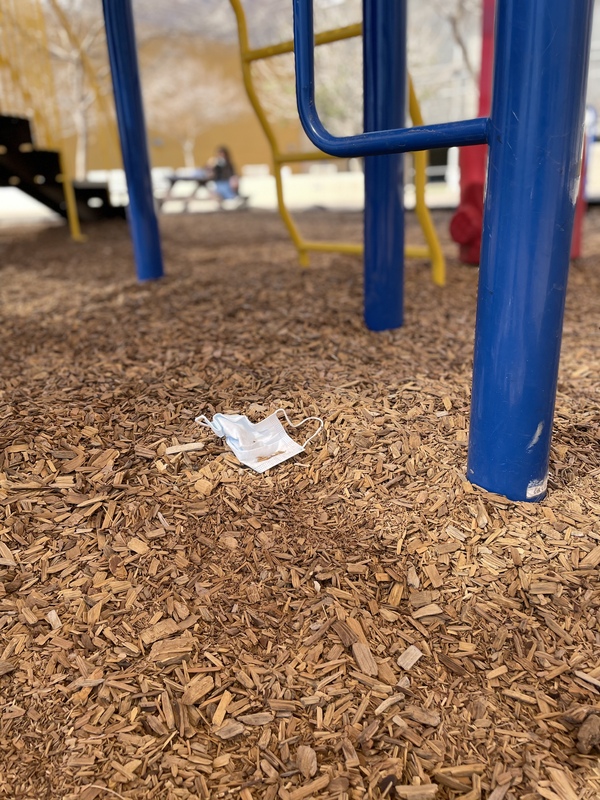
Mask trash on the playground at the Kroc Center in Phoenix, AZ
-
2021-02-20
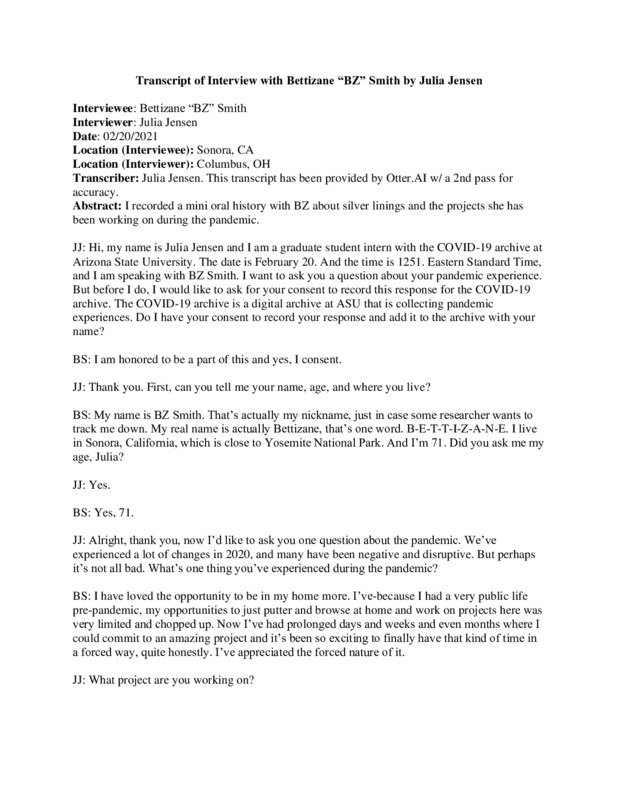
I recorded a mini oral history with BZ about silver linings and the projects she has been working on during the pandemic.
-
02/20/2021
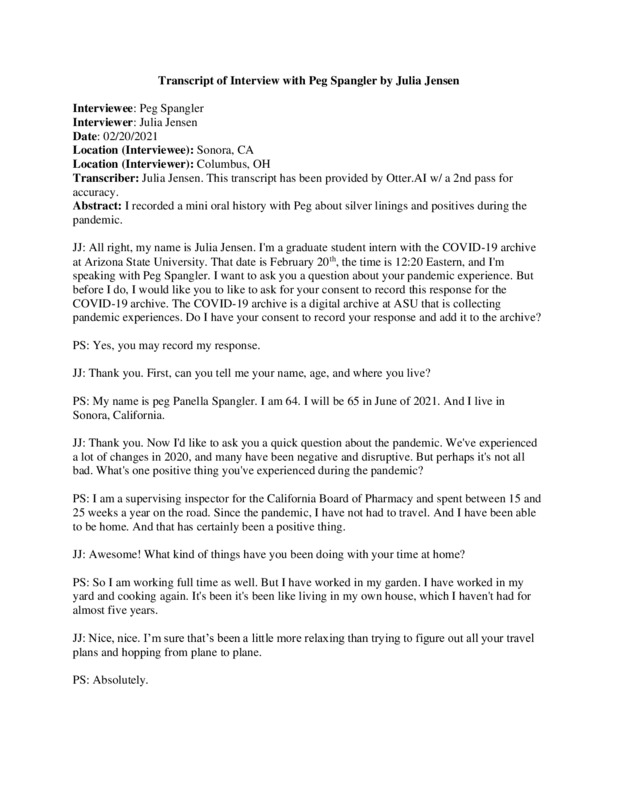
I recorded a mini oral history with Peg about silver linings and positives during the pandemic.
-
2020-11-15
In November 2020 I began reading Kirmen Uribe's novel Bilbao New York Bilbao while in Bilbao, Spain with my partner. We were there to care for his father who is suffering through the late stages of dementia and to spend time with his family who he had not seen in a year. Uribe's novel is important to my plague year for many reasons. He talks about the split mind being from Bilbao yet living in New York. My partner is from Bilbao, and the novel helps me understand his mindset. But Uribe also talks about the ways humans remember and carry pain and mark loss. Unlike trees who carry their growth in their rings or fish who mark time through their scales, humans mark time and pain through simply marking time. He notes that fish grow their entire lives, but humans start dying and shrinking from the moment we hit maturity. Growth, it seems is only for the fishes.
My plague year was marked by my entire partner's family getting the virus, a story of gradual family loss, one of borders, and of course a presidential election. The pandemic closed not only schools and bars but also borders and our chances to move between Spain and the U.S. in any straightforward way. When we began planning the trip in the summer of 2020, we came up against all of the travel bans in place. My Spanish partner could get to Spain, but I could not. So, the research began, and I spent more time on Facebook groups than any person should be allowed to. We knew we weren't going to Spain just to have fun. We needed to take care of his father, but it felt like we were doing something wrong. Love, it turns out, knows no national borders, but border agencies certainly do. To get to Spain, he just hopped a plane to Madrid. I had to go through Lisbon, London, and Paris before arriving there. On the way back, I hopped on a plane flying directly to New York. He had to quarantine in Mexico for two weeks.
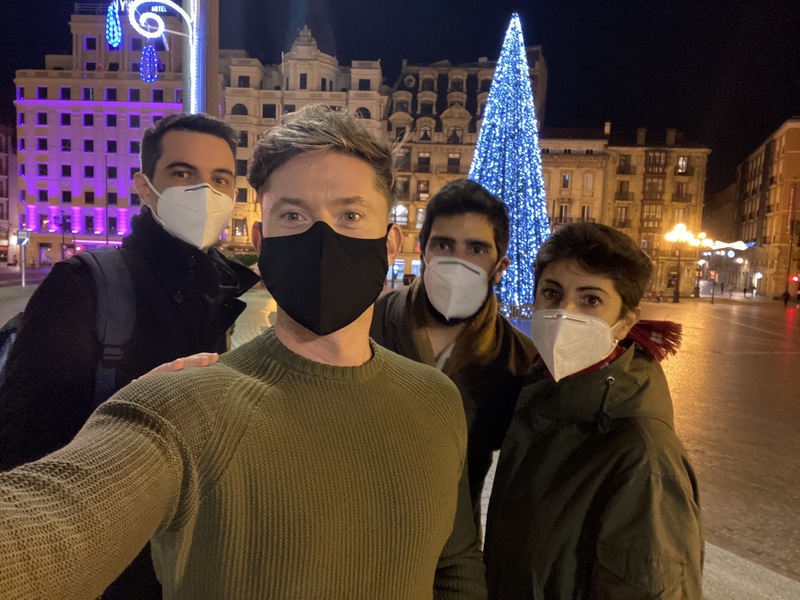
Our stay there was marked by his father's continued decline but also moments of joy. The picture here captures one of those. As a U.S. citizen, his Spanish family and friends are always asking me about U.S. culture and practices. One of my tasks in Spain was to cook a big American Thanksgiving dinner, which I did with gusto. I made all the things: turkey, sweet potatoes, green bean casserole, mashed potatoes, cranberry sauce, and pecan pie. I tried to explain the significance of each dish while realizing how insignificant and somewhat gross Thanksgiving foods are. But we had fun and spent the night after the meal singing "American" songs and discussing art--his cousins are all artists.
That night, one of his friends recommended I read Uribe's novel. So, I ordered it that night. It is a lonely book of loss and thinking about how art marks that loss. I think that is how we marked our time in Spain contemplating everything we had lost in 2020 and everything we were gradually losing. We spent time at the Guggenheim and Fine Arts museums in Bilbao. In fact, we waited for my partner's COVID test while browsing the Fine Arts Museum. It turned out positive, and we separated at the point for two weeks.
But the picture here represents a moment of joy as we said goodnight to my partner's cousins after the Thanksgiving weekend. I hope for all the clichés of going back to normalcy. And we probably will get back to the "before times" given humans' inability to learn from any of their experiences. But I am one of those humans and just want to sit at a bar and talk to strangers again.
When that normalcy returns, I will look back at this picture and remember Uribe's words: "As with the growth rings of fishes, terrible events stay on in our memory, mark our life, until they become a measure of time. Happy days go fast, on the other hand--too fast--and we forget them quickly." Maybe Uribe is wrong, though. I will not be forgetting this day anytime soon.
-
2021-02-20
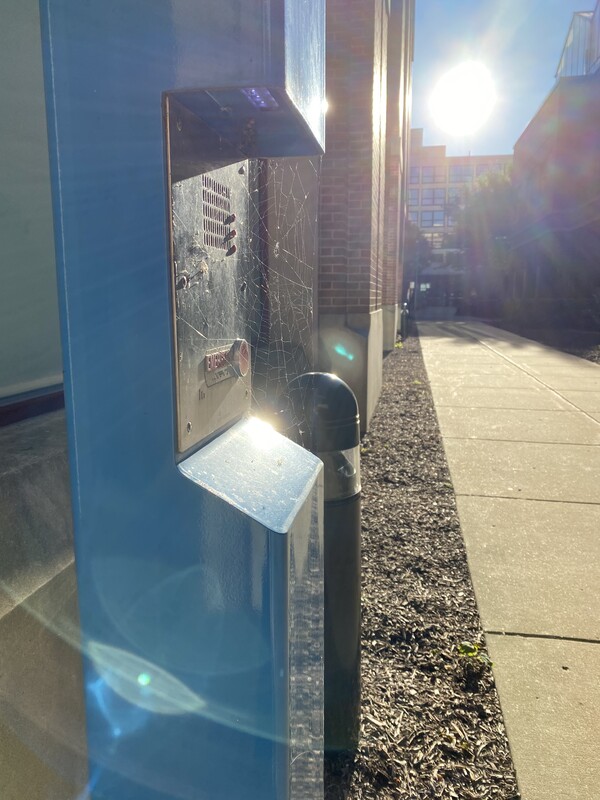
It was an August afternoon, the sidewalks I walked were abandoned. I passed this safety light on DePaul University’s campus, which based on the spider web delicately entwined within, had not been touched in some time. A bug is trapped in the middle by a force they couldn’t see, till it was all too late. This bug and I were clearly friends. My life, like theirs, had been frozen in place. Everything I aimed to do, suspended for another time. Helpless to do anything, and worst of all, even seeking safety and refuge in friends and family, made a risk.
-
2021-02-20
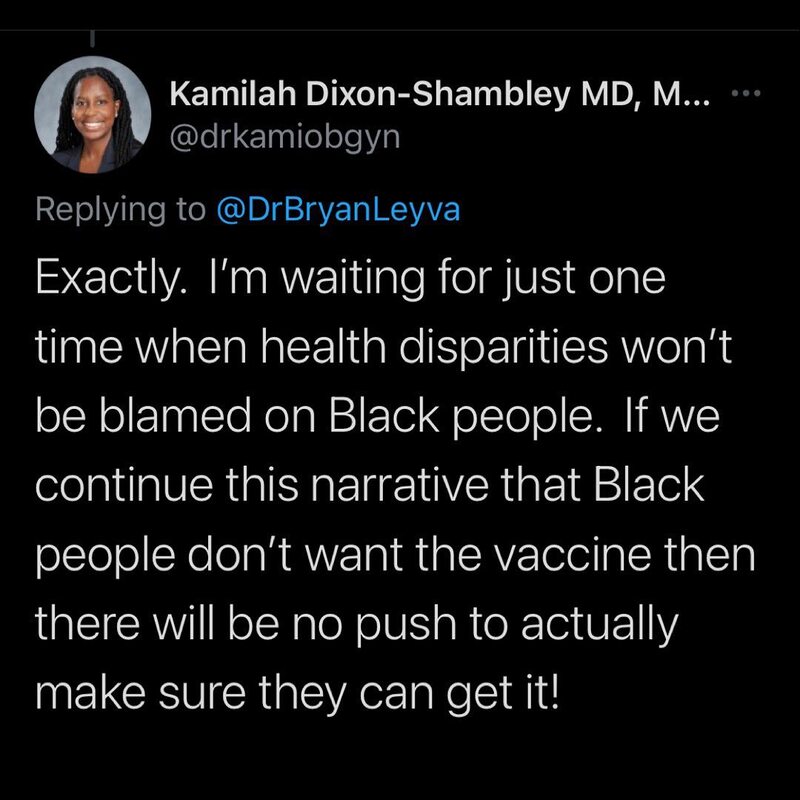
“Vaccine hesitance among Black people is real but it is NOT the reason why only FIVE PERCENT of vaccinations have gone to the Black community.” This is what the original poster wrote in their social media caption on Instagram.
Many people are justifiably concerned with the current vaccine rollout and accessibility. Multiple people have taken to their respective social media accounts on Twitter to voice their thoughts about it. Vaccine hesitancy was acknowledged by handle @dch1309 as one reason for people not getting vaccinated. However, it seems that this reason is being generalized throughout the entire POC population. In reality, folks like handle @allysonxgill had the impossible task of booking an appointment to get vaccines. Meanwhile, handle @m_jones490 shared their significant other’s experience with an already-booked appointment, yet the site still had organization issues.
I think handle @claudiaalick wrote the core of what I want to say; “The United States must always blame Black people for their own suffering." From these multiple accounts, it’s clear to me that there seems to be an active mission the organizers (government) are on that keep people of color away from even the option of getting vaccinated. Vaccination sites are disorganized and inaccessible to these folks. This happens while non-POC folks fault POC folks for not getting vaccinated at all; victim-blaming at its finest.
-
2021-02-20
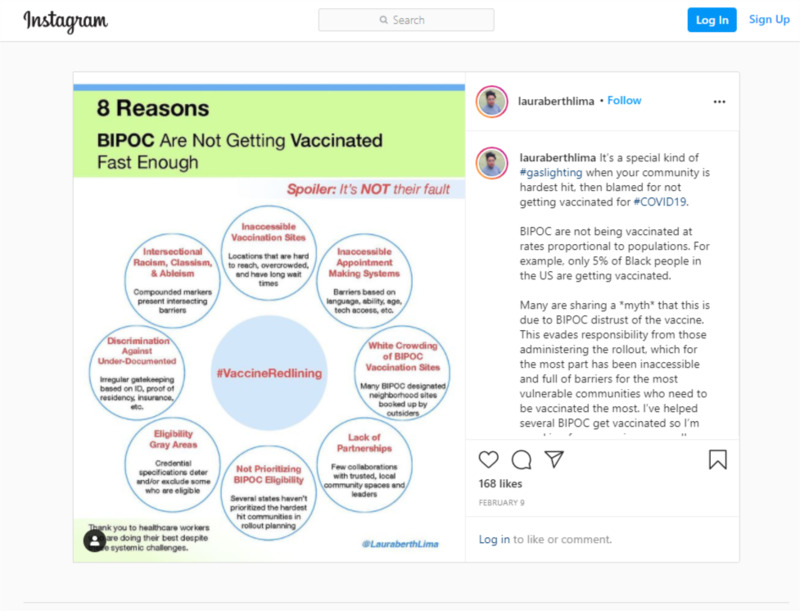
The following social media post on Instagram by handle @lauraberthlima is an infographic of 8 reasons why BIPOC are not getting vaccinated fast enough. The original poster made it clear that it’s a myth how BIPOC aren’t getting vaccinated due to their distrust, and that it’s actually the difficulty in getting the vaccine. There are a few reasons that are easily guessed, such as inaccessibility and plain racism. However, the graphic and caption explain the reasons a bit more. That includes how the BIPOC-designated sites for vaccinations are being booked by non-BIPOC folks; leaving the BIPOC population without a place to get vaccinated.
Many of the posts on this archive can tell you about the vaccine rollout, how there are goals for herd immunity, and that some people have been getting vaccinated by now. This social media post tells me that BIPOC are not being considered for vaccination, and that the system of vaccine rollout right now is less than ideal. It’s as if the people in charge of the rollout are actively assuring that BIPOC folks do not get the COVID-19 vaccine, and are keeping them at risk by doing so. It’s dangerous and irresponsible, and such posts should be shared to as many people as possible.
-
2021-02-18
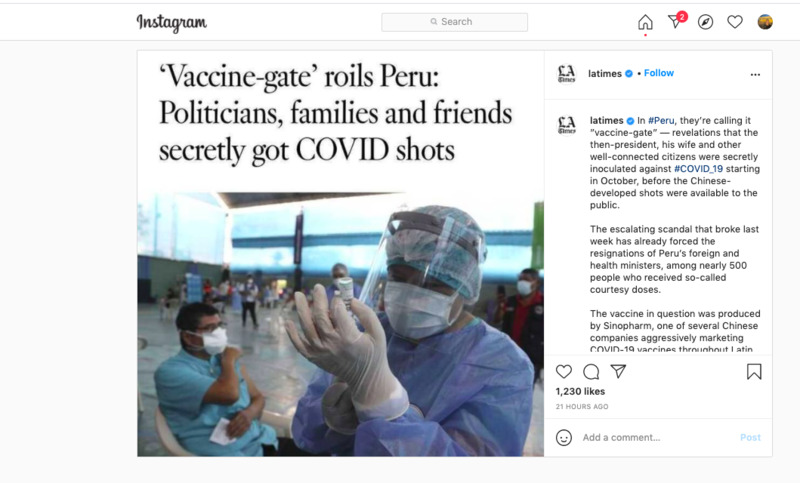
Peru's president, wife, and other well-connected politicians were getting the COVID-19 vaccine back in October, provided by the Chinese company Sinopharm. The vaccines were distributed before the vaccine was publically available, and some high-level officials have resigned.
-
2021-02-19
As a student in my last semester in Brooklyn college, I was looking forward to an easy semester with electives since I was done with all of my major classes. However, a downfall for me was that there was a very interesting internship which I wanted to proceed with but couldn’t because the program was no longer available because of budget issues that were caused by the coronavirus. This internship was going to provide me with an insight of what my career will look like but that never happened.
As an employee of the city of New York, I was still required to work in some form. For example, instead of coming to work physically we transformed our workplace to “zoom” meeting where our work would be done in 2-4 hours and we would still get paid for 8 hours. I saw this as an opportunity to take advantage of since I heard other employees who requested to still show up physically and were dropping like flies with the corona virus, one after another. However, mid-year, around June or July, employees were required to help out in other agencies such as the 311 center because of the increase of food shortages and other aid citizens needed. Eventually, in September we were allowed to go back to work physically – something I was looking forward to since I was more comfortable being where I knew the place and the people.
Mentally and physically, COVID 19 prevented me and many others from staying physically active which led to me gaining unhealthy weight. It was a nonstop binge of eating and just sitting down. Granted, there were opportunities to go out for a walk or work out in the park – but those were chances that I wasn’t going to take because I knew I have a mother with underlying conditions which I had to do everything to prevent her from getting the virus. One thing that I did learn to do during these times is to cut and trim my own hair. Also, this was a perfect time for me to enhance my skills in freehand sketching since thats something I'm good at.
Nevertheless, COVID 19 was an experience like no other that everyone had to grow through, and we continue to just learn and grow from it.
-
2021-02-19
Calorimetry is my least favorite part of chemistry but it usually can have very interesting applications in regard to shower thoughts, which I get a lot since I am sitting at home just thinking in my thoughts day by day. One day I was thinking about whether or not sugar was more powerful than C4 due to a MinuteEarth video saying sugar had a higher J/kg ratio than TNT so I looked into it. I found an online source saying it was 3 * 10^6 joules per pound released in an explosion. So what I did next looked at the caloric content of 1 gram of sugar: 4 calories, which in scientific terms is 4 kilocalories (our colloquial use of calorie is actually 1 kilocalorie) and then 4 kCal was translated into joules which is about 16736 joules per one gram.
453.9 grams of sugar are in one pound of sugar so then I multiplied 453.9 grams by 16736 J/g to get the number of joules stored in one pound of sugar. It equals 7.59128224 *10^6, more than double, almost triple the energy of the same amount of C4 that could be released by sugar if in the right scenario.
I was not surprised at the number but I wanted to see some real-life examples of how sugar, in the right scenarios, could possibly unleash it's hellish powers.
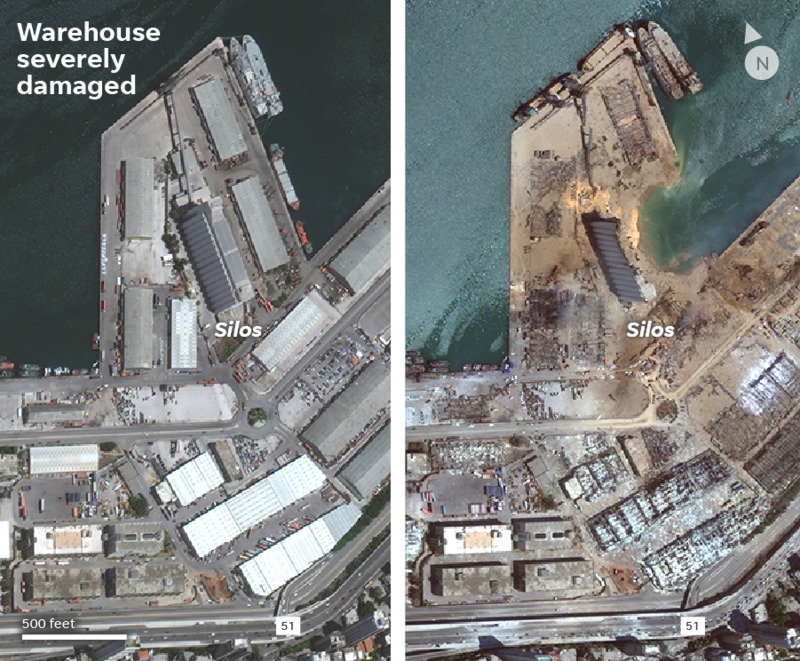
The attached photo is from a 2008 sugar factory explosion in Georgia, the sugar was suspended in small particles throughout the air which is the prime capability for explosions, and boy does it look strong. 14 people died and 36 were injured in that incident. Just something to think about the next time you are baking.
-
2021-02-19
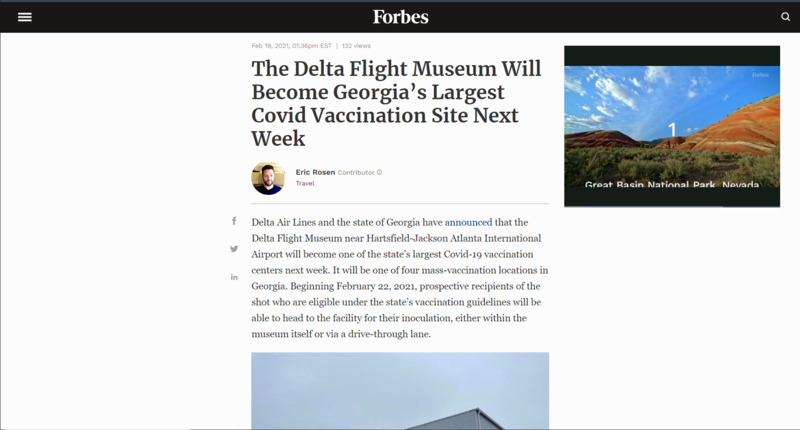
The state of Georgia has announced that they are partnering with Delta Air Lines to turn the Delta Flight Museum into a vaccination center. The center will be one of four major vaccination centers in Georgia. Vaccinations will be offered through drive-thru and walk-up.
-
2021-02-19
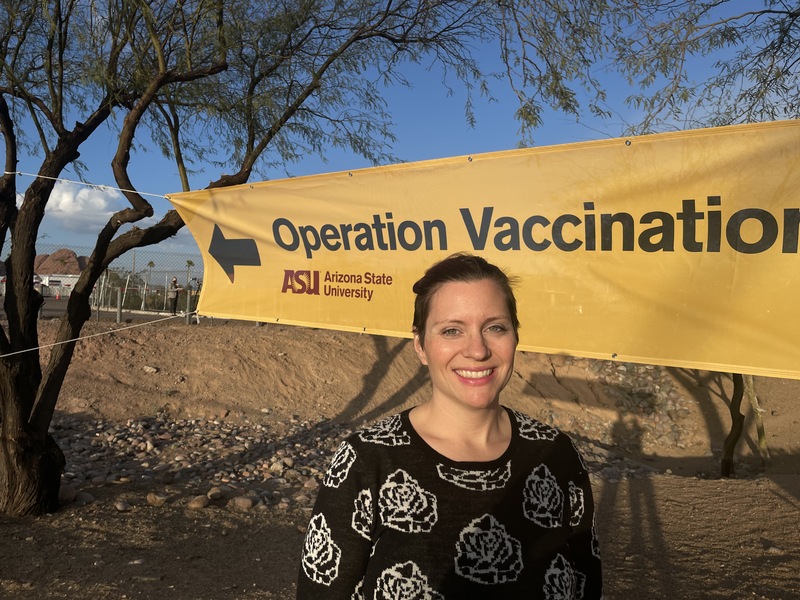
ASU is now vaccinating people on campus. Members of the ASU community receive an email when they are eligible. I am eligible and have tried making an appointment twice, but the appointments are always full. After you get a vaccine, employees are supposed to upload a copy of their vacine to an ASU website.
-
2021-02-18
I moved into a place that is walking distance to the famous Trader Joe's. While I don't necessarily buy into the hype and cult-like fanbase around it (there is an entire subreddit dedicated to just posting about things people hauled from Trader Joe's!), I definitely understand the appeal. Even with COVID, the employees are still chipper and friendly as they say. My Trader Joe's is located right next to my university, and I imagine it gets a lot of foot traffic every day. Every time I go, while not necessarily always packed, the store always has people milling around. Perhaps the small store size and narrow aisles make it seem busier than it already is.
Despite this, the store is reasonably socially distanced, and everyone wears a mask. There are employees stationed at almost every part of the store, including the entrance, so safety precautions are well maintained.
With its vast assortment of unique products, Trader Joe's will still be overwhelming to me, but I look forward to exploring more of the private-label brand.
-
2021-02-11
Looking through the oral history section of JOTPY, I noticed a few recordings of interviews. This got me thinking about oral history and its similarities to journalism and the work journalists do. I then started thinking about how journalists and historical societies could work together to keep oral histories and newspapers. Could there be a way for journalists to get the correct permission from their interviewees to have their recorded interviews be put into the historical society of the area where they’re working?
I was thinking of my time at a small-town newspaper in a rural area. What if my interviews with the local people and the local government officials who aren’t necessarily big-names were put into the archive to help fill the space? Could these interviews help provide a bigger picture of the town and the way it worked during this timeframe? Could they fill a “silence” these historical societies and their archives have? I also recorded town hall meetings and school board meetings almost every week. These meetings are recorded, but often in written form by a secretary. I was recording these events via phone/recording device (actual audio). The work I was doing (the work a journalist does) offers another medium for the archive. I think this would be an interesting interdisciplinary project, especially within rural areas.
And what about now? The move towards online meetings and discussion due to the pandemic allows more accessibility to these board meetings or interviews. But are they being archived at the local level? Private meetings are a bit iffy on permissions and accessibilities, but what about those meetings open to the public? Are they being recorded and then placed where others can access it, and then is the local town historian or historical society archiving it as well? If they are, how are they doing it?
-
2021-02-18
While I am grateful and privileged enough to have quarantined at home with my family, it was certainly frustrating. Once I had conquered my first taste of online learning all I had ahead of me was an uncertain and potentially endless summer. As someone who is a high-risk individual, I didn't feel comfortable going back to my summer job in retail immediately. Thankfully, both of my parents were able to continue to work and I was able to stay home. Being able to stay home for the summer and relax in my hammock most days was unsettlingly different than how others experienced this past summer. I regret not better using my free time to help those that lost jobs and housing and support, while I still had mine. Shockingly the gleam of my extended vacation wore off pretty quickly with my parents. When my parents finally got fed up with me drinking an afternoon coffee in my backyard every day they told me I had better find something productive to keep busy. After sending an unbelievable amount of e-mails and a couple of phone calls with some busy executives I landed an under-the-table research internship. The only issue? Not being able to research through their physical archives. Go figure. While my research wasn't extensive it did keep me fairly busy for my remaining time at home. My early retirement this past summer was a substantial setback in accordance with my previous plans, but it was thoroughly enjoyable.
-
2020-08-05
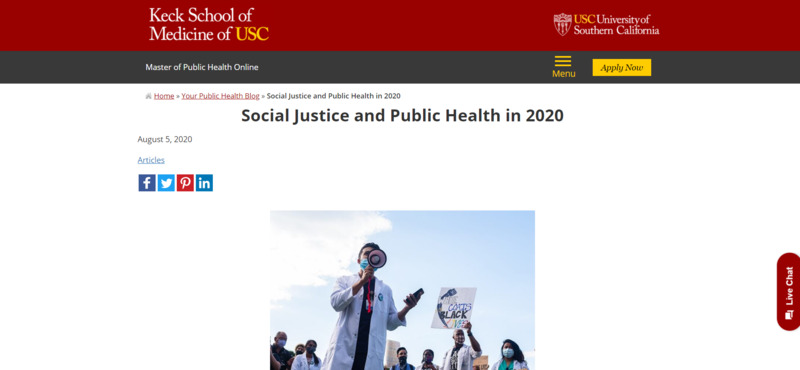
From the article: The COVID-19 pandemic, caused by the spread of the novel coronavirus, has created an unexpected and unprecedented lifestyle shift for many people across the globe. Several months into the pandemic, the public has been exposed to a number of issues they might not have previously considered or thought possible, from hospitals rapidly reaching capacity and the lack of personal protective equipment (PPE) to the mental and social challenges of physical distancing and being quarantined.
-
2020-04-17
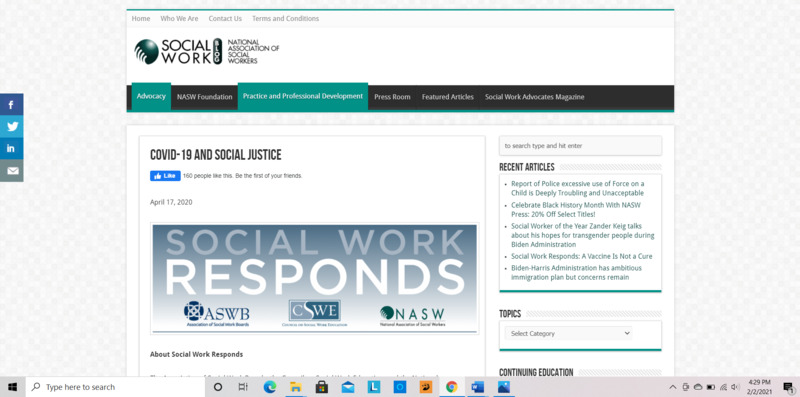
From the article: The COVID-19 pandemic is a health and mental health crisis, to be sure. But it is also a crisis of social injustice, inequitably affecting vulnerable and marginalized populations that include, among others, individuals who earn low incomes, or are incarcerated, homeless, in foster care, over 65 (especially those in long-term care facilities), people of color, or undocumented. Social work practitioners, educators, and policy makers are working to address the needs of these populations despite the unpredictability of the virus’s secondary impact on systems.
-
2020-11-10
From the article: Economic shocks from the pandemic have widened existing inequities around the world, leading to calls for greater social justice in dealing with this health threat.
Poorer people, minorities, and women are suffering disproportionately from growing health, housing, income, and education gaps under measures to contain COVID-19 that could set them back for years to come.
To fund programs to address the problem, governments, supranationals, and corporations, among others, have accelerated issuance of sustainable instruments--including social bonds, where issuance jumped nearly four times so far this year to US$71.9 billion from the 2019 level.
We think the sustainable debt market, partly because of the rapid rise in social bond issuance, could exceed $500 billion this year.
-
2021
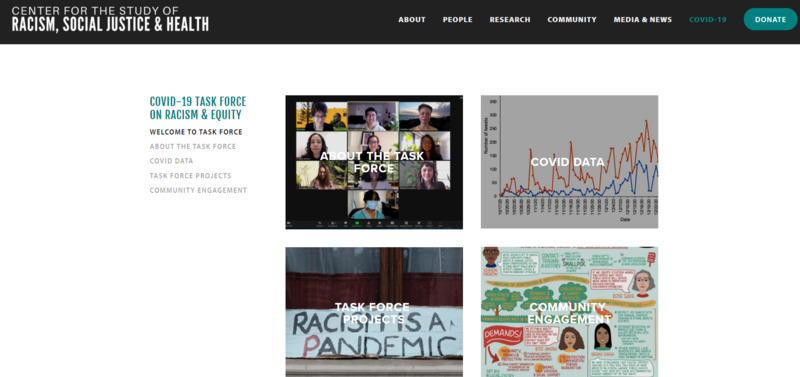
COVID-19 TASK FORCE ON RACISM & EQUITY. The site looks at the science and humanity behind the Covid-19 Pandemic through a social justice lens.
-
2020-10-23
From article: Jennifer Prah Ruger uses the covid-19 pandemic to show the importance of countries implementing a justice framework for health and equality.
This article is part of a collection launched at the World Health Summit, 25-27 October 2020, Berlin, Germany. Funding for the articles, including open access fees, was provided by a grant from Bloomberg Philanthropies to the Council on Foreign Relations, support from the Konrad-Adenauer-Stiftung to the Graduate Institute of International and Development Studies, and the Institute for Health Metrics and Evaluation.
-
2021-02-18
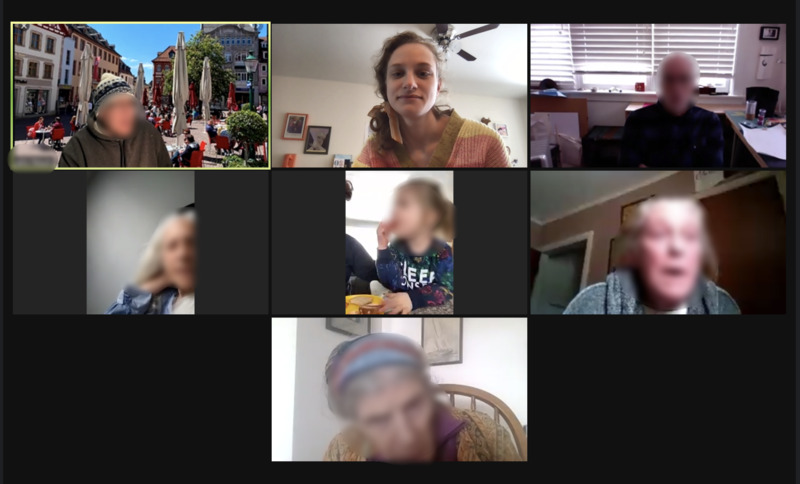
At the beginning of the pandemic, when everything went into lockdown, my uncle started weekly family Zoom calls on Sunday mornings. Through these weekly calls, we actually saw each other more often than before the pandemic, and they became a nice time to check in with everybody and share stories and what's going on with our lives. My favorite part is seeing my two baby cousins, both of whom don't live near me. When we started, my youngest cousin was four months old, and through Zoom, we have watched her learn to walk and we celebrated her first birthday together. My other baby cousin loves to talk to the family and share her toys, clothes, and food through the screen. It is all very cute, and I am grateful for the family time I get to have through Zoom.
-
2021-02-18
I have been vaccinated. I got both of my shots, waited the requisite two-week waiting period, which mysteriously dropped from 30 days to 14, and so as of yesterday, I am as fully vaccinated as I can be.
And I am still not traveling.
I will continue to wear a mask.
In fact, I will be double masking when students return to the high school I work at following spring break.
There is still a pandemic.
Not enough people are vaccinated.
I don’t truly know how effective the vaccine is, no one does.
And most of all, I want to make a statement. That masks are important. That masks are important. That social distancing is important. That I might still catch COVID, be asymptomatic, and pass it on. Herd immunity is essential.
A lot of life I want to get back to, but I know that so many things should not go back to the days of 2019 and early 2020. We cannot forget. We cannot become complacent.
Okay – sometimes I want to keep wearing the mask so hide my sneers so no one can see. ;)
-
2020
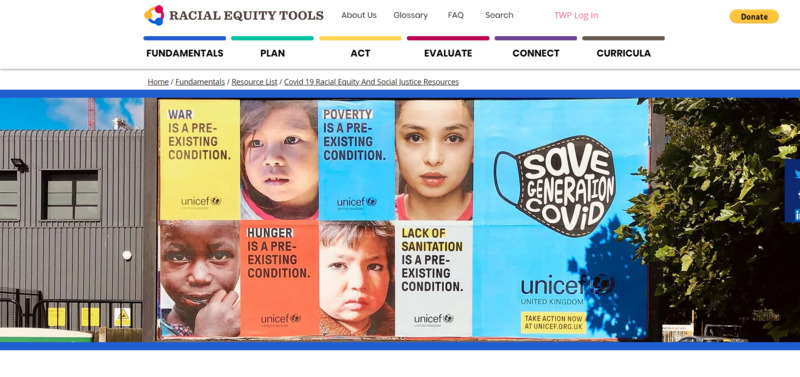
The Fundamental Equity Tools website has resources and tools for people looking to get involved with social justice issues surrounding Covid-19.
-
2020-10-07
From the article: A recent study by researchers at Harvard University found that mortality ratios for Black and Latinx communities in the United States were 3.6 and 2.6 times higher, respectively, than the mortality ratio for non-Hispanic Whites,1 a stark gap also reported in New York City (NYC).2 Other similar patterns have been found in NYC over the course of the COVID-19 pandemic. Mortality rates for the Latinx and Black populations are 242 per 100 000 and 226 per 100 000, respectively, both more than twice those for White and Asian American residents.3 Surveys conducted by the City University of New York (CUNY) Graduate School of Public Health & Health Policy and others tell an even more alarming story. The gaps in mortality rates are just the tip of an iceberg of long-standing public health–related inequities among people of color in the United States. These discrepancies threaten all US citizens—wealthy and poor alike—and they have been exacerbated by the coronavirus.
-
2020-06-09
From article: Racism and classism create conditions where people of color, those living in poverty, and other marginalized groups have limited access to resources that affect health
-
2020-11-19
From the article: In previous years, Classy’s Why America Gives report has focused on consumer giving trends, what motivates donors to give, and their plans for Giving Tuesday and year-end giving. In our third-annual edition of Why America Gives, the 2020 report measures these year-over-year changes in giving sentiments and behaviors; in addition, it also analyzes how current events—specifically the COVID-19 pandemic and the social justice movement—have altered giving trends.
-
2020-05-15
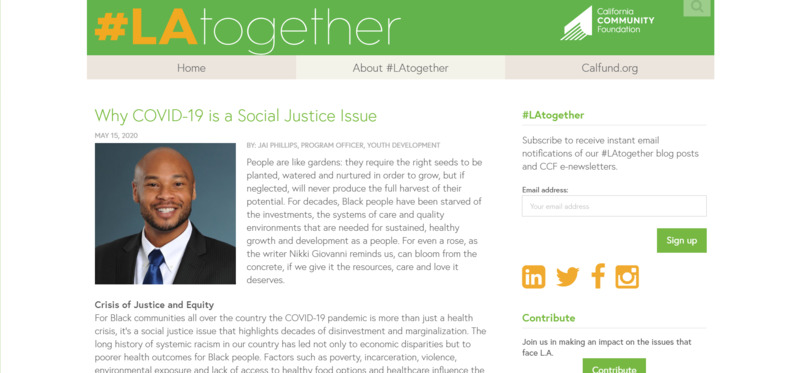
From the article: People are like gardens: they require the right seeds to be planted, watered and nurtured in order to grow, but if neglected, will never produce the full harvest of their potential. For decades, Black people have been starved of the investments, the systems of care and quality environments that are needed for sustained, healthy growth and development as a people. For even a rose, as the writer Nikki Giovanni reminds us, can bloom from the concrete, if we give it the resources, care and love it deserves.
-
2020-09-25
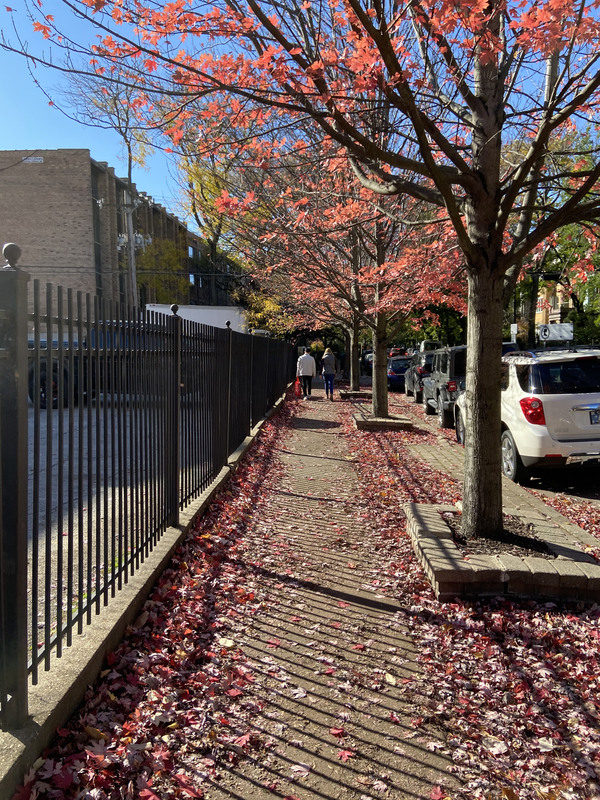
I once used to walk this street on my way to work at a restaurant. I always loved how busy it was, seeing the streets overcrowded with people who had places to be. When I lost my job because of the pandemic in March I had to go home for 7 months. At the beginning I think we all thought that things would have turned around by the time the leaves started to fall. When I came back, I went downtown to visit the restaurant I had once worked at. The restaurant was boarded up still and the streets were mostly empty, and I felt kind of empty too.
-
2020-09-01
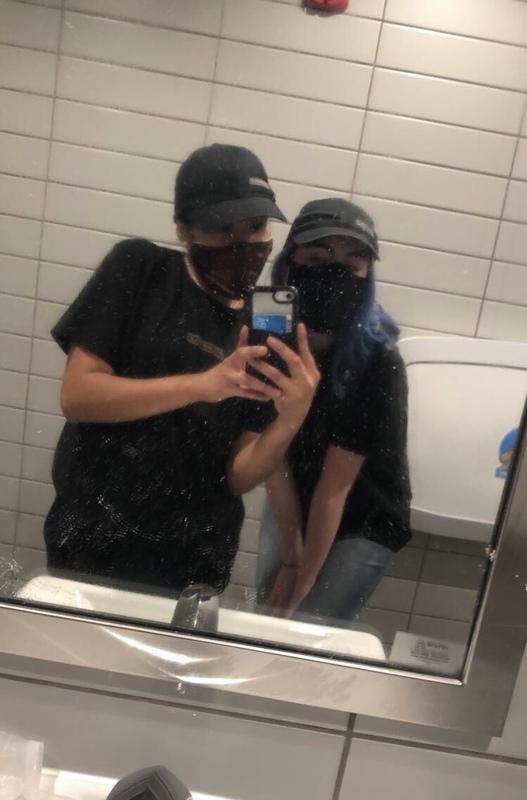
When I think about this past year, what first comes to mind is my food service job. Then, I think of my coworker Alex. For almost a year we worked together and she ended up being a great friend. At the end of the summer, she quit to find a better-paying job.
In this picture, we were goofing off at the end of our shift, cleaning the bathroom and listening to music. It was our last day together and we wanted to end on a good note. Food service has definitely been a challenge during this pandemic, but I’m grateful I got to work with a friend through most of it. I definitely miss her :)
-
2020-10-29
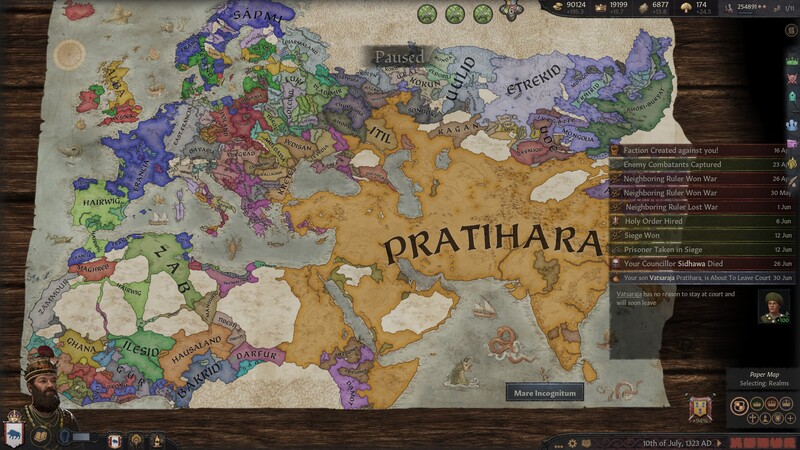
2020 was a good time for video games, particularly those that I am interested in. Releasing in the middle of the year, games such as the highly anticipated Mount and Blade: Bannerlord and Crusader Kings III managed to provide time-wasting opportunities to many people. The latter, abbreviated CK3, is pictured here. CK3 is essentially a feudalism-simulator with role playing game mechanics, famous in the PC gaming sphere for both its complexity but also its ability to organically allow stories to form in the most Game of Thrones way possible.
This was one of my earlier games, after I was more familiar with how the game differed from CK2. Starting as the Raja of the real-life Northern Indian dynasty of the Imperial Gurjara-Pratihara in 867 CE, through many generations of rulers I managed to consolidate the entire subcontinent through diplomacy, intrigue, and warfare. Around 1000 CE one of my rulers who had a more intellectual education rather than the usual military one, consolidated all imperially sanctioned Hindu beliefs into the Charvaka school, a real-life ancient Hindu belief based on materialism and empiricism. As this new consolidated Hinduism united the subcontinent at a more local level, regional governors along the Indus River took advantage of political fragmentation around the Indian Ocean and pushed west, taking over not just Persia and Central Asia but also establishing Hindu-Somali outposts in Africa and Yemen. By the 1300s the empire spread from Burma in the east all the way to modern day Libya and Greece, with Rome itself falling to a Pratihara expedition. Peace was maintained within the empire's vassals by a robust series of alliances, as well as the use of the "dread" mechanic to scare any more unruly subjects into submission via planned executions and threats. The most serious threats the Pratihara Empire faced was a series of crusades launched from Western Europe, and the Mongol Conquests which were ended by assassinating a few generations of Mongol Khans leading to political infighting and collapse.
Beyond the fake history being made in game, this single play through gave me enjoyment for dozens of hours. While psychical entertainment was shut down, travel impossible, and the shadow of the pandemic hung over everything, games like CK3 allow people like me to immerse ourselves in what begins as real history and ends with an alternate history that we ourselves designed. Many people who don't usually play video games became engrossed in them, particularly early on in the likewise open-ended game Animal Crossing: New Horizons. The need to develop new hobbies as a way to cope with isolation was a boon for the video game industry, which despite its massive market was seen by many people as quaint at best, or worthless at worst. There is value in video games, especially during the pandemic.
-
2021-02-18
I received my second vaccination earlier this week. I had minor symptoms (some fatigue and body aches), but otherwise it went well. I had some friends, both in exceptional shape, who experienced high fevers and other flu like symptoms, so I guess I lucked out on that front. The peace of mind is incredible. I plan to still take precautions, especially because even with the vaccine, it is believed you can still carry the virus, but it is wonderful to not have to worry about getting sick with COVID anymore.
-
2021-02
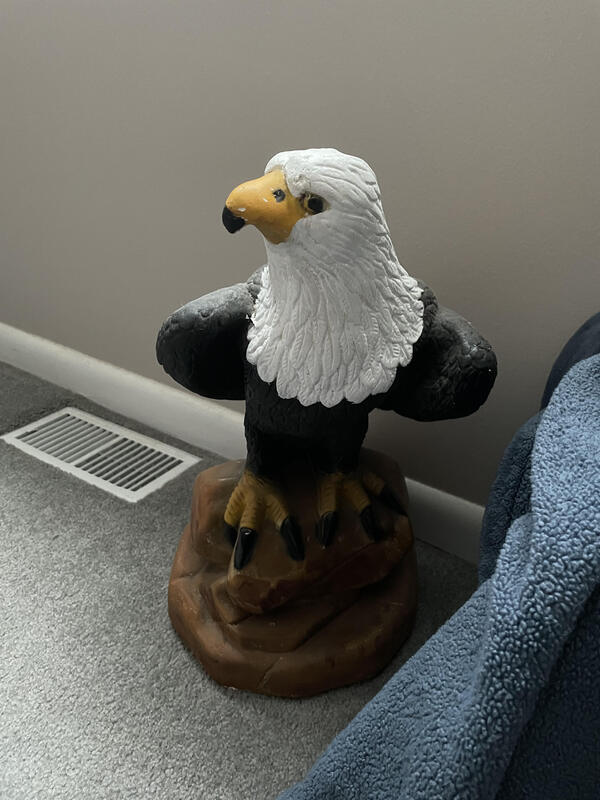
Beep. Beep. Beep. I open my eyes and stretch. I smack that snooze button. The eagle stars at me.
During these Covid-19 days, I’m able to spend time thinking about memories. Eyes close; I see darkness.
I walk into my Grandmother’s house. A room has the eagle statue and a large window to see the birds. The eagle stars at me.
All of a sudden, I am around family members at my grandmother’s memorial service.
Beep. Beep. Beep. I open my eyes and stretch. I smack that dismiss button. The Eagle stars at me. My Grandmother is watching over me.
-
2021-02-09
A freshly opened, hardly touched puzzle. In a time where there’s nothing, and yet too much going on, I clear my head by putting together an image I connect with, and the exuberance of finding pieces I’ve lost at my feet. COVID-19 brought numbing boredom to a new height, along with finding new ways to challenge myself and my family members.
March of 2020 brought the first puzzle, and it’s been a fluctuating number both of pieces and images that include big cities and paintings ever since. I’m piecing my world back together one jigsaw at a time.
-
2021-02-16
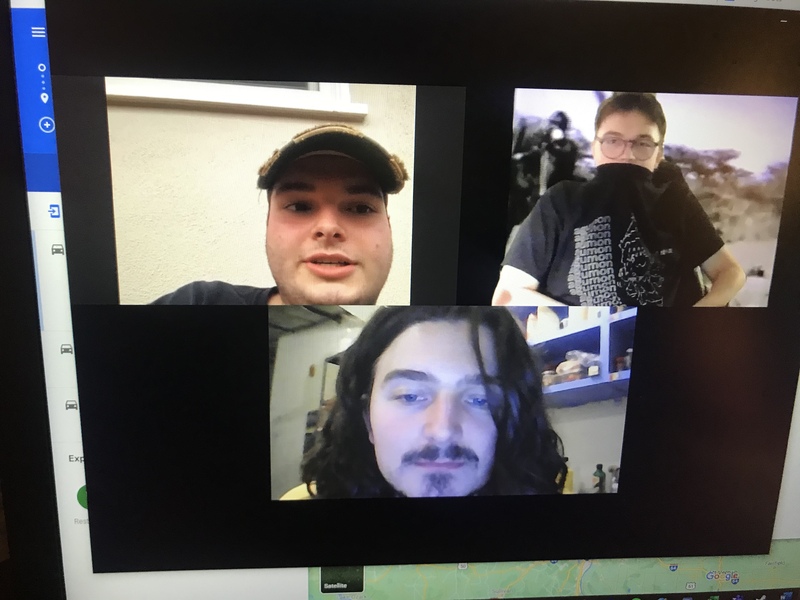
During a pandemic, creatives continued to collaborate online through the platform Zoom. In this picture, Jackson Scoggins, William Way, and I (Spencer Bolding) meet and discuss the beginnings of Jackson’s new magazine about a local record label. We spent our first semester interviewing key characters in the creation of Dolfin Records over Zoom, often having to explain the mechanics to those new to the program. After a series of recorded interviews, we put together an in-depth timeline of the beginning of Dolfin Records that will go into our first issue. Creatives will always find a way to create. #HST269 #zoom #localmusic #Dallas #Dolfin #zine #DIY #musicians #art #deepellum #pandemic #creative
-
2020-06
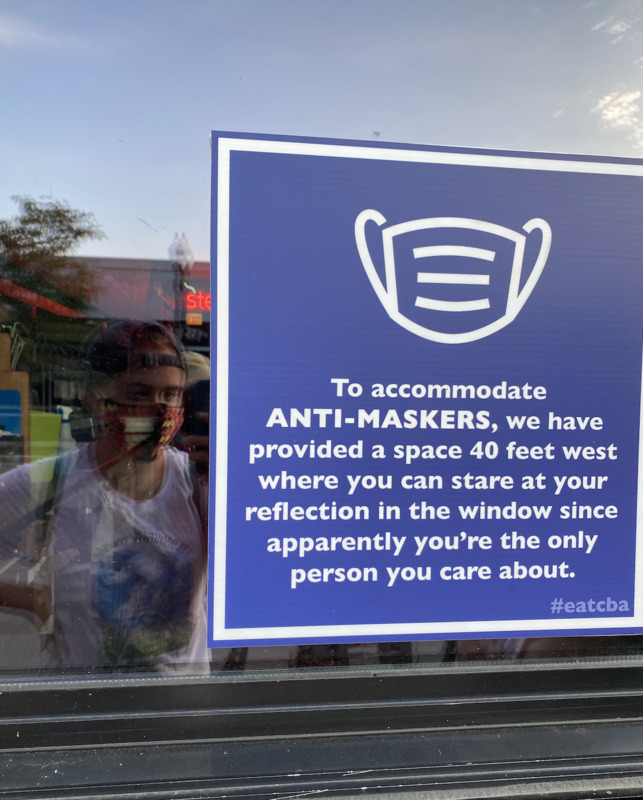
One common sight to behold during the pandemic was the signs posted within business’ storefront windows mandating masks to be worn to slow the spread of the coronavirus. In early June 2020 as the city of Chicago entered their Phase 3, which allowed for local businesses to reopen, some store owners used creative messages such as this one to enforce required mask mandates.
The sign above, which I noticed on the Chicago Bagel Authority’s Belmont location—six miles north of the Chicago Loop—is a symbol of the city’s efforts to mask up, specifically targeting groups known as “anti-maskers.”
-
2021-02-18
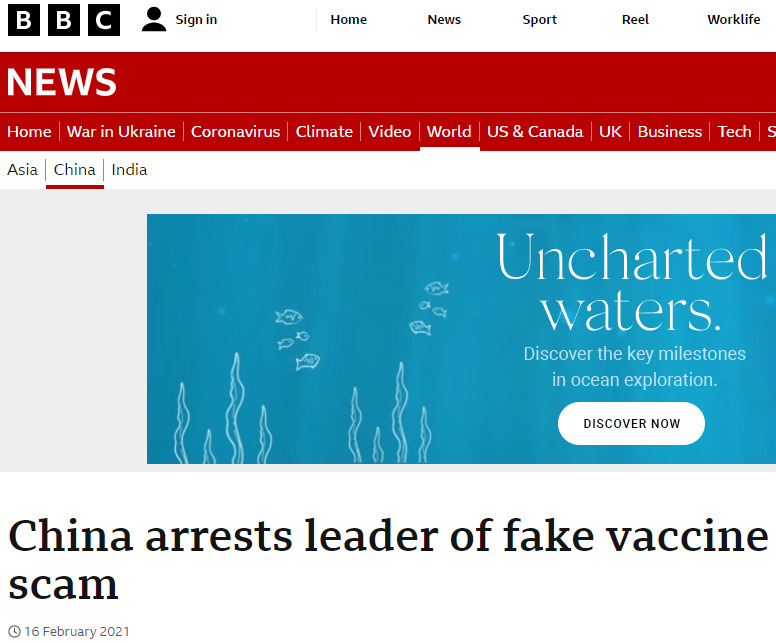
Hundreds, an estimated 600, of fake vaccines were shipped to Hong Kong and internationally by a group led by "Kong". These vaccines consisted of nothing but saline solution or mineral water. They were being sold to medical facilities and other places at inflated prices.
Officials in China have made at least 70 arrests in relation to this case with more suspected. It's reported that the group made an estimated profit of 18 million yuan or nearly 3 million U.S. dollars in this scam.
-
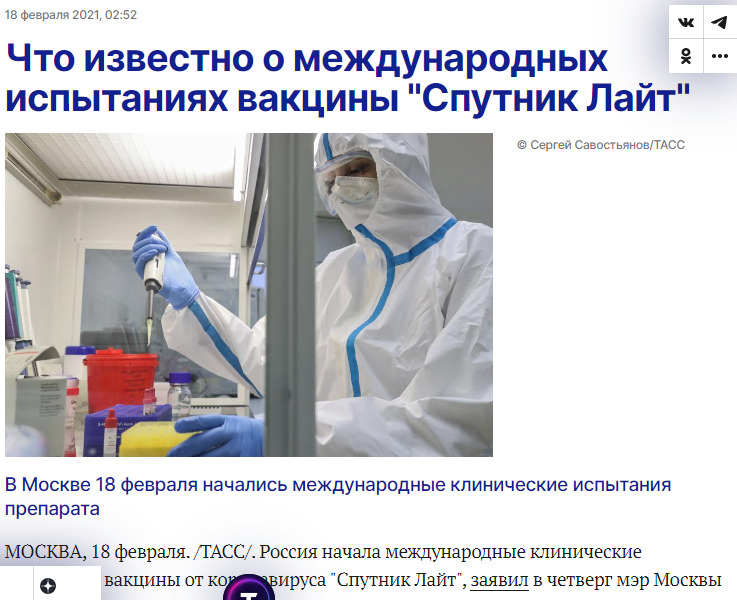
2021-02-18
It is an article about an innovative vaccine from COVID that is not two-phased, but one-phased.
-

2020-02-18
An image of this bar front was shared on this archive almost a year ago, on March 31, 2020, at the beginning of the pandemic: https://covid-19archive.org/s/archive/item/11917.
On February 10, 2021, I passed by this bar on my way home from an errand and remembered it being shared on this archive. It looks different now, so I wanted to document it.
Aside from the weather depicting a more solemn image, the next noticeable difference is in the fact that in this posting, the bar's front window is boarded up, with a most likely spray-painted tag in green ink. The boarding up is most likely a remnant from 2020's late spring/early summer protests that took place around the country in response to racial violence, which was kickstarted by the murder of George Floyd in Minneapolis, MN.
In addition, Green Mill also has posted a flyer in the circular window of their front door. In March 2020, the pandemic was still so new that many didn't know what to do besides close their doors for the time being. Now, in 2021, with more understanding of COVID-19's severity, many businesses have some sort of signage indicating that they are closed and encouraging readers to follow the social distancing guidelines set forth by local, state, and/or federal governments. This is most likely the sign posted in window.
Hopefully, in another year's time, we'll get to see Green Mill open and lively with the sounds of jazz music, the coronavirus pandemic only a memory of the recent past.
-
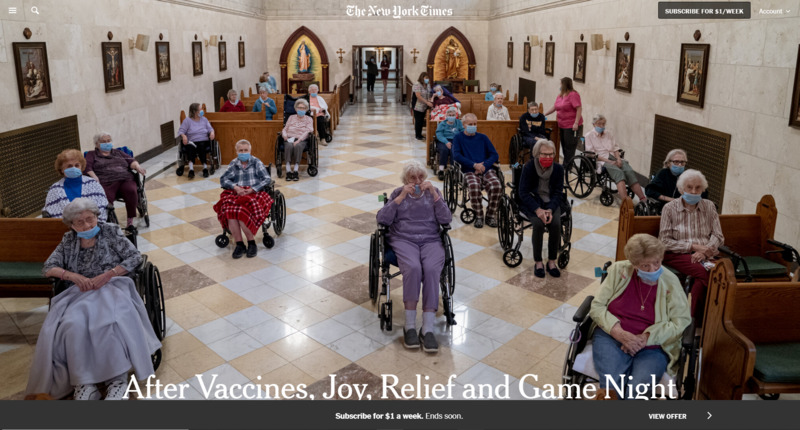
2021-02-12
As the COVID-19 vaccine rolls-out, nursing and retirement homes across the United States are starting to open up again. In many places, this means dinner, game night, and a select few visitors.