-
2020-12-11
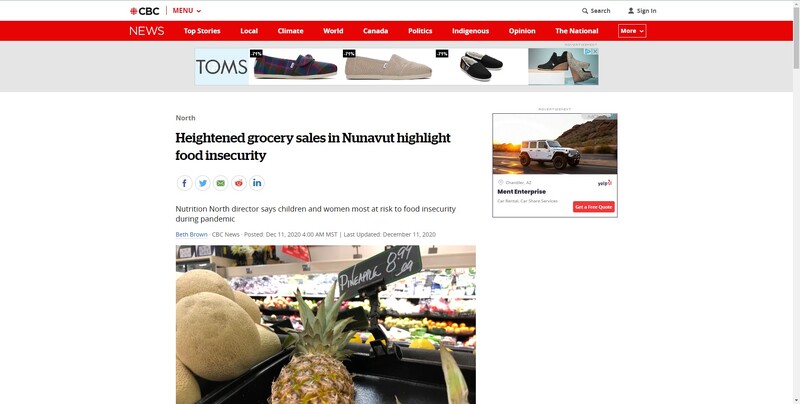
Relief funding for the COVID-19 pandemic has been effective in increasing access to food in remote northern communities — but it's also revealed the true extent of food insecurity that Nunavut households face.
-
2020-10-10
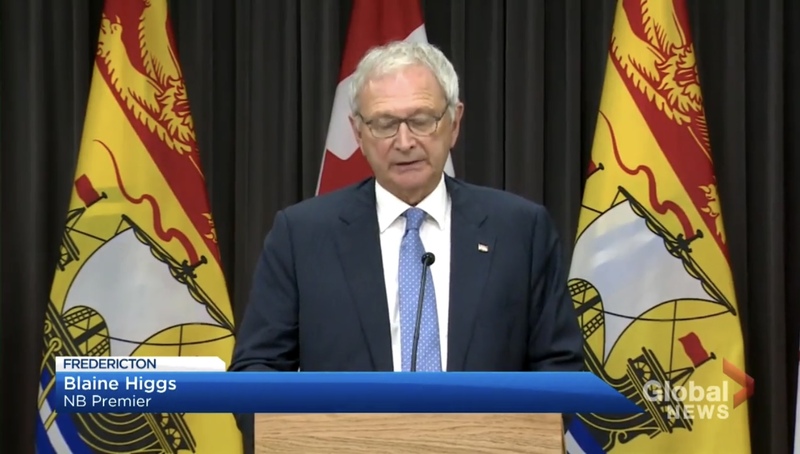
This article includes two videos and provides additional details as to an anti-mask rally in Moncton, N.B.
-
2020-08-20
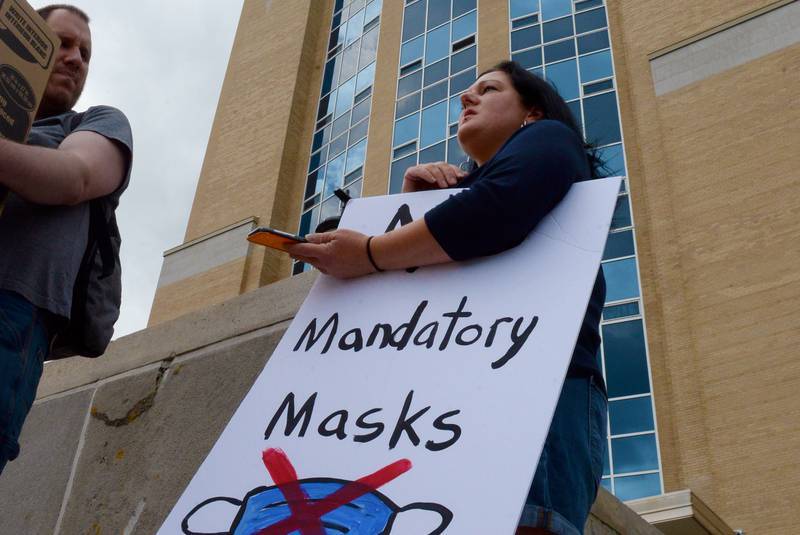
This article further describes the small anti-mask protesters in St. John's who demonstrated in response to the enforced restrictions.
-
2020
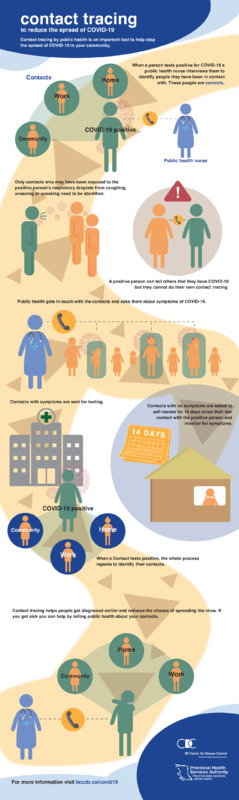
An infographic of how and why contact tracing is done.
-

2020-11-22
This article shares about a recent anti-mask rally in Steinbach, Manitoba.
-

2020-12-02
This article discusses one family seeking COVID-19 exposure to improve their immunity to the virus.
-
2020-12-13
A Map showing all the active health facilities in Nunavut
-

2020-11-26
This article provides tips on how to best celebrate Christmas holidays and encourages Canadians to stay home.
-

2020-10-20
University of Calgary offers tips for a safe Halloween during COVID-19 — and what to do if trick-or-treating is cancelled
-

2020-11-29
This article includes a video on how a birthday became a COVID-19 superspreader event.
-

2020-12-07
This article examine how funeral homes are using high pressure sales tactics during the pandemic.
-

2020-12-08
Despite showing symptoms or not, residents between the ages of 20 to 29 were asked to get tested in Charlottetown, P.E.I.. Responding to the provinces demands many showed up to drive-thru testing clinics causing long lines and wait times. During this time, P.E.I tested 2,000 people. All results were negative.
-
2020-10-16
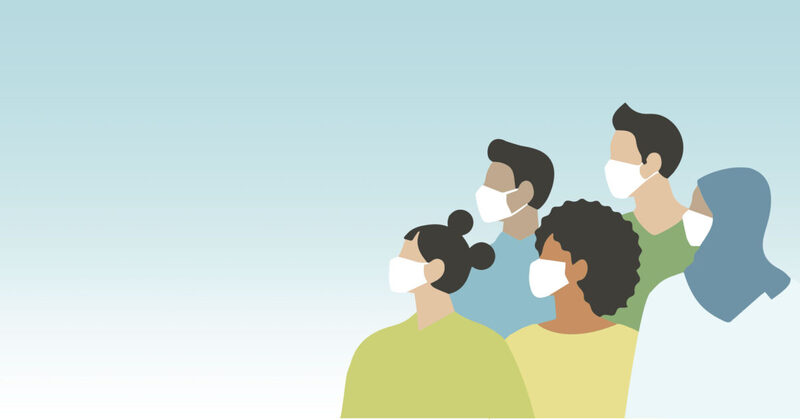
This release provides an update on the procedures for funerals during the pandemic.
-
2020-03-29
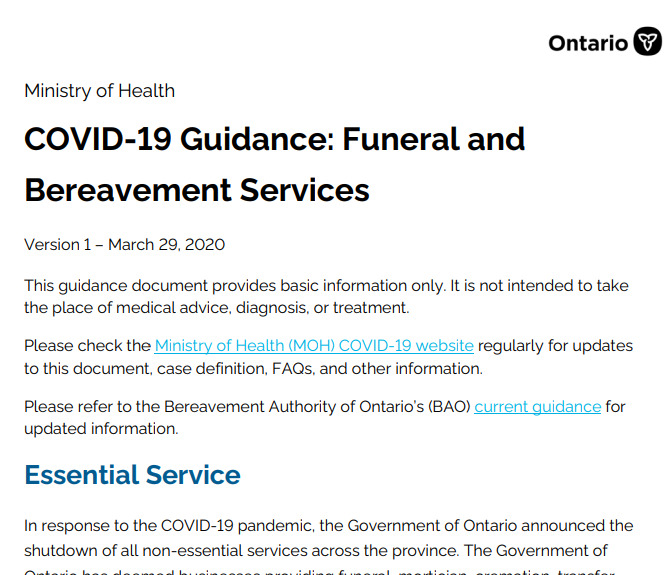
New Ontario guidelines for handling bodies with COVID-19.
-

2020-06-11
This article suggests some ideas on how to host a micro wedding.
-
2020-12-13
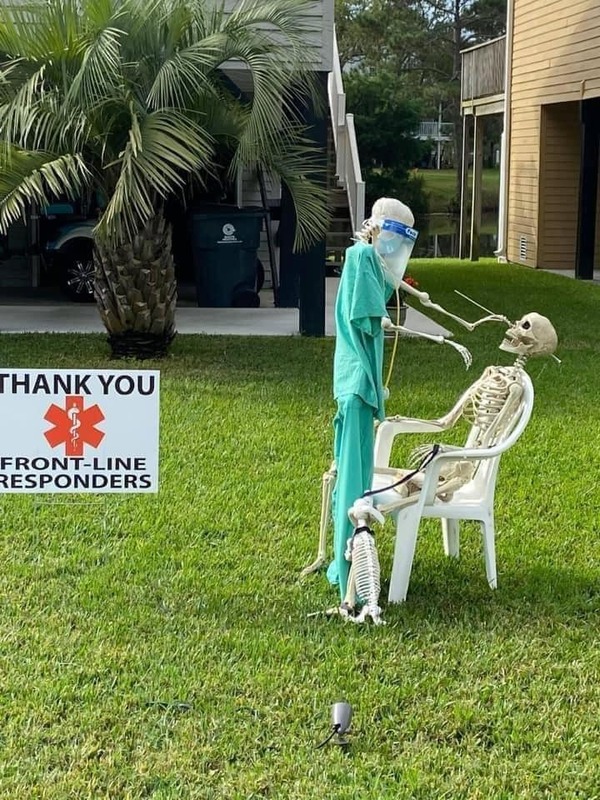
Local Halloween decoration humorously depicts how it feels to be tested with a nasal swab. This test is uncomfortable as the swab is inserted through your nasal cavity and brushed against the back of your throat. The irritating sensation causes your eyes to water but it should not feel painful.
-
2020-05-19
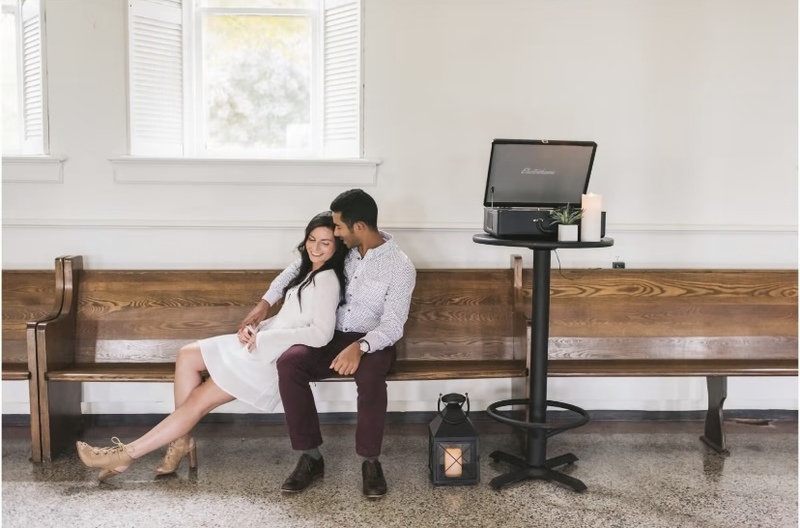
Pictured is a couple situated next to a record player. This venue offers specialty pricing for micro weddings.
-
2020-09-15
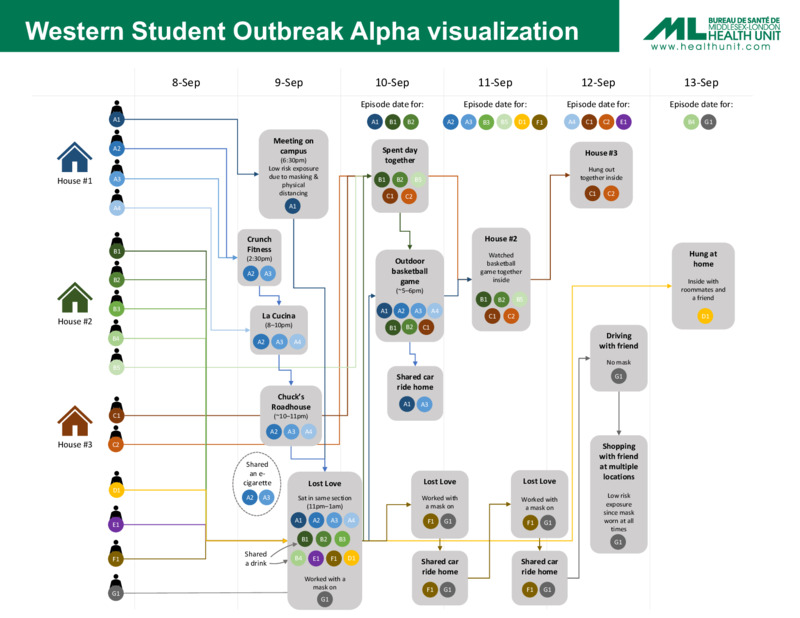
Three University of Western Ontario students test positive for COVID-19. Sadly, their movement around the city, visiting downtown bars and restaurants, and with students in neighbouring housing units, has led to a large outbreak.
-

2020-04-15
This article defines what a micro wedding is: 50 people or less.
-
2020-06-06
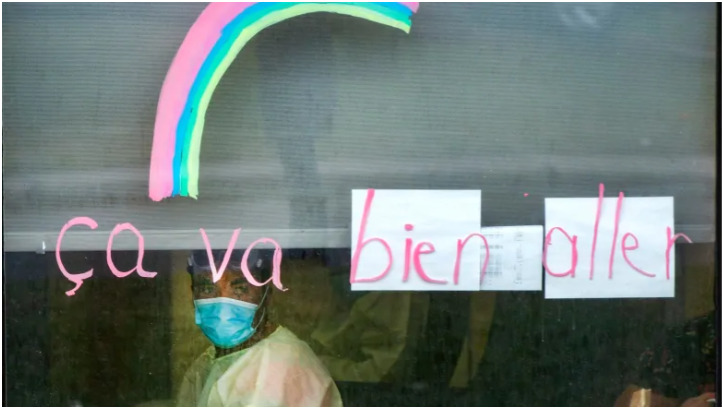
An article from the Canadian Broadcasting Corporation about stress and overwork in healthcare workers who have been redeployed into long-term care homes
-
2020-11-23
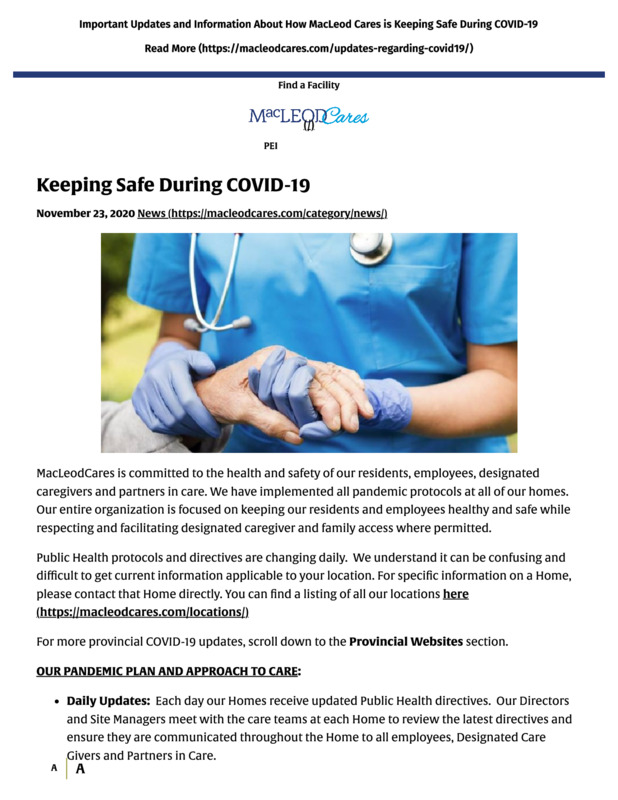
A statement from MacLeod Cares, a company that manages long term care homes in Atlantic Canada, detailing the measures they have taken to keep their facilities safe during the pandemic
-
2020-09-10
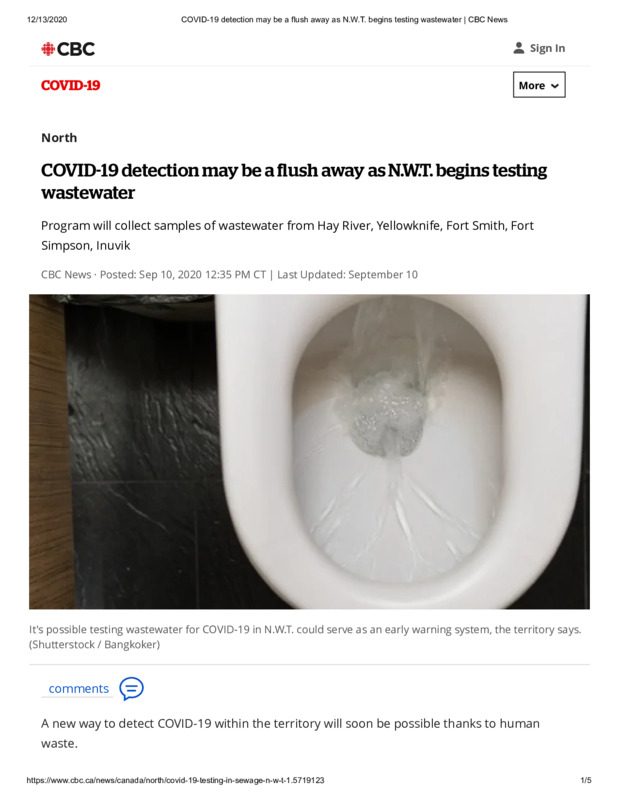
An article from the Canadian Broadcasting Corporation about the use of wastewater monitoring systems to detect outbreaks of COVID-19
-
2020-06-18
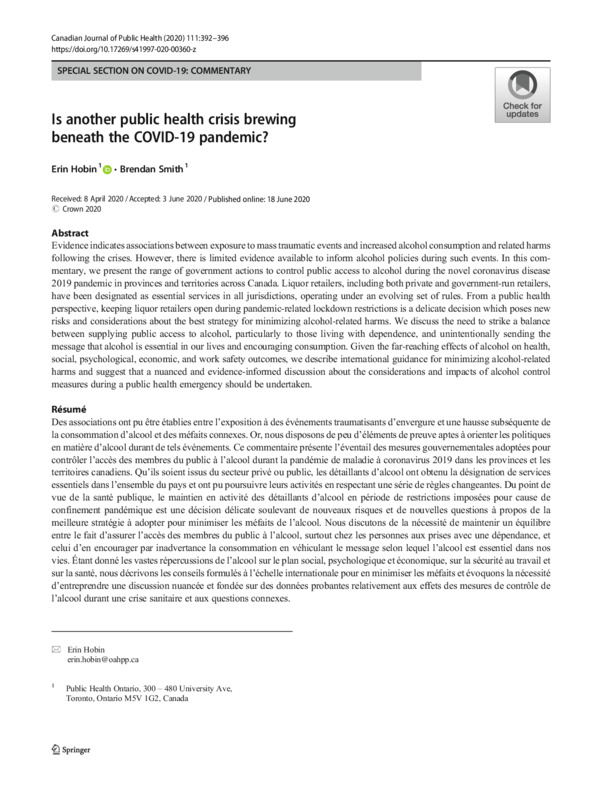
An article from the Canadian Journal of Public Health that discusses the risk of substance abuse problems becoming worse across Canada due to the trauma and stress of the pandemic.
-

2020-03-23
A document describing the official position of the CFNU on reasonable precautions that should be put into place to prevent nurses and other healthcare workers getting Covid-19
-

2020-12-05
Being around the countryside has been a relief from the paranoia of the world. The cattle have no clue that the world around them is any different.
-
2020-12-13
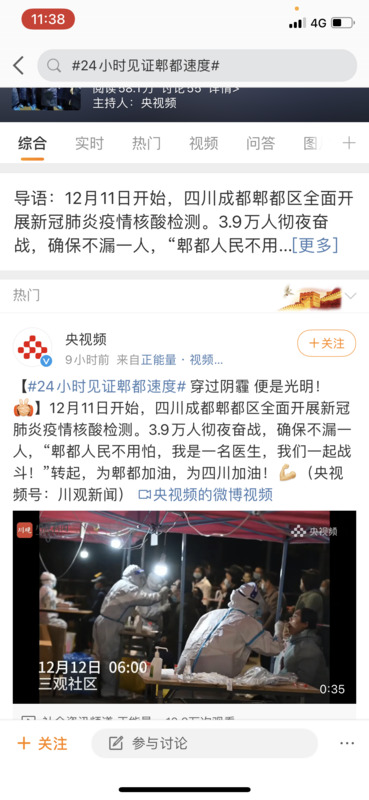
Chengdu has been to test every members in Pidu community to make sure there were no more members that were infected with COVID-19. The local government plans to test 34 thousands people within 24 hours.
-
2020-11-13
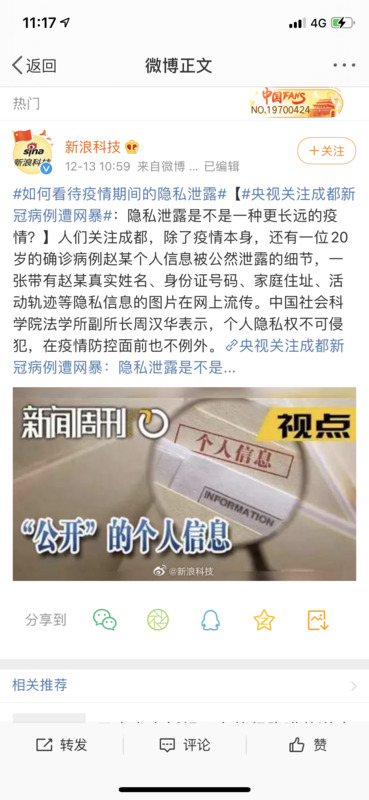
In China, every confirmed patient needs to report their family name, their activities in last three days and what places they’re been to so that the close contact persons would also be easily to followed. This method is meant to use as a clue for the public to know if they have been in close contact with the confirmed patient so they could self-report to the community that they are in high-risks. However, many have used these information as a clue to dig up the personal information of the confirmed patient and cyberbully him or her. This time for Chengdu’s outbreak, many people were furious that the patient had been to a dozen places in a night even she did not know that she was confirmed. Keyboard warriors started to find her personal information, and many girls were mistakenly recognized as the patient, they all suffered cyberbully and their personal information, pictures were posted online and the public demanded them to apologize. This has been a huge fight in Chinese social media these days, many supported the victim and the question of privacy has been brought up. Many believe that personal privacy should be valued, however, in the time of internet, the scope of privacy is getting narrowed.
-

2020-08-31
This photo shows protesters, one holding a pride flag, and police.
-
2020-10-20
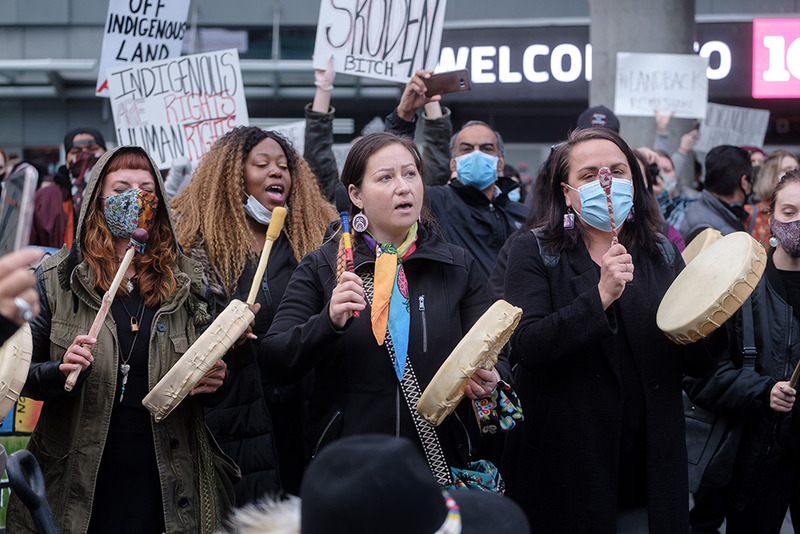
This photo shows women, some wearing masks, holding up signs and protesting.
-
2020-10-24
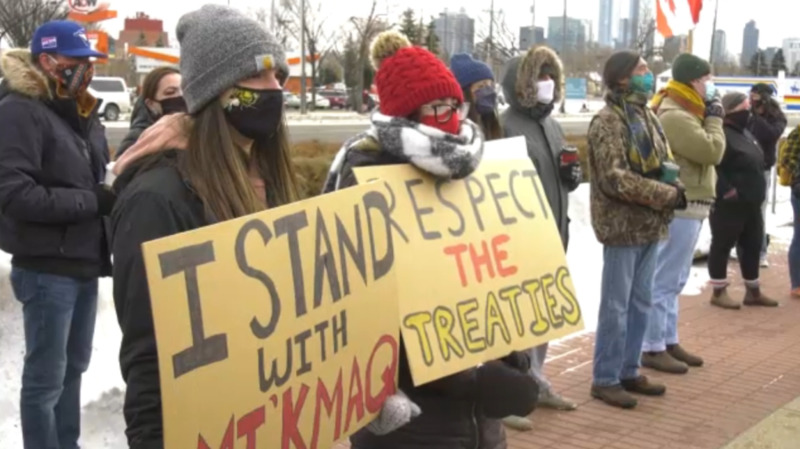
This photo includes two girls, one holding a sign which states "I stand with Mi'kmaq" while the other's says "Respect the Treaties."
-

2020-08-30
A man holds a sign which states "Black Lives Matter" and "Treat Racism like Covid-19."
-
2020-05-05
Life was hard for me for the last two years. As 2020 comes close to an end, I am almost wrapped up with my first year in college, though barely. Last year, due to some family issue, my grade was failing in high school, so I could not enter the college I was applied to, while in this year, the transition to college was still extremely tough due to the COVID pandemic. I had little to no social interactions with others, lives in complete isolation, while had to deal with college workloads. It was tough as I felt that my life was not in my control, and became increasingly frustrated. I had an extremely respiratory system as well, coughing and wheezing constantly, so I had to be careful at managing myself to not contain COVID. I felt like I was a burden on my family, who supports me financially right now, as well as a burden on the society. However, as I took a long walk across the city street during the night, I realized that this was out of my control. It was not my fault that the pandemic happened, and I am doing my part to prevent further spread of the disease. I am no burden of the society - no more than people who are not properly quarantining themselves, at least.
-
2020-04-06
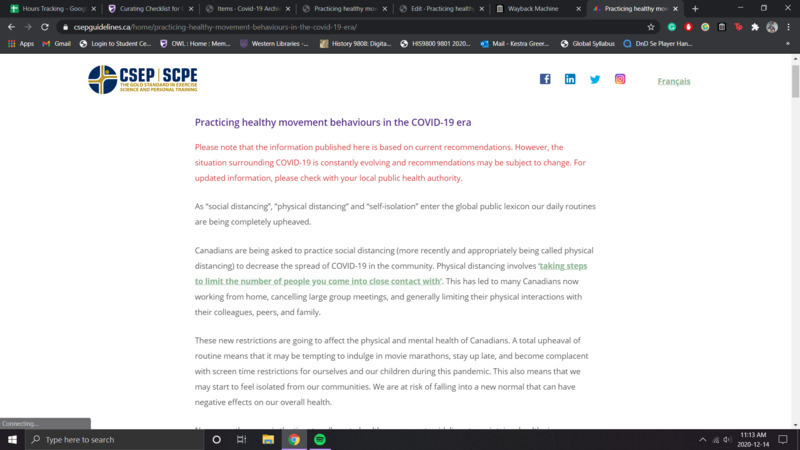
In response to the restrictions put in place by the government, the CSEP believes its important for Canadians to adhere to healthy guidelines in order to maintain a healthy immune system and build a strong defence.
-
2020
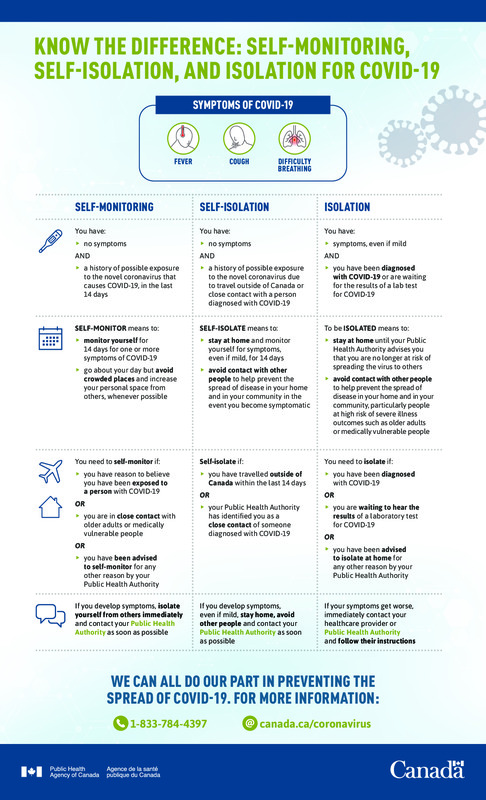
Table created by the Public Health Agency of Canada, for determining the difference between self-monitoring, self-isolation, isolation
-

2020-05-26
In response to Premier Doug Ford's disappointment about the number of tests being done in Ontario, the County of Renfrew Paramedic Service is mobilizing to offer drive-thru clinics for anybody in the county who wants to be tested for COVID-19 in order to keep up with the provinces' testing demands.
Dr. Theresa Tam and chief public health officer of Canada says, "This is a wonderful example of the health-care system coming together to ensure that no one is left behind and it highlights the important role paramedics play in linking communities to health-care settings".
-

2020-11-19
The Qikiqtani Inuit Association says that it will distribute $1.8 million in federal funding to support the work of the Ilisaqsivik Society, the YWCA Agvik, the Uqutaq Society, the Tukisigiarvik Society, Qikiqtani hamlet recreation departments and the previously announced Qikiqtani Family Support Initiative. (Image courtesy of the Qikiqtani Inuit Association)
-
2020-04-03
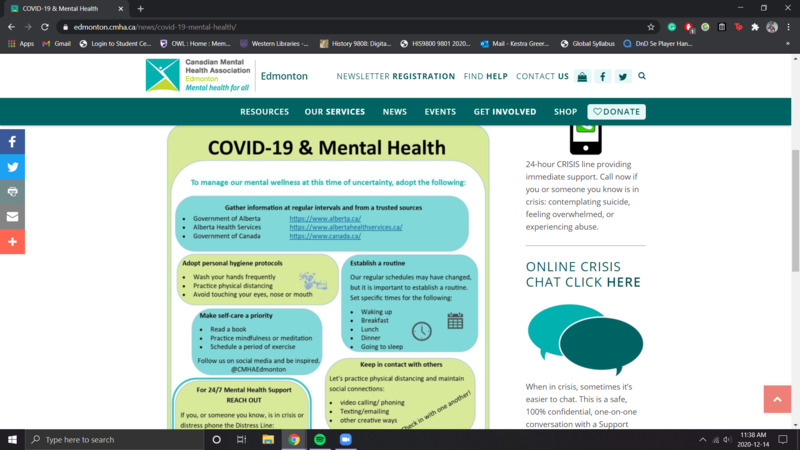
Tips from the Edmonton Canadian Mental Health Association on how to manage our mental wellness at this time of uncertainty.
-
2020
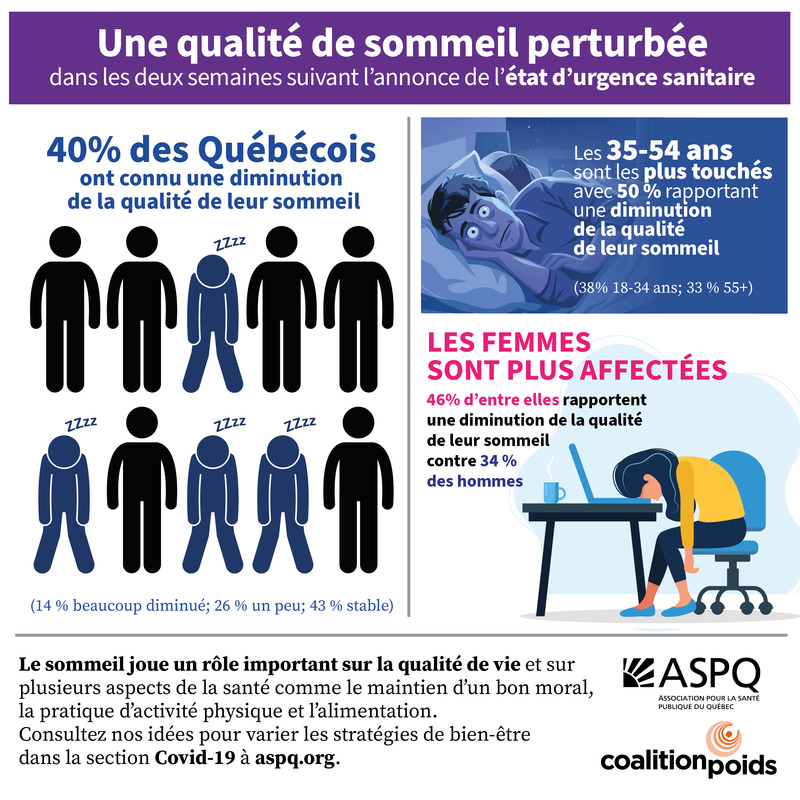
The Québec organization Coalition des Poids is dedicated to creating environments that facilitate healthy life choices. Aware of the potential negative impacts the government lockdown would have on our health, this company produced graphics to inform and help the public maintain their health during the pandemic. The illustrations encourage Canadians to take care of their physical health through proper nourishment, physical activity, and sleep.
-
2020
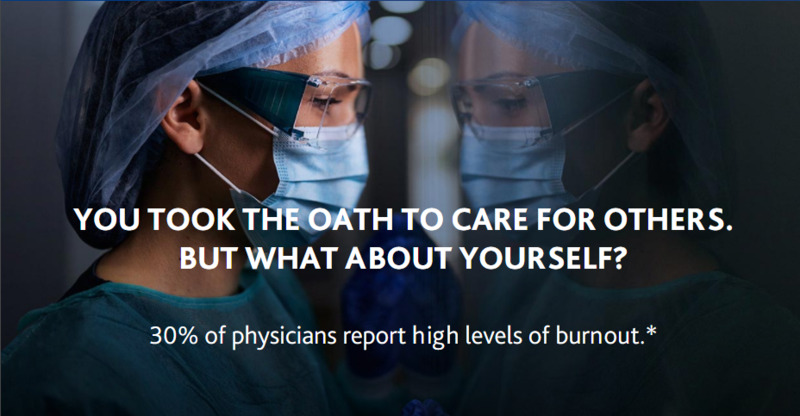
The demands of the pandemic are having a serious impact on the emotional, psychological and physical wellbeing of healthcare workers across the country. The Canadian Medical Association wishes to support frontline workers by providing them with access to a Wellness Support Line to ensure they have high-quality and tailored mental health services for all their needs.
-
2020-12
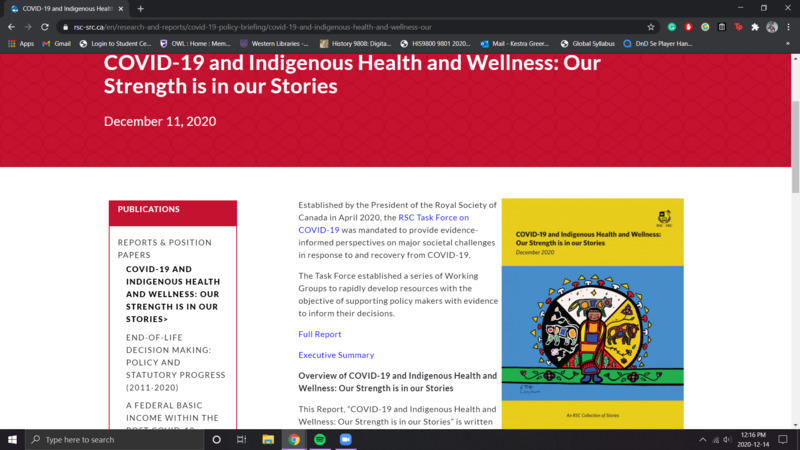
This Report, “COVID-19 and Indigenous Health and Wellness: Our Strength is in our Stories” is written as a collection of stories. Indigenous scholars, practitioners and learners, offer this writing to support an improved understanding about how COVID-19 is impacting the health and wellness of Indigenous peoples.
-
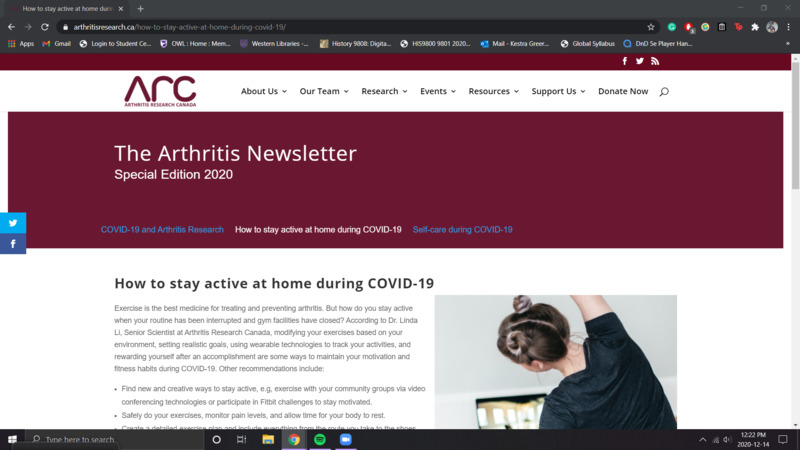
2020
Recommendations from Dr. Linda Li, Senior Scientist at Arthritis Research Canada sharing the best way to exercise in new environment.
The importance of exercising during COVID.
-
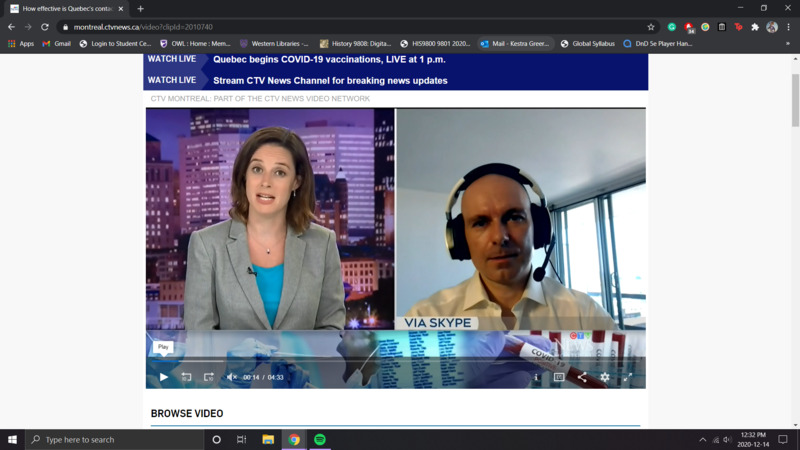
2020
Public health PhD Carl-Etienne Juneau speaks about difficulties of contact tracing in Quebec.
-
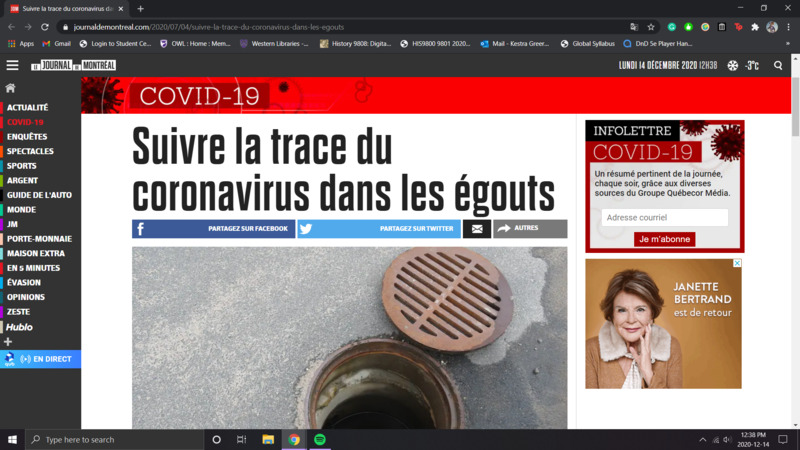
2020-07-04
In anticipation of a second wave of COVID-19, Canadian scientists are currently working to set up a detection system based on organic waste that ends up in sewers.
-
2020
The coronavirus pandemic has affected Canada’s pharmaceutical and retail pharmacy industry across four main areas: product sourcing and procurement, product launch and distribution, acquisition and access, and treatment and care management. Based on challenges in these areas, this report offers a perspective on potential solutions and considerations.
-
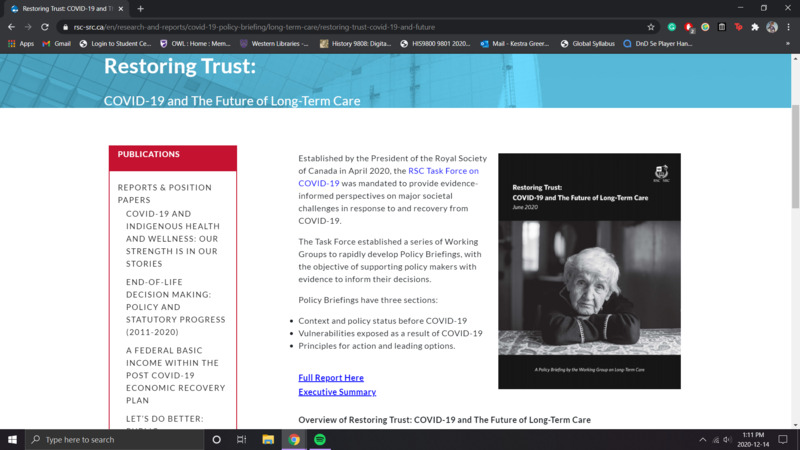
2020-06
Established by the President of the Royal Society of Canada in April 2020, the RSC Task Force on COVID-19 was mandated to provide evidence-informed perspectives on major societal challenges in response to and recovery from COVID-19.
The report begins by reviewing the research context and policy environment in Canada’s long-term care sector before the arrival of COVID-19. It summarizes the existing knowledge base for far-sighted and integrated solutions to challenges in the long-term care sector. The report then outlines profound, long-standing deficiencies in the long-term care sector that contributed to the magnitude of the COVID-19 crisis.
-
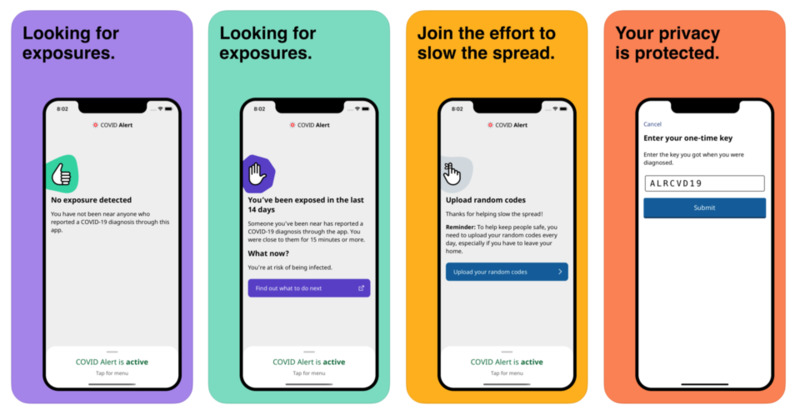
2020
The Government of Canada created the COVID Alert App to breaking the cycle of infection. This app can let app users know of possible exposures to the virus before any symptoms can appear. Thanks to this app, we can reduce the spread of infection, take care of ourselves and protect our communities.
-

2020-05-01
Alberta's chief medical officer of health Dr. Deena Hinshaw provided an update on the most recent numbers of COVID-19 cases in the province Friday and the government's ongoing response to the pandemic. She also announced the launch of a mobile contact-tracing app for the province, called ABTraceTogether, to help fight the spread of COVID-19.
-
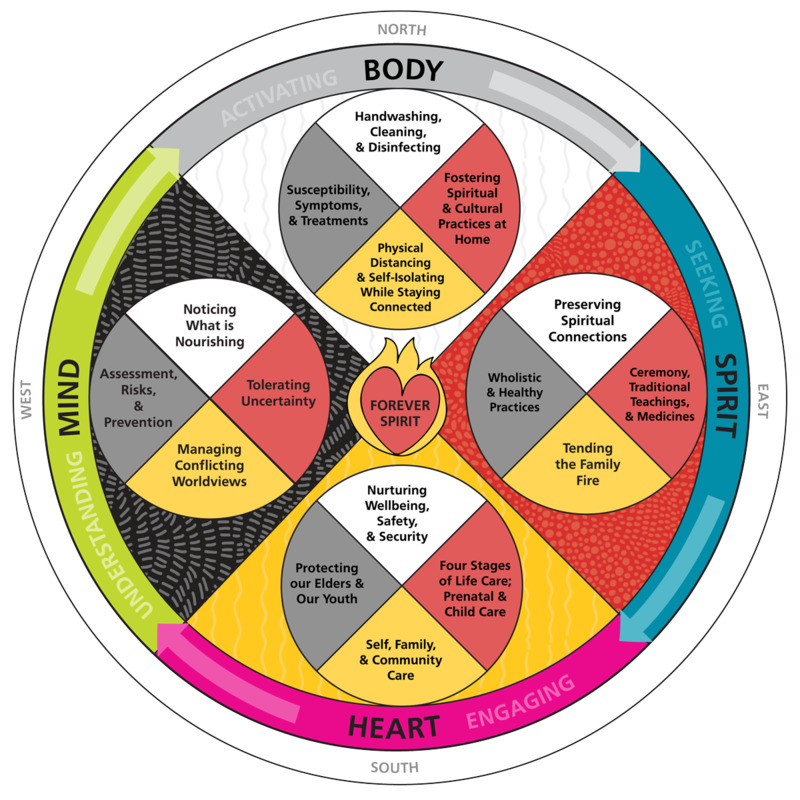
2020
A group of Indigenous women adapted the Medicine Wheel to promoted healthy strategies to cope with the pandemic to the public. This rendition is a holistic approach, inspired by the sacred teaching of their ancestors and the Seven Fire Prophecies, designed to enhance the wellness of the body, spirit, heart, and mind.
-
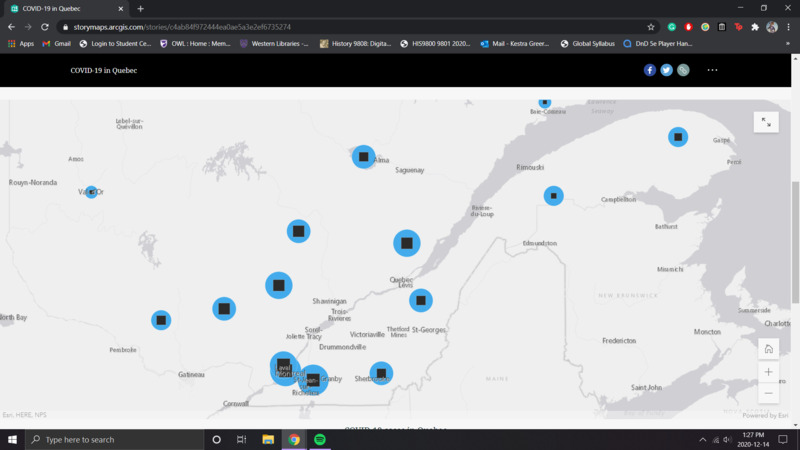
2020-12-12
This is a regional breakdown of COVID-19 cases across Quebec.
-

2020-12-31T23:59:59+14:00
.