-
2020-10-06
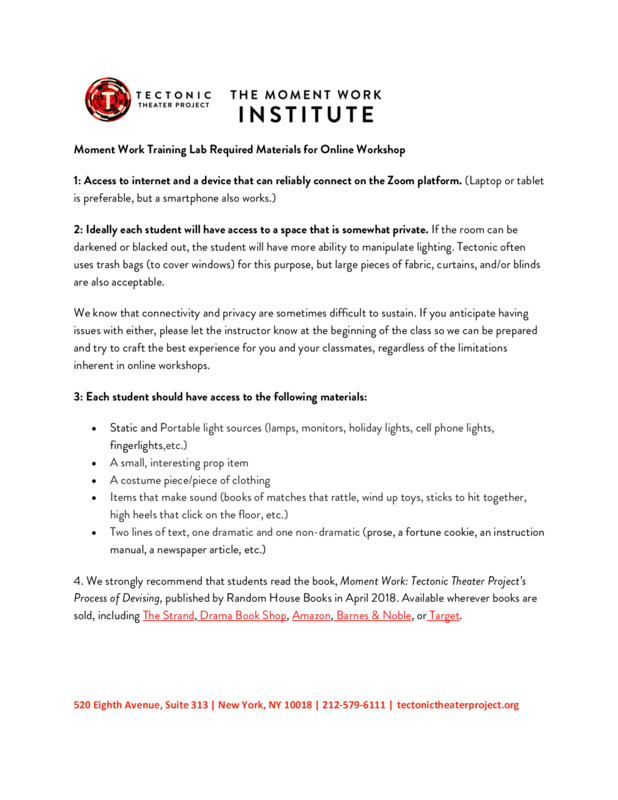
This document is a list of requirements and guidelines for the attendance of a an acting workshop I was a part of in October of this year, as a part of a larger project the Drama Department at my university, St. Mary's was and is attempting to create a new and safer theatre experience for the coming semesters. The workshop we attended was, of course, created with the intent for attendees to participate in-person. Despite this, however, as the requirements here show, the fact that that was impossible, or at least very ill-advised, not only wasn't enough to prevent it from happening, it may have helped it in a good number of ways. For a first example, the individuals in charge of the workshop, affiliated with The Tectonic Theatre, were situated in New York, as opposed to my university being located in San Antonio Texas. The fact that the workshop was held virtually actually made it much more realistically approachable as otherwise the distance would have complicated matters considerably, which was taken care of in that way. In the same vein, as the requirements hint at with the items that are required, is that each person who participated was able to use their surroundings, almost exclusively their own homes, which they were of course very familiar with, to great affect for the exercises that were given to them. In fact, despite the initial misgivings that many of us-myself included-initially had, the workshop was able to take place not only just as well as it would have had it been in person, but in my personal opinion, it might have gone even better. All in all, the workshop was a pretty impressive look at overcoming complications from this pandemic and working around them to make the virtual experience lose nothing from an in-person experience.
-
2020-11-20
The contributor of this item did not include verbal or written consent. We attempted to contact contributor (or interviewee if possible) to get consent, but got no response or had incomplete contact information. We can not allow this interview to be listened to without consent but felt the metadata is important. The recording and transcript are retained by the archive and not public. Should you wish to listen to audio file reach out to the archive and we will attempt to get consent.
-

2020-04-27
The pandemic has struck everyone hard. China was starting to rebuild the economy and restore normal life with new rules with the ending of national quarantine in April. I take a walk at the seashore every night and see the other side of the city with lights on. It reminds me of the hope and the beauty of life.
-
2020-11-19
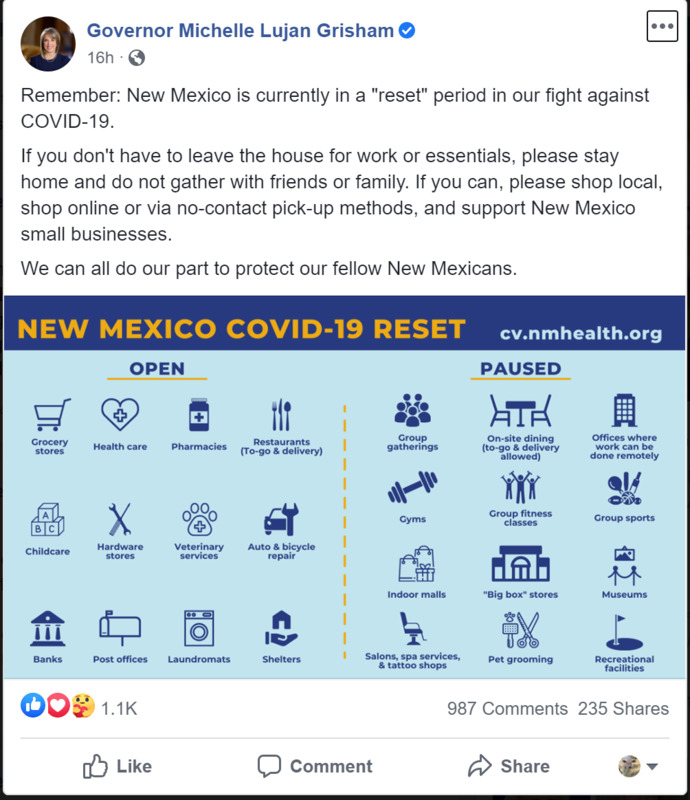
New Mexico's Governor Michelle Lujan-Grisham, gave her weekly update regarding the COVID-19 pandemic. The Governor addressed the rising number of COVID cases and deaths in New Mexico. She ordered a two week "reset" to lower the number of cases. This means that shopping centers, gyms, unessential stores, indoor dining, museums, group sports, etc have been closed for two weeks. The Governor has been facing a lot of backlash because of her COVID-19 mandates and policies. These new closures have upset the people of New Mexico further. I personally see them as a means to stop the spread of the virus and keep people healthy and safe. Yes, I do miss sharing a meal with friends and family, visiting a museum, watching a movie and just living a "normal" life. However, I understand that I need to be safe not only for myself but for my family and community as well. It is not about my needs, I need to consider others as well. This is not a time to be selfish and ego driven.
-

2020-11-20
This video shares fears, experiences, and the fight to see a better future.
-
2020-11-20
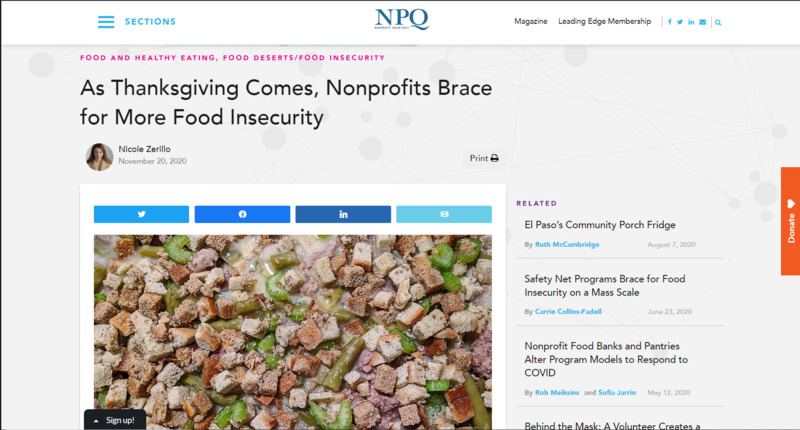
As Thanksgiving approaches, food nonprofits across the United States preparing to distribute more food this year because of increased food insecurity caused by COVID-19.
-
2020-11-20
Flying during Covid
I have needed to fly for family emergencies four different times since the pandemic began. The first time I felt uneasy but the fact that they seated us with an empty seat between each person and the requirement of face masks made me feel more comfortable. The second flight, however, was crowded with a woman sitting right next to me and turning her fact to talk to me 6 inches away – without her mask on!!!! That was nerve racking. But the last two flights were spaced out and everyone wore a mask. EXCEPT – the irony is that when they pass out the snack bags everyone on the plane removes their mask at the same time to eat. I simply choose to hold off on eating my snack bag for a half hour and wait until I see that people are done eating. There hasn’t been a big outbreak traced back to airplanes so I will continue to fly when my aging parents need help. And to keep others safe, each time I return from a trip, I quarantine and get tested.
-
2020-11-19
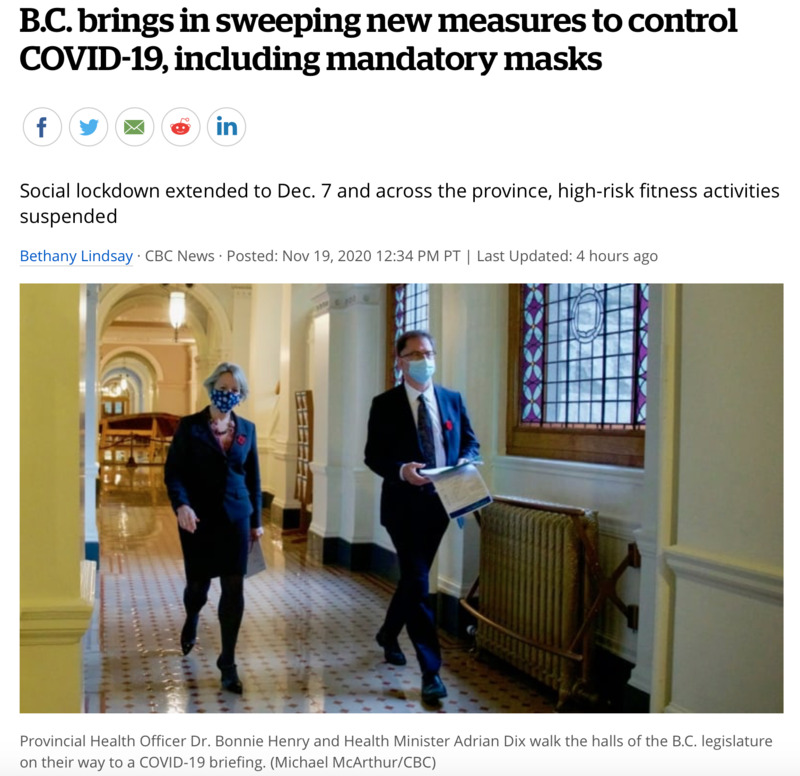
The province has introduced sweeping measures in order to curb the rise of Covid-19 cases. This has included a mask mandate, which is a reversal from previous policy. Other restrictions introduced encompass lessening the time spent in public indoor spaces or events.
-
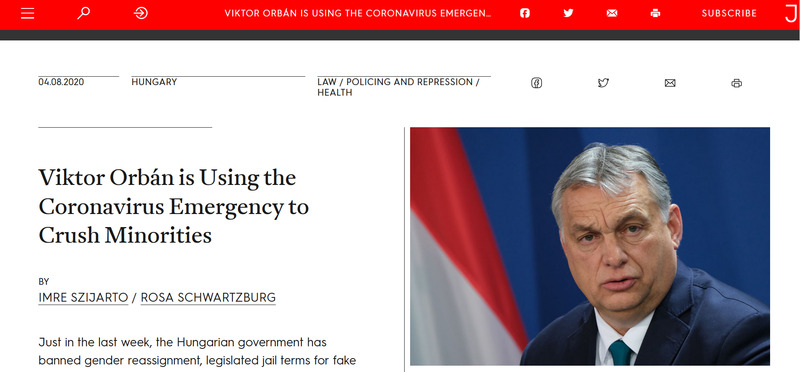
2020-04-08
In an article for Jacobin Magazine, Imre Szijarto and Rosa Schwartzburg describe in length how the far-right government of Hungarian Prime Minister Viktor Orban has taken advantage of the COVID-19 pandemic to pass a law to give itself emergency powers over civil society and the other branches of government. These emergency powers, which include the ability to censor journalists, attacks on LGBTQ rights, the power to grant government contracts (to Orban's cronies), and the takeover of art institutions, represents a blatant power grab that is unprecedented in Europe since the 1930s. Indeed, Orban's emergency power decree has drawn comparisons to figures as varied as Adolf Hitler and Emperor Palpatine (in Hungarian language memes), and the European Union leadership has strongly condemned Orban's decree as akin the "Enabling Act," which was passed by the Nazis in 1933. Orban's autocratic power grab and the democratic backsliding experienced by Hungary were already underway before the pandemic, but COVID-19 has allowed Orban to use a "state of exception" to effectively suspend liberally democracy in Hungary for the foreseeable future.
-
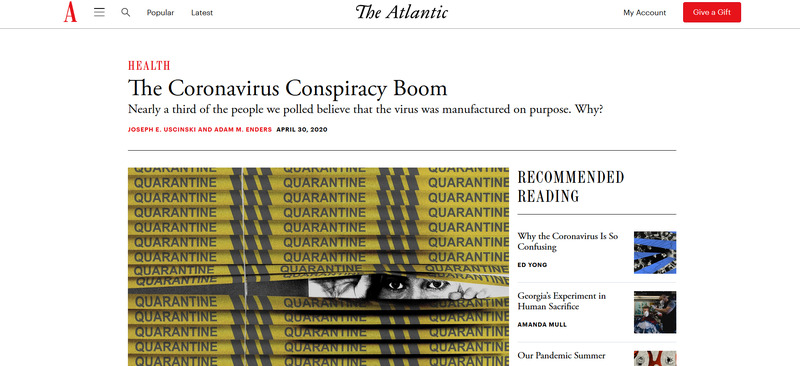
2020-04-30
The advent of the COVID-19 pandemic and its associated socioeconomic and political shock has created fertile grounds for the dissemination of conspiracy theories. In an article for the Atlantic Monthly, political scientists Joseph E. Uscinski and Adam M. Enders provide an overview of why conspiracy theories have developed and spread, and how they are being exacerbated by political polarization, groupthink, group identity, and misinformation. The authors also examine the different types of COVID-19 conspiracy theories, showing that certain kinds of conspiracy theories are associated with political identities and exacerbated by conspiratorial statements made by politicians.
-
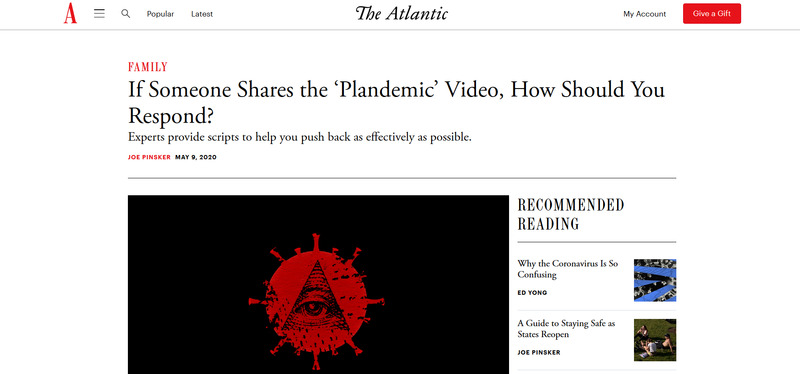
2020-05-09
The COVID-19 pandemic and its associated economic shock have created fertile conditions for the development and spread of conspiracy theories, especially about the nature of the pandemic. These conspiracy theories have begun to permeate the lives of many Americans, disrupting personal relationships through arguments and disgust. In an article for the Atlantic Monthly, journalist Joe Pinsker provides readers with advice on what to do if someone in their personal circle shares conspiracy theory videos, particularly the Plandemic documentary. Rather than be combative and insulting, Pinsker advises his readers to be emphatic and understanding. This allows readers to pivot the conversation toward addressing the conspiracy theorist's concerns, while also not causing them to be more entrenched in their positions. When these tactics do not work, however, Pinsker advises readers to give on them as a lost cause.
-
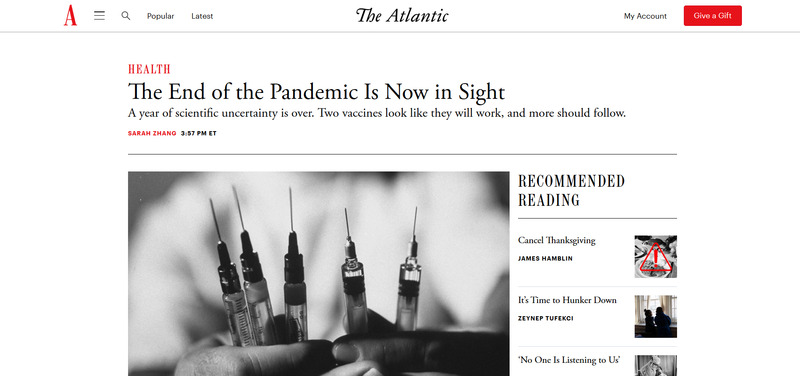
2020-11-18
With the development of two viable COVID-19 vaccines, it appears that the end of the pandemic appears to be at hand in the near future. In an article for the Atlantic Monthly magazine, journalist Sarah Zhang explains how these viable vaccines were developed using new technologies and how the resolution of the pandemic is now more dependent on policy choices made by political leaders, namely the President of the United States.
During the initial months of the COVID-19 pandemic, medical professionals, epidemiologists, and vaccinologists were in the dark about the symptoms, treatability, and curability of the disease. After months of intense hands-on experience and in-depth genomic research, the companies Pfizer and Moderna have developed viable vaccine candidates. But these vaccines are different from typical vaccines: they are mRNA vaccines. This means that they work by injecting mRNA which encodes viral proteins, rather than injecting a weakened or dead SARS-CoV-2 virus.
mRNA vaccines, according to Zhang, were once thought to be potentially unviable, but the positive preliminary results of the Pfizer and Moderna mRNA vaccines may mark the beginning of a new era of vaccine research and development. In the future, Zhang says, mRNA vaccines may be developed for the Zika virus or for personalized forms of cancer. However, a major drawback of mRNA vaccines is their fragility, as they require extremely cold temperatures to be preserved.
Now that these vaccines may be available for public use in the near future, it is up to the United States' political leadership to formulate policies to promote the vaccination of the populace and the mitigation of COVID-19 infections during the winter. According to Zhang, "Every infection we prevent now—through masking and social distancing—is an infection that can, eventually, be prevented forever through vaccines."
-
2020-05-03
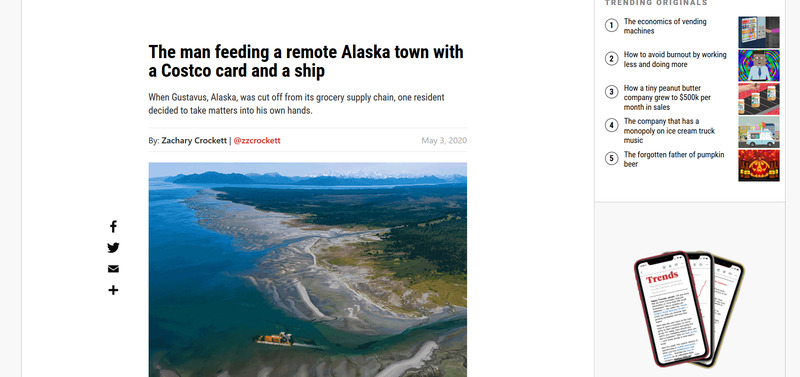
The advent of COVID-19 has made it more difficult for isolated, rural communities to maintain access to basic necessities such as food, water, and personal care products. In an article for the Hustle, journalist Zachary Crokett recounts the story of a Gustavus, Alaska grocer named Toshua Parker, who has taken it upon himself to supply the needs of his fellow townspeople in a time of crisis. Through the use of a shipping freighter, business connections, and a trusty Costco membership card, Parker has mostly succeeded in supplying the community's consumer needs and has made his business, Toshco, an economic pillar of Gustavus.
The success of Parker's small, rural business in the face of COVID-19, according to Crockett, is representative of a "renaissance" of rural businesses, which are an important component of supplying a town's consumer needs. Without these businesses, isolated rural communities such as Gustavus would have a harder time enduring the pandemic relative to communities with robust economic centers.
-
2020-11-18
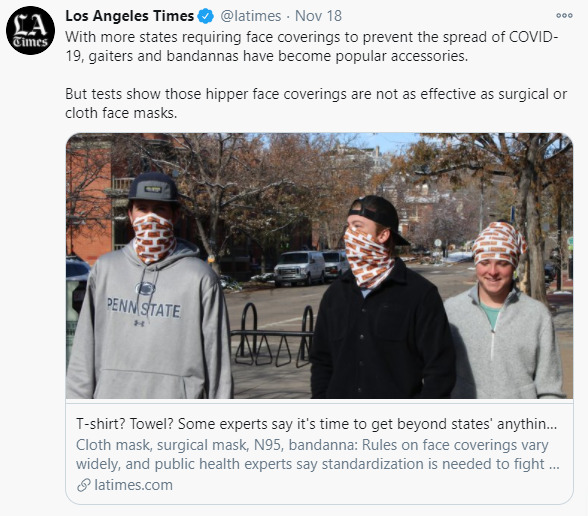
With more states requiring face coverings to prevent the spread of COVID-19, gaiters and bandannas have become popular accessories. But tests show those hipper face coverings are not as effective as surgical or cloth face masks.
-
2020-11-17
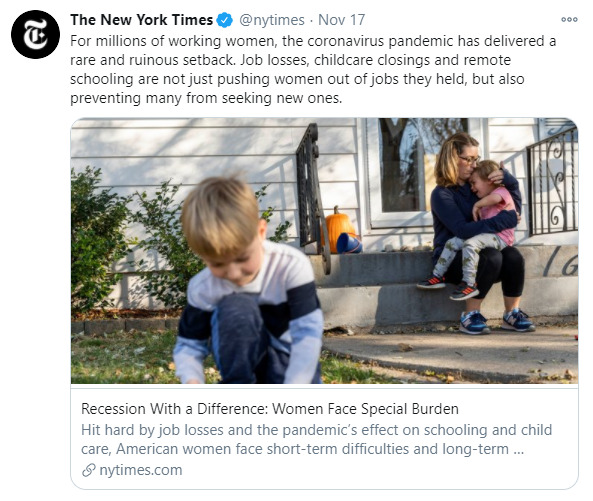
For millions of working women, the coronavirus pandemic has delivered a rare and ruinous setback. Job losses, childcare closings and remote schooling are not just pushing women out of jobs they held, but also preventing many from seeking new ones.
-
2020-11-16
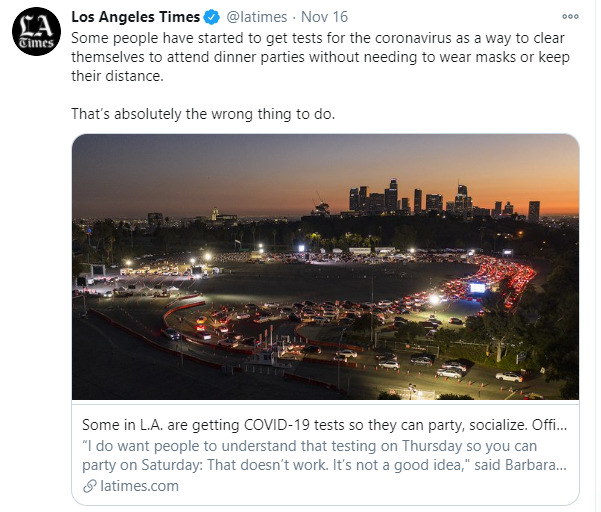
Some people have started to get tests for the coronavirus as a way to clear themselves to attend dinner parties without needing to wear masks or keep their distance. That’s absolutely the wrong thing to do.
-

2020-11-19
California Governor Gavin Newsom announced a limited stay at home order on Thursday that would require non-essential work and gatherings to stop between 10 pm and 5 am in counties with high rates of COVID-19. The order is set to take effect on Saturday at 10 pm and will last for one month.
-
2020-11-19
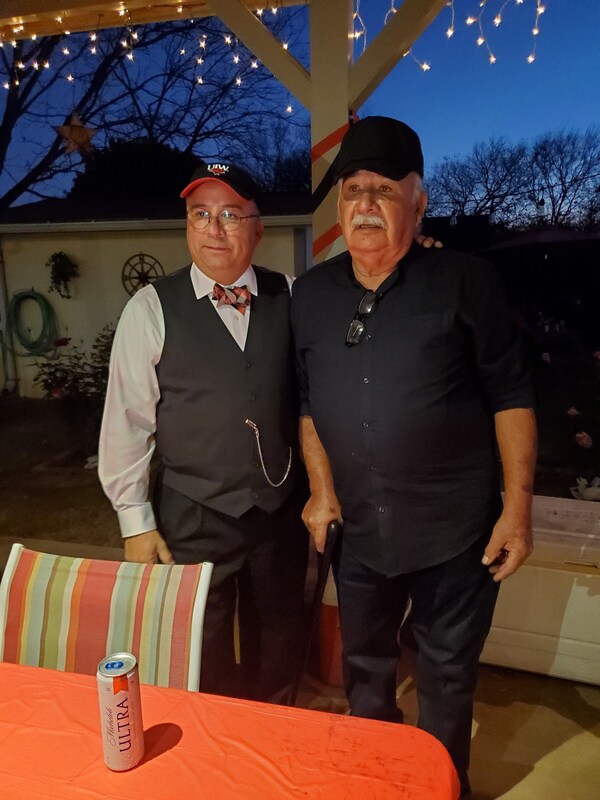
It was the fall of 2019, and the celebration was on for graduation. Two Air Force Veterans are standing side-by-side for a father and son picture. This moment represents the sky is the limit, and the only thing to do is to move forward and continue with a masters program. Continuing with my higher education meant a continuation in life events for my dad. COVID-19 and his untimely death was not foreseen for the new year of 2020. This will always be a happy time of our lives.
-
2020-11-19
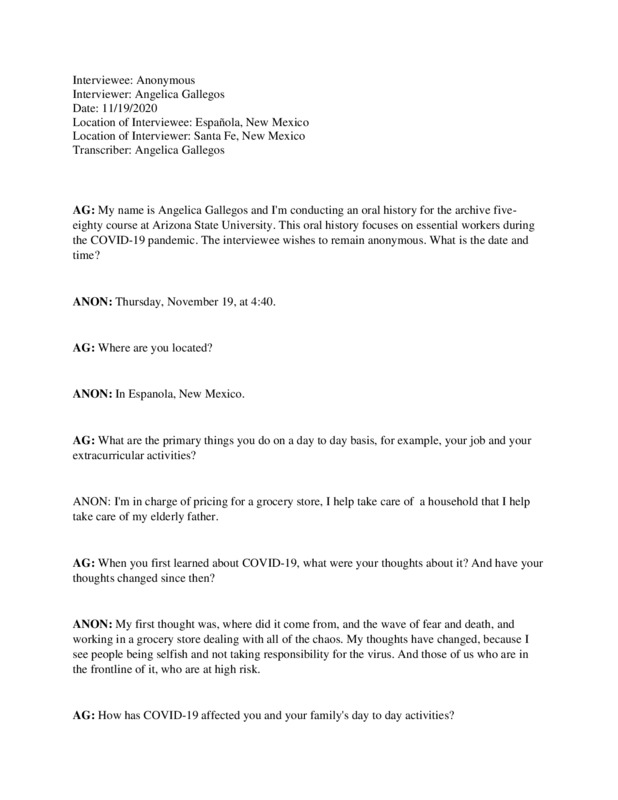
The interviewee discusses her life and daily activities during the COVID-19 pandemic. She addresses her role as an essential employee while caring for her family.
-
2020-11-19
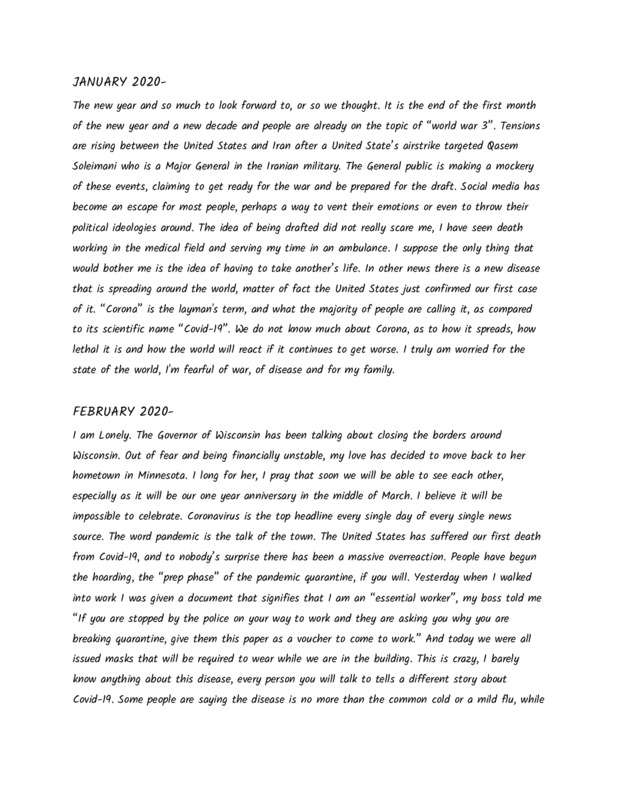
To show the hardships and happiness throughout the pandemic year of 2020
-
2020-03-13
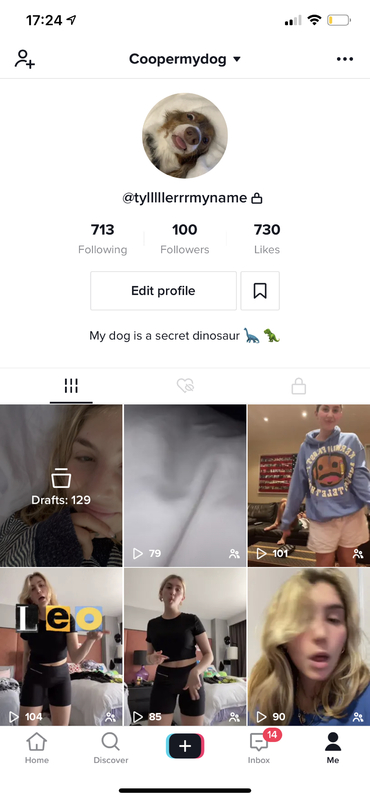
March 13, the covid-19 virus struck my highschool. We were sent home early and spring break was prolonged. Everyone assumed this would last a week maybe a month, but I knew that the devastation would last a long while more. Everyday during my lockdown, I focused on myself, more than I ever had before. I worked out every day, I baked, I did my school work, I was on a schedule. Over the four weeks I barely went out of my apartment, I tried my best to keep my head up high and try not to worry about the essential and front line workers. I buried myself into Tik Tok, which is what my story is going to be about.
Through lock-down I became quite the dancer. I managed to learn most of the Tik-Tok dances and become fascinated with the Tik Tok algorithm. Although this sounds like a bit of a problem, I was happy, I spent hours a day on my phone scrolling. A screenager, I know. Well, in the midst of my scrolling I would come to romanticize my life post covid, how I will be making new friends and exploring new places. I made one Tik Tok a day, no kidding. I created an archive of the lockdown in my drafts. I devoted a lot of my day to Tik Tok, I kept up with the drama and followed all of the baking trends.
However, my Tik Tok debut never occurred, sadly. But, I did come to find out new things about myself. I know, most people find social media toxic in some sort of way, as I do now, but during lockdown I felt it was a sort of outlet. I expressed myself and laughed, and saw a little happiness while being inside. I realized that all of my saved videos on Tik Tok would be an archive for my children, they would look at the videos and the umpteenth amount of selfies I took and laugh. Of course, the pandemic is no funny situation at all, but when my children learn about it and question how covid was for me I can show them.
The photograph is not as important as my realization of how the Tik Tok changed the pandemic. It might have altered it in a bad way at times because people were glued to their screens. But it is okay for people to spend time on it, to make them laugh and to make them maybe become more creative.
-
2020-10-05
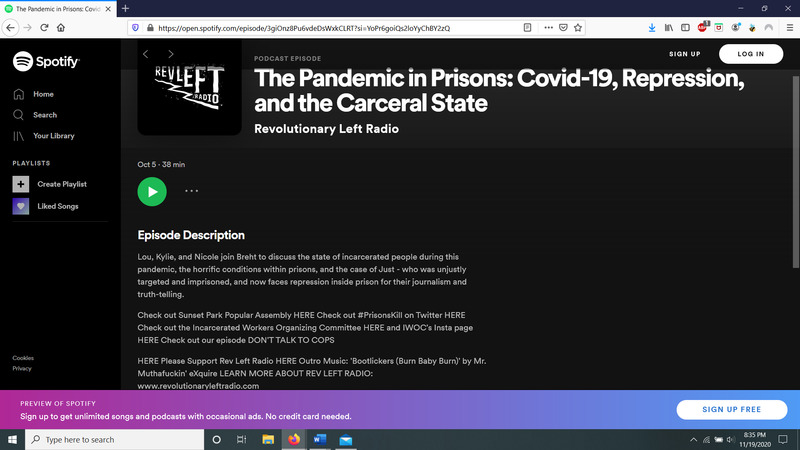
This podcast episode is from the Revolutionary Left Radio podcast featuring show host Breht and guests.
-
2020-07-23
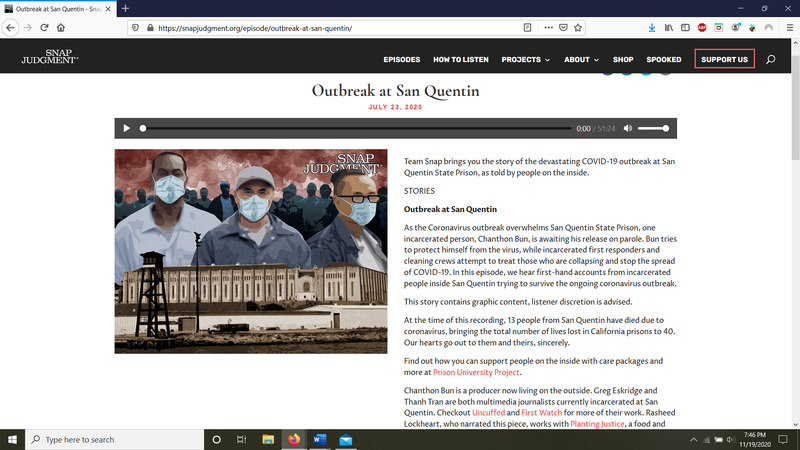
Podcast episode produced by Snap Judgment in which they look at covid-19 outbreaks in San Quentin prison
-
2020-09-01
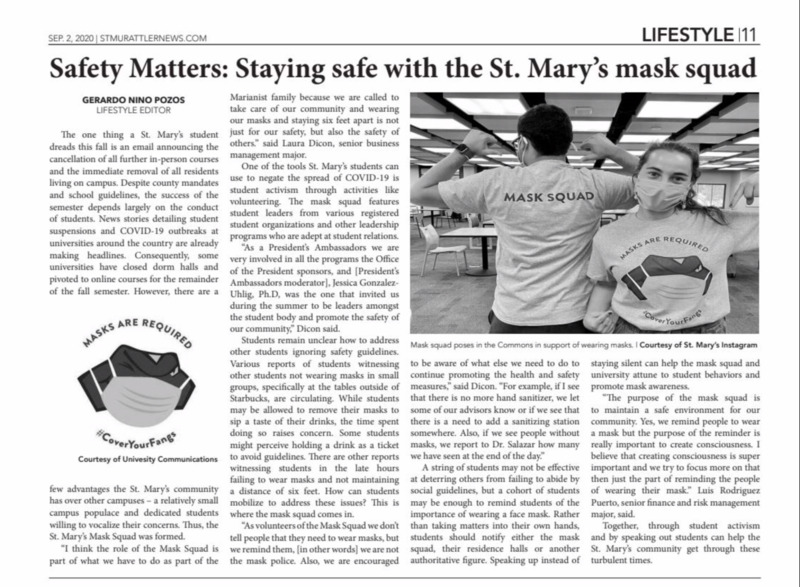
A feature story in the lifestyle section of The Rattler student newspaper is about the St. Mary’s Mask Squad, a group of student leaders from different RSOs on campus promoting safety and Marianist values. The job of the mask squad is to not only promote proper mask wearing but find ways the campus can improve on safety for its students and staff. This promotes our Marinist values by caring about other’s safety and health and making sure our actions are aimed towards protecting those around us.
-
2020-09-01
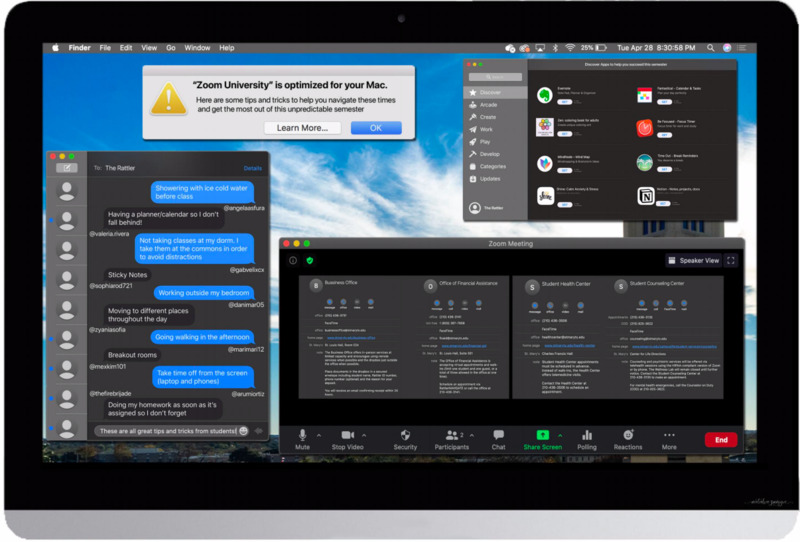
This is the center spread graphic of the first issue of the 2020 fall semester—the first semester where many students on the St. Mary’s campus have gone to primarily remote learning. This center spread is meant to bring awareness to the resources students have available to help them through unfamiliar times: the resources listed include the business office, the office of financial assistance, the student health center, and the student counseling center. Also included are tips from fellow classmates on how to stay engaged and succeed and helpful apps that may help them stay organized throughout online learning.
-
2020-11-18
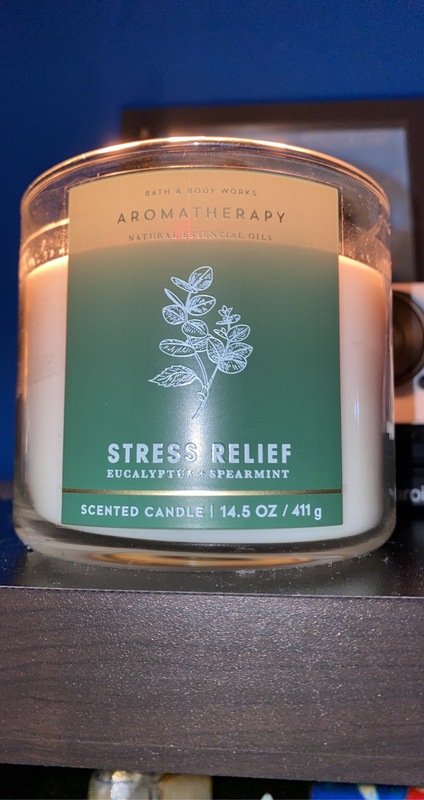
Anxiety is something that is not fun to deal with especially during a pandemic when we have no one to talk to or can't really go out much. A way that helps me calm down is meditation whether it be turning off the lights and lighting up a scented candle or just going outside and take a breath of fresh air. These new creative ways that were taught to me by a Professor at St. Mary's University has helped me a lot in different situations. Lying down with a scented candle helps relieve your stress or anxiety by calming you down and not thinking about the situation that is happening around us. Doing this for ten minutes a day really does make a difference in your everyday life. Going outside for a breath a fresh air is also very calming because you would be outside your house and looking at nature really does help forget about the pandemic that we are dealing with. So whenever you are feeling anxious a candle or going outside can help relax your thoughts and body.
-
2020-05
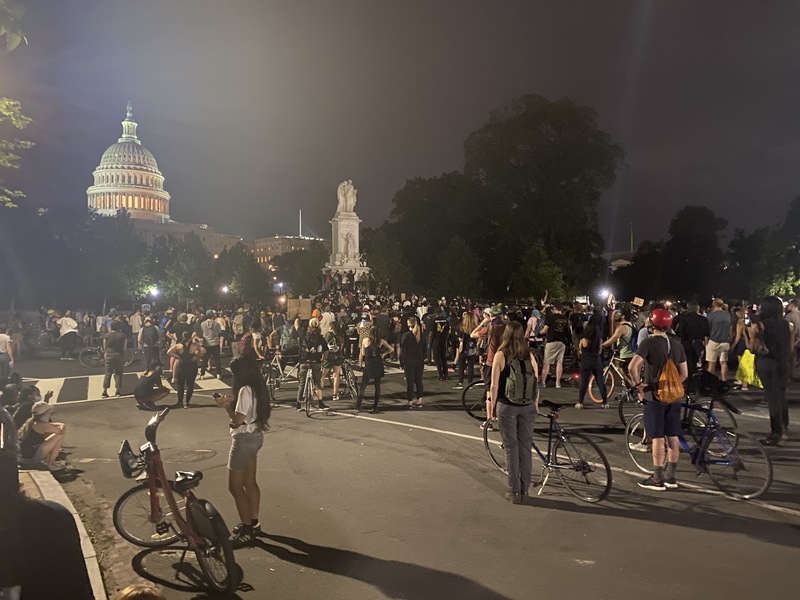
During the spring, I volunteered at the McKenna Center--a homeless shelter on N Capital St in DC. The man to my left in the picture in front of the shelter is a man named Johnny. He his from Bolivia and is the janitor at the center. Last spring I tutored him, and in return he cooked food for me and a few other volunteers to deliver to about 100 people every week. Some of the other photographs are fro the protests around the same time.
-

2020-11-19
新型コロナウイルスの有力な治療薬になる可能性があります。京都府立医科大学などの研究チームは新型コロナウイルスが細胞に侵入するのを防ぐ特殊なたんぱく質を開発したと発表しました。 京都府立医科大学・星野温助教:「(新型コロナウイルス)治療薬がまだ『これ』というのが確立されてませんので、その一つの大きな候補となる開発技術になりますので、大きく社会に貢献できるものと期待します」 新型コロナウイルスは表面にあるトゲが人の細胞の表面にある「ACE2」と呼ばれる突起と結合することで細胞内に侵入します。京都府立医科大学の星野温助教らの研究チームは細胞の突起に結合する前に、ウイルス表面のトゲと結合する特殊なたんぱく質を開発しました。トゲと結合する力がACE2よりも100倍以上強いということです。このたんぱく質を軽症や中等症の患者に投与することで感染した後に症状の悪化を抑える効果が期待できるということです。また、似たような仕組みの抗体製剤と比べてウイルスが変異しても効果が変わらないとしています。 京都府立医科大学・星野温助教:「抗体製剤は比較的スパイク(ウイルスのトゲ)と点でくっついている感じですね。私たちのたんぱく質製剤は元々、スパイクがACE2(細胞の突起)にくっつく面をすべてカバーしているので」 今後は企業と協力して来年度に臨床試験を始め、再来年度の実用化を目指したいとしています。
It has the potential to be a powerful remedy for the new coronavirus. Research teams including Kyoto Prefectural University of Medicine have announced that they have developed a special protein that prevents the new coronavirus from invading cells.
Assistant Professor Atsushi Hoshino, Kyoto Prefectural University of Medicine: "(New coronavirus) Therapeutic drug has not yet been established, so it will be one of the major candidates for development technology, and will greatly contribute to society. I expect it to be possible. "
The new coronavirus invades the cells by binding the spikes on the surface to the protrusions called "ACE2" on the surface of human cells. A research team led by Assistant Professor Atsushi Hoshino of Kyoto Prefectural University of Medicine has developed a special protein that binds to spikes on the surface of the virus before it binds to the protrusions of cells. It means that the force to bind to spikes is more than 100 times stronger than ACE2. By administering this protein to patients with mild or moderate illness, it can be expected to have the effect of suppressing the worsening of symptoms after infection. In addition, compared to antibody preparations with a similar mechanism, the effect does not change even if the virus mutates.
Atsushi Hoshino, Assistant Professor, Kyoto Prefectural University of Medicine: "It feels like antibody preparations are relatively sticking to spikes (virus spikes). Our protein preparations already have spikes sticking to ACE2 (cell protrusions) and it covers all of them. "
In the future, we would like to cooperate with companies to start clinical trials next year and aim for practical application in the following year of next year.
Video translated by Youngbin Noh
-

2020-11-19
This is a news that talks about the highest number of COVID cases in Tokyo. I believe this is caused by all the GO TO Travel which promoted people to travel despite being in COVID, and how all restaurants are open to dine-in and no one doing take-out. Also, Izakaya, a drinking/eating type of restaurants are usually have seats close to each other and do not have good ventilation.
東京都できょう、新型コロナウイルスの感染者が534人確認され、2日連続、過去最多を更新しました。 都は4段階の警戒レベルを「最高」に引き上げました。 きょう、都内で感染が確認されたのは534人できのうの493人を上回り最多を更新しました。 1日の新規感染者数が500人を超えるのは初めてです。 重症者はきのうから1人減った38人です。 こうした中、都は専門家と会議を開き、「感染状況」についての警戒レベルをおよそ2ヵ月ぶりに4段階で最も深刻な「感染が拡大している」に引き上げました。 特に重症化のリスクがある高齢者が大幅に増加したとして注意を呼びかけました。 (小池知事)「急速な感染拡大の局面にあるということ。高齢者・基礎疾患のある人は会食への参加を控えてもらいたい。避けてもらいたい。」 ただ、飲食店の営業時間の短縮要請については、「時短の効果とマイナスの影響を比較して考える必要がある」など慎重な意見もあり、現時点では行わない方針です。
In Tokyo, 534 people were confirmed to be infected with the new coronavirus, which was a highest number for the second consecutive day. Tokyo has raised the four levels of alertness to "highest". Today, the number of confirmed infections (543) in Tokyo exceeded 493. This is the first time that the number of newly infected people exceeds 500 per day. The number of seriously ill people is 38, one less than yesterday. Under these circumstances, the city held a meeting with experts and raised the alert level for "infection status" to the most serious "infection is spreading" in four stages for the first time in about two months. In particular, Tokyo has stated that the number of elderly people at risk of becoming severe has increased significantly.
(Governor Koike) "We are in a phase of rapid infection spread. We would like elderly people and people with underlying illnesses to refrain from attending dinner. Please avoid it."
However, regarding the request to shorten the business hours of restaurants, she stated that "It is necessary to compare the effect of shortening the time with the negative effect", so we will not make that decision at this time.
Video translated by Youngbin Noh
-
2020-11-19
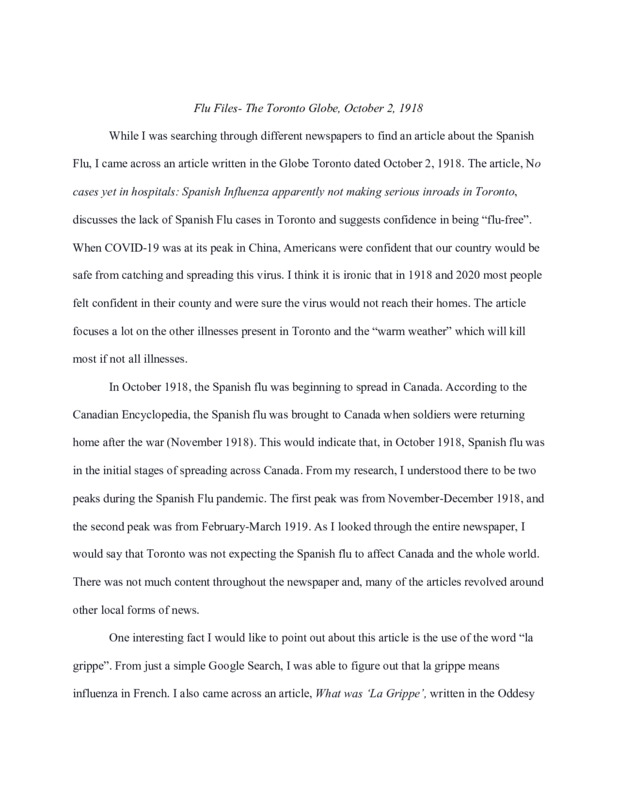
In this short paper, I wrote about similarities between the 1918 Spanish Flu the 2020 COVID-19 pandemic. I analyze an article written in the Toronto Globe on October 2nd, 1918, and compared it to the events that happened in January-February 2020 in the United States.
-
2020-11-02
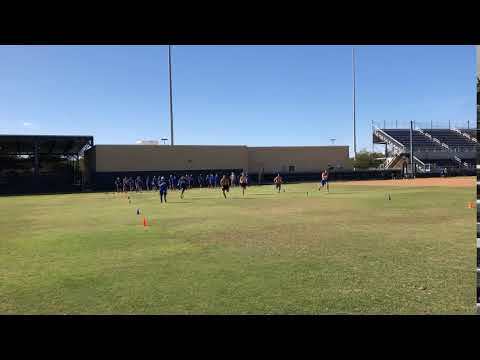
This item gives a sneak peek into a workout by St. Mary's University Baseball team. Their workout outdoors allows everyone to be spread out and maintaining social distancing requirements.
-
2020-11-18
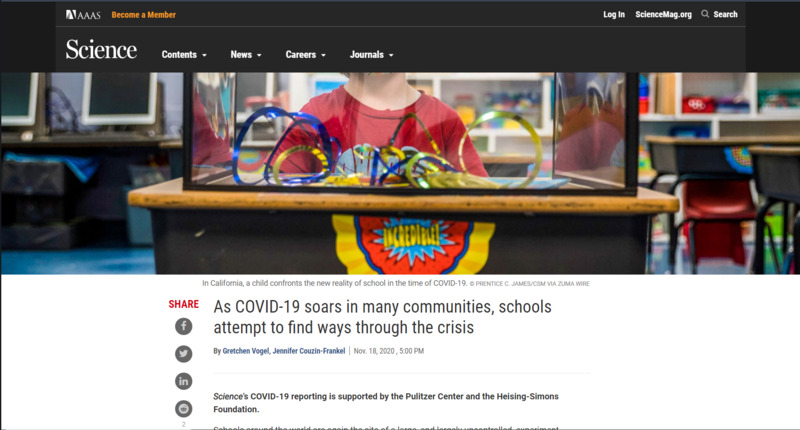
As schools reopened around the world, countries saw surges in new COVID-19 cases. In response, some countries have re-closed schools while others have remained upon and employed strict guidelines.
-
2020-03-16
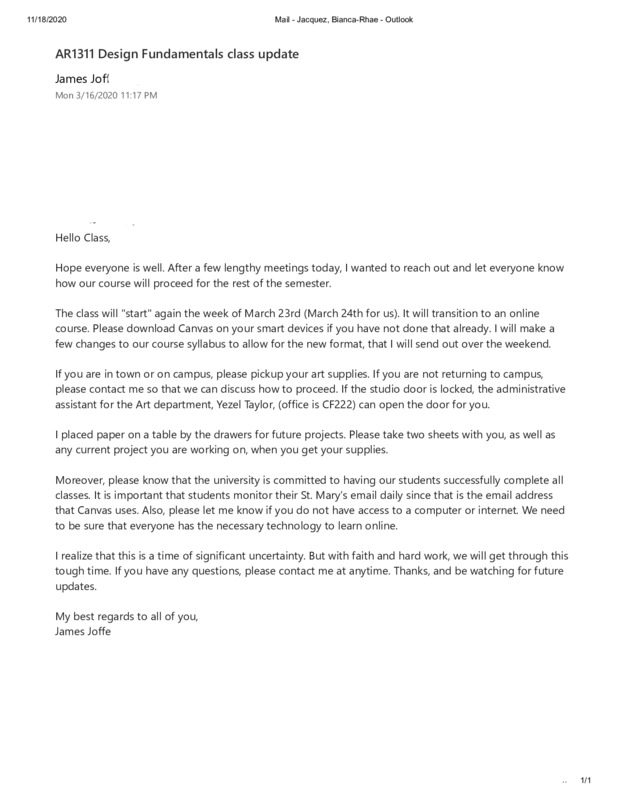
In March 2020 while on spring break we got an email sent from the Office of the President saying that spring break would be extended an extra week to allow staff to transition class to fully online/virtual. When I heard this news I was worried about how my art class would continue. When Dr. Joffe sent this email it felt reassuring that our professors were acting fast to create plans for the class.
-
2020-09-28
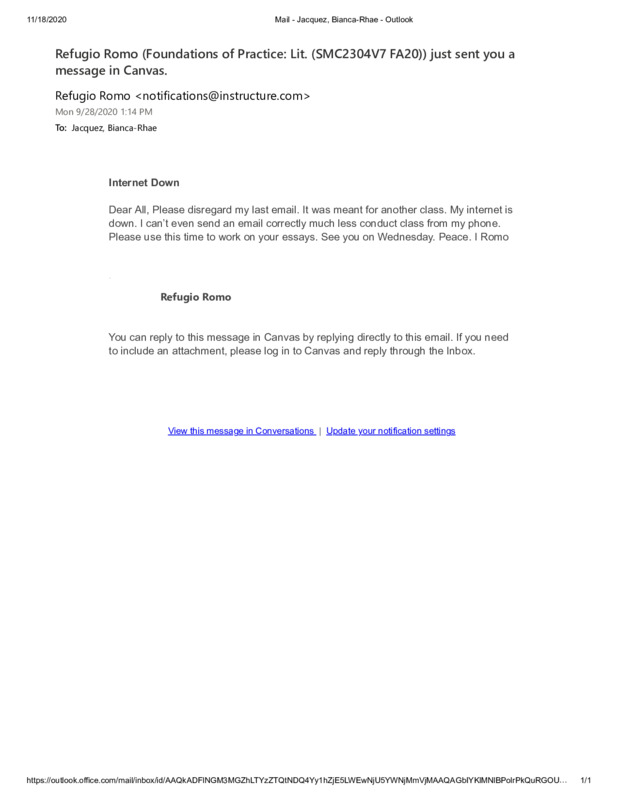
Dr. Romo sent these two emails to his students after expressing issues with his internet. The first email he had sent was directed towards the wrong class and when we sent the second email he made emphasize on the struggle of using his phone to communicate correctly. This is one professor that was okay with opening up about his struggles with online teaching at the moment they were happening. Professors aren't immune to having technical issues while teaching online so have an open conversation with students about those struggles makes it feel less frustrating.
-
2020-08-10T15:06
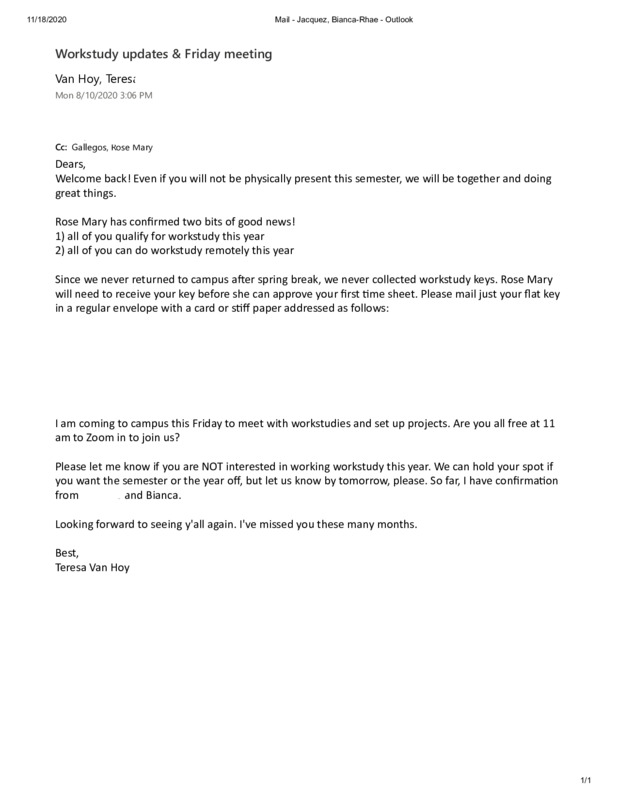
When I got the email saying that as a work-study student at St. Mary's University I was going to be able to work from home for the semester I was extremely excited. Before the pandemic, we were only allowed to work in-person while on campus. In March all work-studies were told that they would not be able to work at home, so it was stressful waiting to hear if we were going to be allowed to work. Being able to still work on the projects that we are assigned during this pandemic is a nice escape from reality.
-
2020-11-18
The contributor of this item did not include verbal or written consent. We attempted to contact contributor (or interviewee if possible) to get consent, but got no response or had incomplete contact information. We can not allow this interview to be listened to without consent but felt the metadata is important. The recording and transcript are retained by the archive and not public. Should you wish to listen to audio file reach out to the archive and we will attempt to get consent.
-
2020
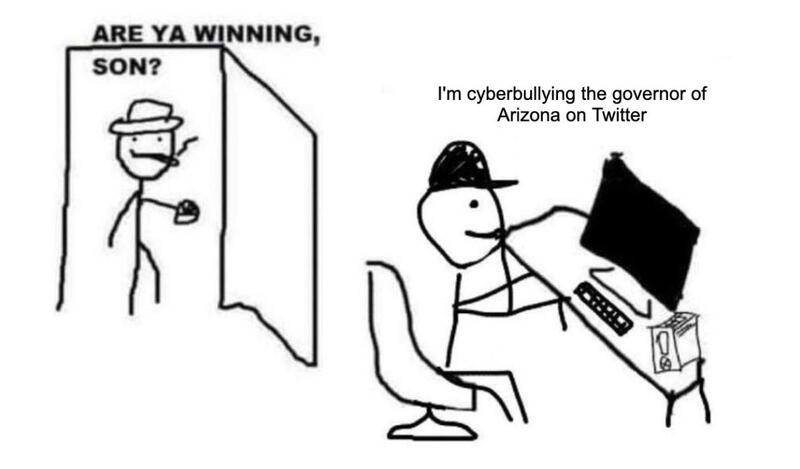
The once mildly disliked man is now disputed moreso as a general failure when it came to Red for Ed and the COVID-19 cases in Arizona.
-
2020-09-01
These photos are introductions of The Rattler (St. Mary's University school newspaper) staff to the campus. Typically students interested in working on staff can meet the current editors at one of the many in person meetings, but since all meetings are held over Zoom and students can pick up more stories through a simple email putting names the faces of the section editors can be a bit hard. These introduction photos can help writers connect with the staff they will work with so closely, and understand who may be best to contact if they have any questions.
-
2020-11-04
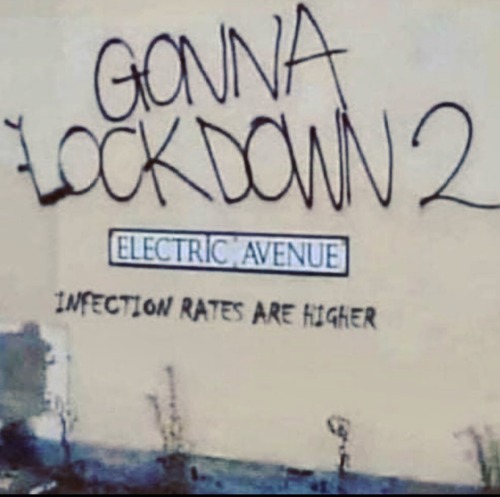
The expected second wave hits and now some countries must lockdown once again.
-
2020-06-10
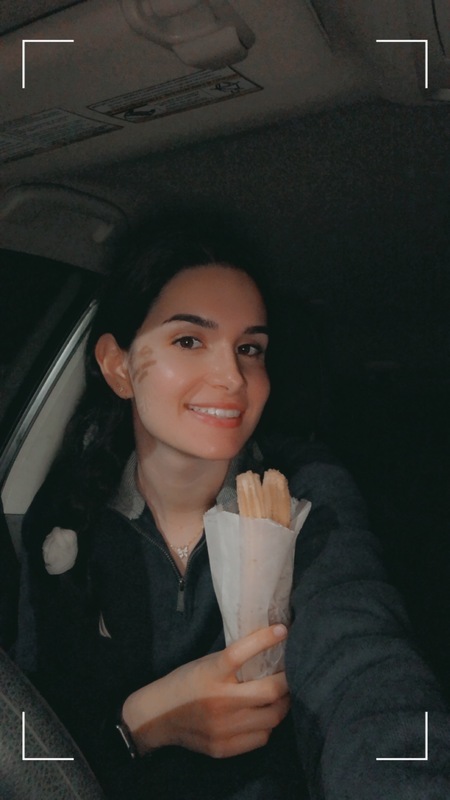
My friend Maddie sent me this selfie of her getting some churros during quarantine. We used to always go get churro's together but many places have been closed. She found a food truck that sells churro's and she decided to go get it as it requires minimal contact with people and allows for social distancing! Like me, she uses food (specifically sweets) to help with stress and anxiety! She described the change during COVID, "Before COVID one of my coping mechanisms for when I’m stressed was to go get something sweet to eat. But I had to adjust that, and now I get something sweet to-go and sit in my car while I listen to music."
-
2020-06-10
My friend Maddie sent me this selfie of her getting some churros during quarentine. We used to always go get churro's together but many places have been closed. She found a food truck that sells churro's and she decided to go get it as it requires minimal contact with people and allows for social distancing! Like me, she uses food (specifically sweets) to help with stress and anxiety! She described the change during COVID, "Before COVID one of my coping mechanisms for when I’m stressed was to go get something sweet to eat. But I had to adjust that, and now I get something sweet to-go and sit in my car while I listen to music."
-
11/18/2020
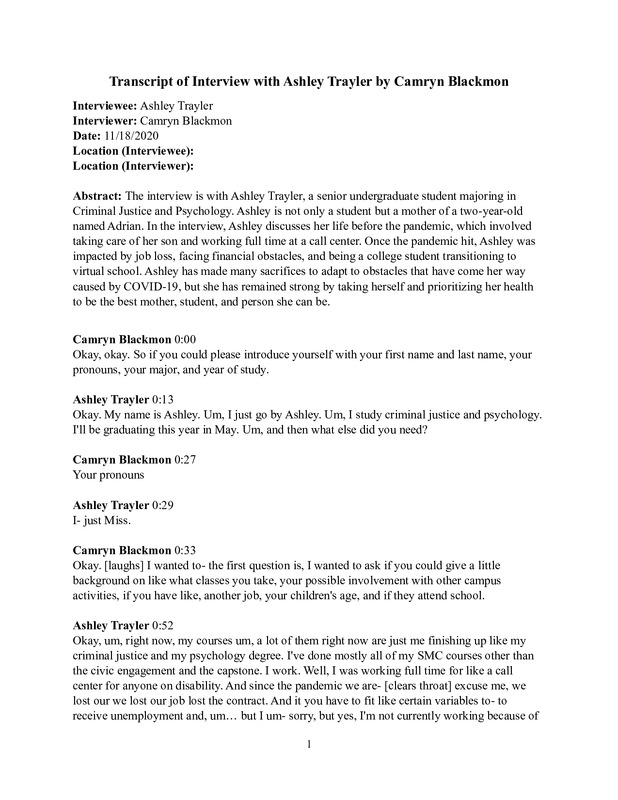
The interview is with Ashley Trayler, a senior undergraduate student majoring in Criminal Justice and Psychology. Ashley is not only a student but a mother of a two-year-old named Adrian. In the interview, Ashley discusses her life before the pandemic, which involved taking care of her son and working full time at a call center. Once the pandemic hit, Ashley was impacted by job loss, facing financial obstacles, and being a college student transitioning to virtual school. Ashley has made many sacrifices to adapt to obstacles that have come her way caused by COVID-19, but she has remained strong by taking herself and prioritizing her health to be the best mother, student, and person she can be.
-
2020-11-12
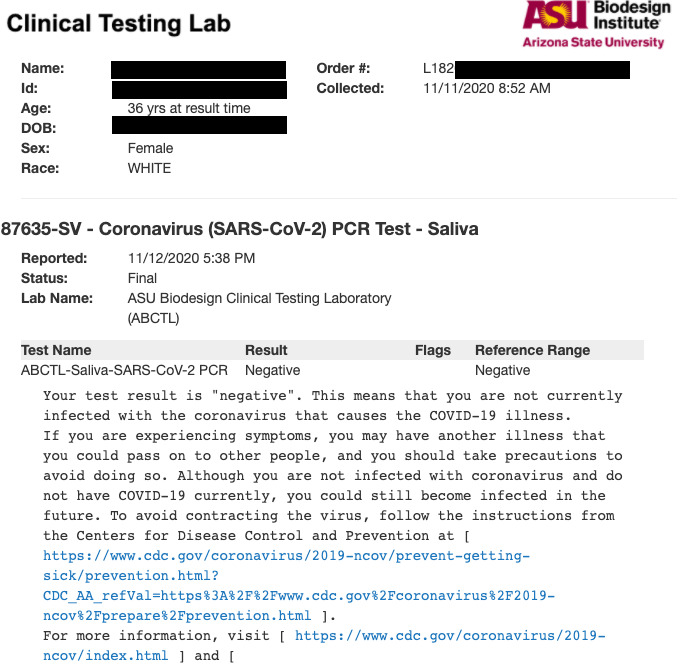
Last week I felt sick and had a slightly metallic taste in my mouth. I completely understand that many underlying issues can cause this, but because the testing at ASU is fairly quick and easy, I decided to get a test. The test is super fast and easy. You sign up, get a QR code, and drive through a huge parking lot off of Rio Salado behind the stadium. You spit into a cup through a straw, they scan your code and take the sample, and that's it. I had my results in less than 48 hours and all electronically.
COVID-19 infection rates are on the rise across the United States, and it's better to know. My test came back negative, but my daughter was sent home from school Monday for coughing and a runny nose. She can't go back to school without a doctor's note or a COVID test, and unfortunately, she can't use the ASU testing site. There's community testing, Embry Women's health, and as far as I can tell, a rapid response site in Mesa that charges $100 for quick results.
-

2020-11-18
A vehicle was how a commuting student got to and from school. I loved driving to school it gave me and opportunity to reflect on my day and go over any activities I need to do during the day and just listen to music. During this pandemic I can not do any of those activities. All classes are online so there is no need to drive my car and it just sits in my driveway. Driving was an everyday thing for everyone and since quarantine I have gone days without driving. However, I didn't not mind not having to pay for gas as often. This is the only plus side I see from not being able to drive during the pandemic.
-
2020-10-14
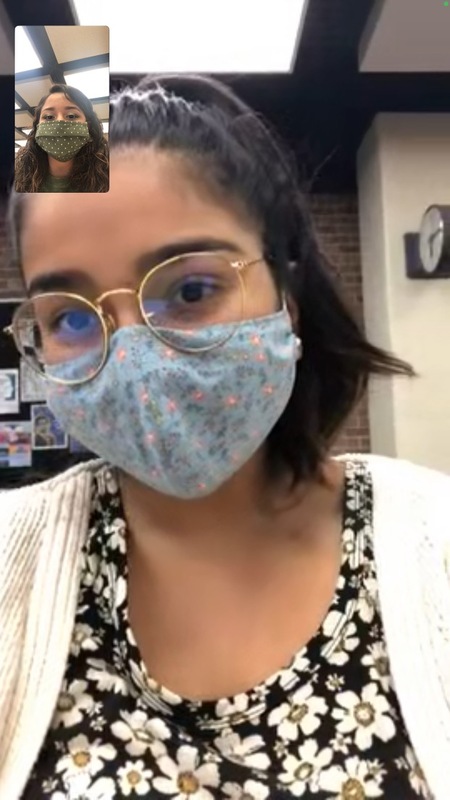
My friend Victoria, has shared ways that she has been able to keep in touch with her friends during this time of quarantine, social distancing, and precaution. Victoria captioned this screenshot with: "Before COVID, I would hangout with my friends in person which was a good and fun stress reliever. However, now that we have to social distance, I FaceTime them which helps just as much" I, personally have also resulted in communicating with my friends via video chat calls. I usually try and schedule a time to call them where we can catch up and chat. I usually am not a huge video chat fan however, with COVID-19, I have become one. In order to minimize the spread of the virus and keep our families safe, most of my friends and I, have been relying solely on facetime calls to catch up. It's weird but it's definitely better than getting sick!
-
2020-07-01
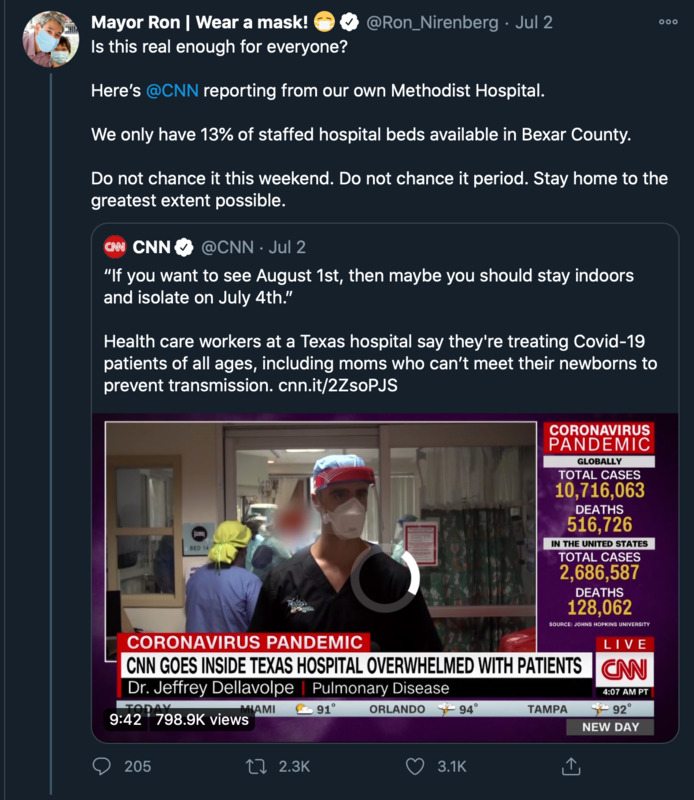
These series of images are tweets from or about San Antonio mayor Ron Nirenberg and his administration's actions regarding the COVID-19 outbreak in San Antonio.
Through tweets, the local government mobilized to disperse political, economic, and medical information. Information such as case statistics, social distancing warnings, how to stay safe, and where to get tested for COVID.
-
2020-08-17
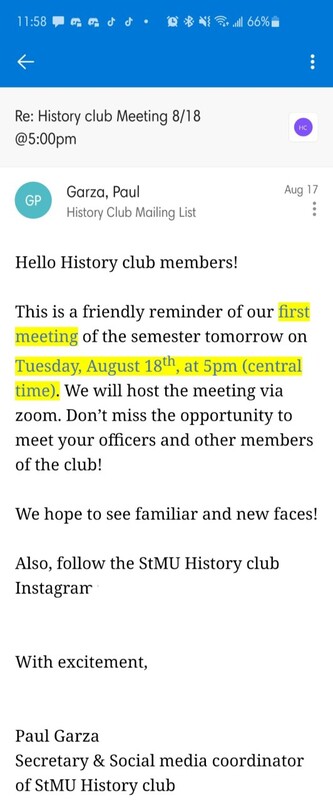
St. Mary's University clubs had to move online during the Covid-19 pandemic. As the semester started the History Club sent out a welcome letter to members with information on how to connect to the zoom meeting which would host the club's meetings for the semester.
-
2020-11-18
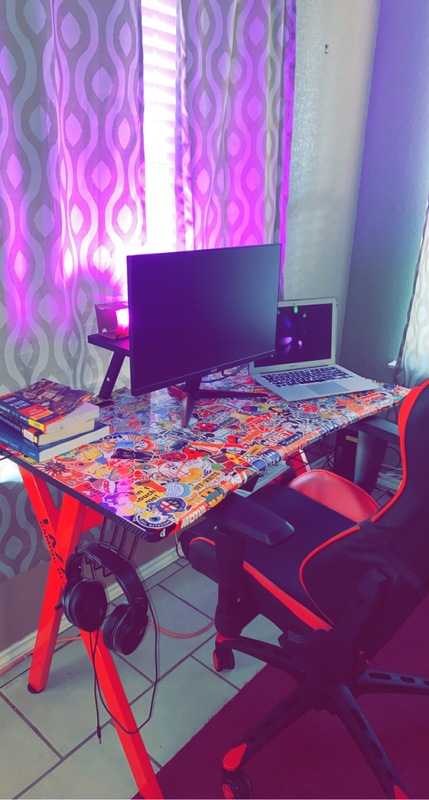
This is my desk that I would attend my online classes from. This is definitely different from the normal desks or tables I’m familiar with or anyone student is. This is different also because you don’t have to choose where to sit in the class. Do you sit up front, in the middle or the back of the class? With online classes every student is front and center on their screen. When coming to class I would be almost uncomfortable having to takes notes in such a small area to don’t disturb the student on your left or right. With your own desk you have the freedom to spread out a feel comfortable with taking notes.
-
2020-11-18
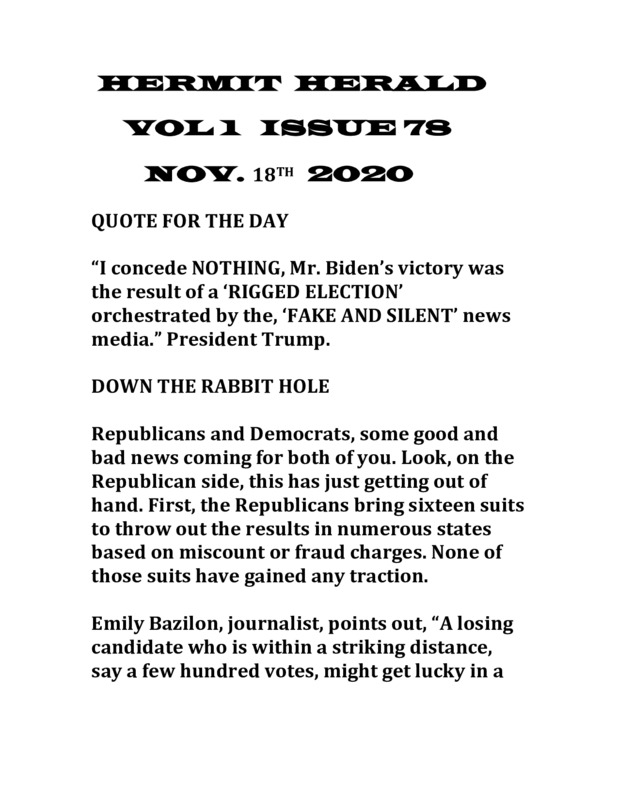
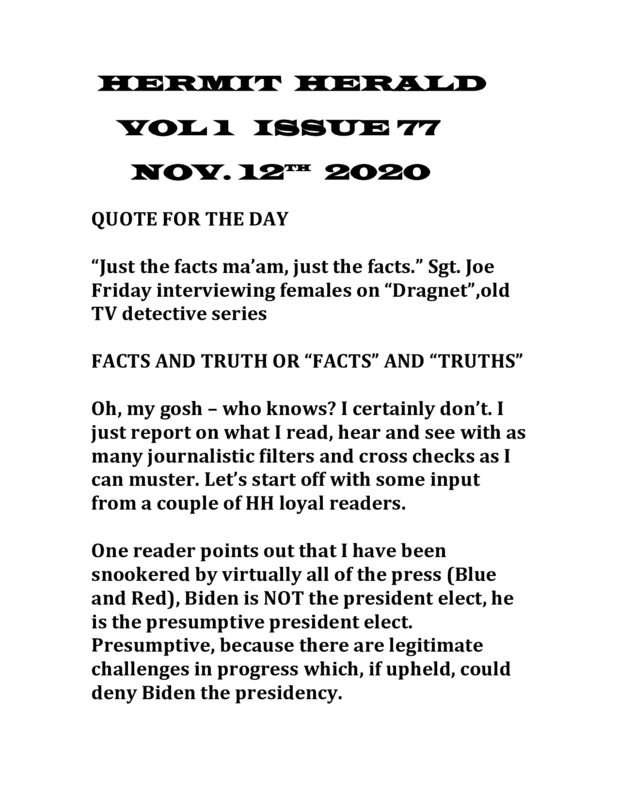
ELECTION CONTENTION
-
2020-11-12
Election results fighting