-
2020-03-24
As borders around the world were slamming shut, I organised for my daughter to return home from Israel very fast, experiencing the anxieties of my childhood overlaid with the stories of my parents .
-
2020-03-23
Article about celebrating a barmitzvah during the Covid19 restrictions
-
2020-04-23
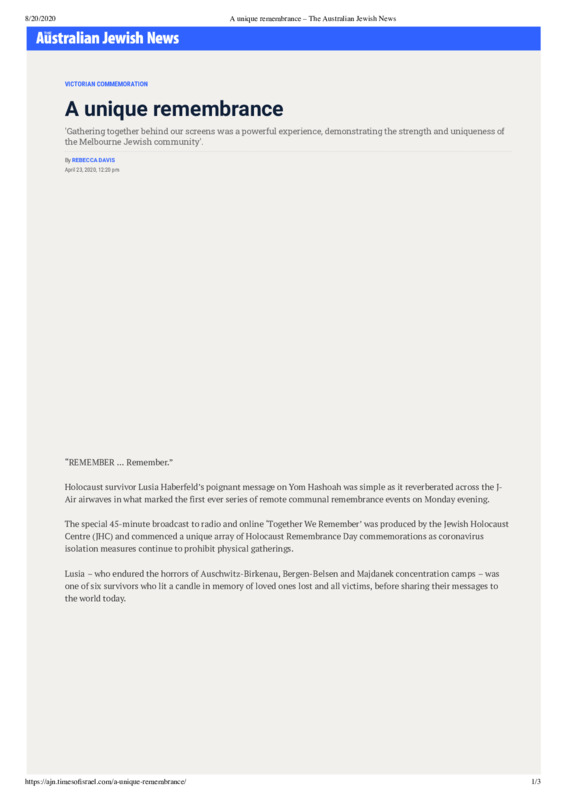
This article, written by Rebecca Davis and published on 23 April 2020, reports on the Yom Hashoah events held the previous day, all online because of the lockdown.
Three events are reported on: "special 45-minute broadcast to radio and online ‘Together We Remember’ [which] was produced by the Jewish Holocaust Centre (JHC) and commenced a unique array of Holocaust Remembrance Day commemorations as coronavirus isolation measures continue to prohibit physical gatherings"; "Immediately following the J-Air broadcast, the interactive Zoom event ‘Turning Memory into Action’ was hosted by LaunchPad in partnership with the JHC"; and "Later in the evening, the Jewish Community Council of Victoria together with the JHC screened 13 survivor testimonies on YouTube."
-
2020-04-20
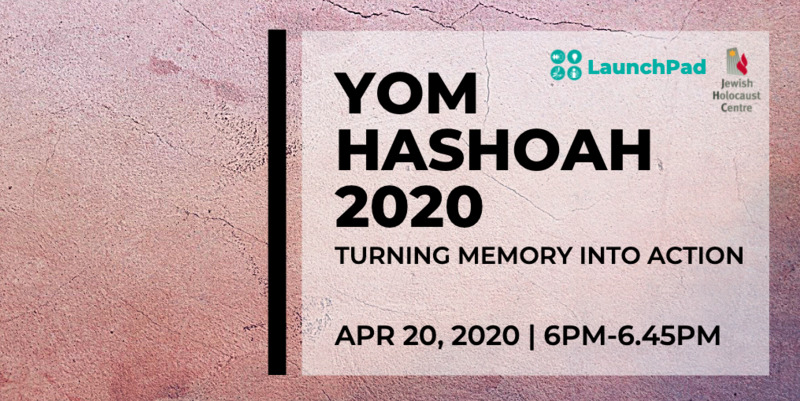
Due to the pandemic, Yom Hashoah commemoration events, which would normally be held in person, needed to go online.
On April 20, 2020, LaunchPad hosted an online, zoom-based, Yom Hashoah event which "consisted of an intergenerational conversation exploring the preservation of memory and the ways in which we can each be custodians of our family's stories."
At the event there were three speakers: Phillip Maisel (Holocaust survivor), Suzy Zail (2nd Gen) and Julia Sussman (3rd Gen), moderated by Jennifer Levitt Maxwell.
The event (which went for 45 minutes) also involved candle lighting. Everyone was encouraged to light a candle at home, and then six people were nominated to light 6 candles for the event, namely: Pauline Rockman OAM - co-president of the Jewish Holocaust Centre, Simone Szalmuk-Singer - co-chair of Australian Jewish Funders, Phil and Sue Lewis and their family - co-chair of the Jewish Holocaust Centres capital campaign, Helen Mahemoff - Board Director of the Jewish Holocaust Centre, Arek dybel - filmmaker and creative director at museum POLIN in Warsaw, and Andrea Lipshutz - representing LaunchPad’s ‘Regeneration Melbourne’ Committee.
-
2020-08-19
This is my portfolio for my 15 weeks as an intern working with The Journal of the Plague Year. I was anxious to learn the skills involved in gathering, creating, and archiving materials to preserve history in our lifetime. The pandemic of COVID-19 is a once in a century occurrence, and I felt it was very important to preserve our thoughts, emotions, photographs, jokes, and events that are shaping our lives now.
Generally, I’ve been fascinated by archives and the potential they hold for telling our stories. I’ve also been frustrated by the lack of accessibility they all present. I’m hoping that the digital archive techniques we have employed will ease that problem. We’ve had the freedom to use tags (or, in archive-speak, folksonomy) to make the content searchable and accessible to all who come after us. In addition to archive work, my branch of historical interest is in the everyday lives of people. This digital repository satisfies both passions.
Lastly, working on preserving the events of this pandemic has helped me find my way during this difficult time. I feel that I've been able to contribute--at least a little bit--and thus been able to be causative over some little part of this global nightmare.
I am earning my Master’s degree in order to teach at the college where I work now. I’ve been functioning as a TA for the last several years as well as working as a classified staff member. I should graduate in May 2021, and become an adjunct. However, with all learning remote and the campus closed, hiring may be delayed. My mission is to inspire a love of history and the ability to think critically about the past and present. Too often history is still being taught as a memorization exercise of dates, names, and events. I will teach against that model and hopefully inspire a love of the past and its lessons and stories in my students.
I want to thank all of our staff at ASU for delivering a professional learning experience—I was very lucky to have had the opportunity to be a part of it.
-
2020-08-19
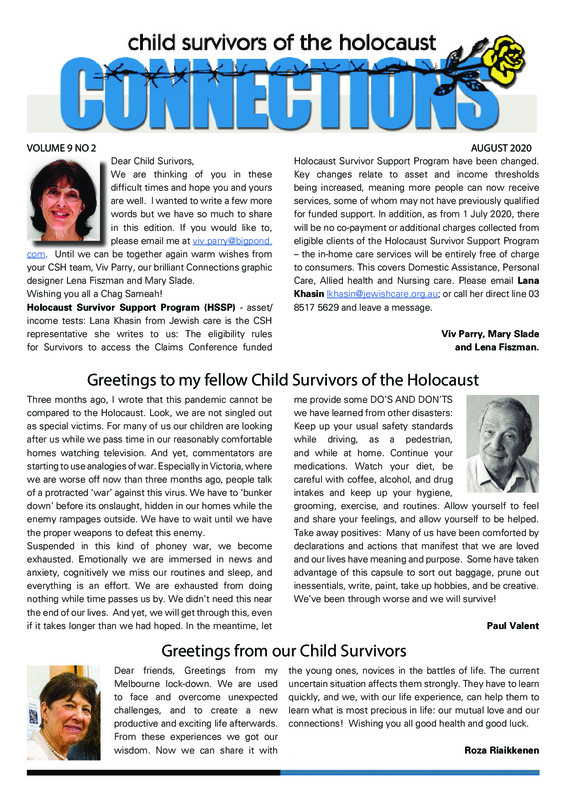
This collection of writings was assembled by Viv Parry (Chairperson for the Child Survivors of the Holocaust Melbourne Group) for submission to the archive. It contains the following:
'A Point in Time', a recent article that Viv Parry was asked to write for the New Year Magazine for The Ark Synagogue, Hawthorn
Connections (August 2020) is a newsletter edited by Viv Parry for the Child Survivors of the Holocaust (CSH) Melbourne Group. In this newsletter there are 9 individual contributions from CSH in answer to her personal request to "tell us how you are travelling at the moment during this unprecedented time?" Viv made no suggestions, asking only that they addressed the group (265 CSH members) and shared their thoughts at whatever level they found personally relevant to themselves.
'Child Survivors, Corona' is an article written by Dr Paul Valant's for Connections, published in April 2020. A second article on the topic appears in the August edition of the newsletter.
An email from Stefanie Selzer, dated 31.7.2020. Stefanie is the World Federation Of Jewish Child Survivors of the Holocaust & Descendants N.Y, President and Claims Conference representative. Stefanie forwarded our Connections Newsletter to the other CSH groups in the US including Canada where Mark Elster felt compelled to reply (also included in the same document).
These documents together create a story of a unique group of people who are supporting each other at this difficult time, with a remarkably positive attitude.
-
2020-08-17
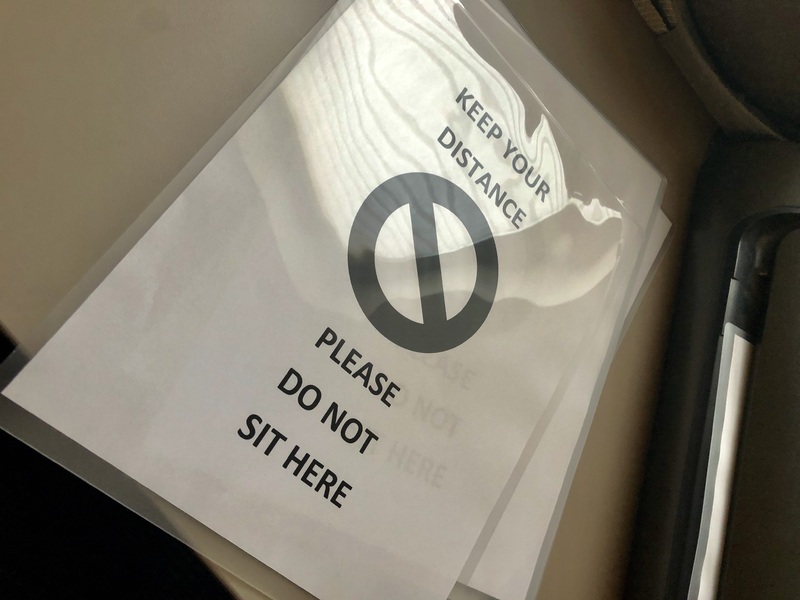
This is an actual workplace posting in the communal office placed on every other computer workstation to remind employees to maintain social distancing.
-
2020-08-19
The Journal of the Plague Year will become a lasting memory and not just because it is preserved inside of an archive. One of the most memorable aspects will be the way our internship class grew to become a team. As we all look back to our first weeks, little did we know the scope of pedagogy we would need to experience before arriving upon these final days. Dr. Kole gave us the support we needed, but wasn’t afraid to introduce us to the “rapid” nature of a rapid response archive. The conversations of “wearing hats” became common terminology to describe all of the evolving jobs this internship would entail. Some days we were scholars thinking deeply about the concerns of silences. Other days we felt more like roving reporters gathering stories as they were developing. Our “marketing hats” were often in use as we promoted our Calls for Submissions. Undoubtedly, there were days we were required to stack our hats four high. As fledgling public historians, we accomplished all of these things and we did it together as a team. The word “team” seems the most obvious description, but for our group the most fitting term is “family.”
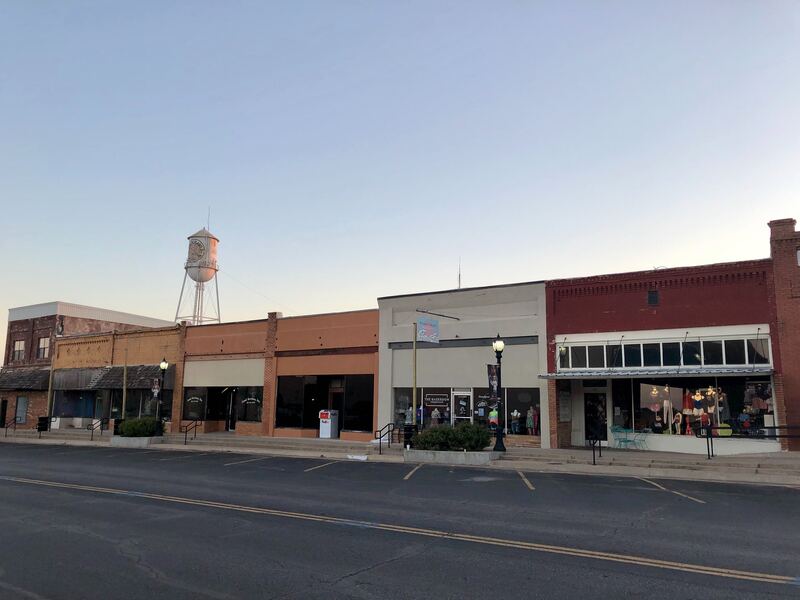
This moment has already come and gone, yet it’s preserved for those that look toward it. I felt the need to devote my individual time to preserving those things that were at propinquity. That being said, the “Rural Voices” collection is something near and dear to me. Near because I live in the community that inspired this collection. Dear because it’s so much more; it’s home. I created it because of this familiarity, a familiarity that was disrupted by COVID-19 and I experienced firsthand. Moving forward, future interns will have the opportunity to continue what I have started. This collection was never meant to have only one voice and is only a reflection of its first voice. Every rural community has a wealth of history occurring and with each passing moment those voices fade. The “Rural Voices” collection was, and should always remain, a direct response to that silence.
-
2020-08-19
Prior to interning the JOTPY internship I thought we would be doing a lot of submissions for the archive to build it and maybe online work to raise awareness of the archive. I had no real knowledge of public history and was going in not expecting it to be such an important part of the archive. Throughout the internship I developed many skills such as curating, how to write a blog, press release and mission statement, and how to build an individual archive collection. I realized my colloquial writing was weak during the internship since many of the projects involved reaching out directly to the general public and speaking plainly. I was once quite adept at this but being an undergrad and now a graduate student these skills had become quite rusty as I endeavored to perfect my academic writing.
I had to learn to work as a team in the internship and also reach out to regular non academics for submissions and these socially based experiences were uncomfortable for me since I am more of an introvert. However, throughout the internship I came to really value the camaraderie and community the interns built together. Before the internship I shied away from group projects as a necessary evil to be avoided at all costs however the internship showed me how much fun working with others could be and to value a great team. The internship also allowed me to network with other people including fellow interns, teachers and archive associates. The internship gave me real world experience of my historical skills introduced me to many new skills set that could pertain to future employment. Overall, it was a great experience that I wouldn’t trade for the world.
-
2020-05-14
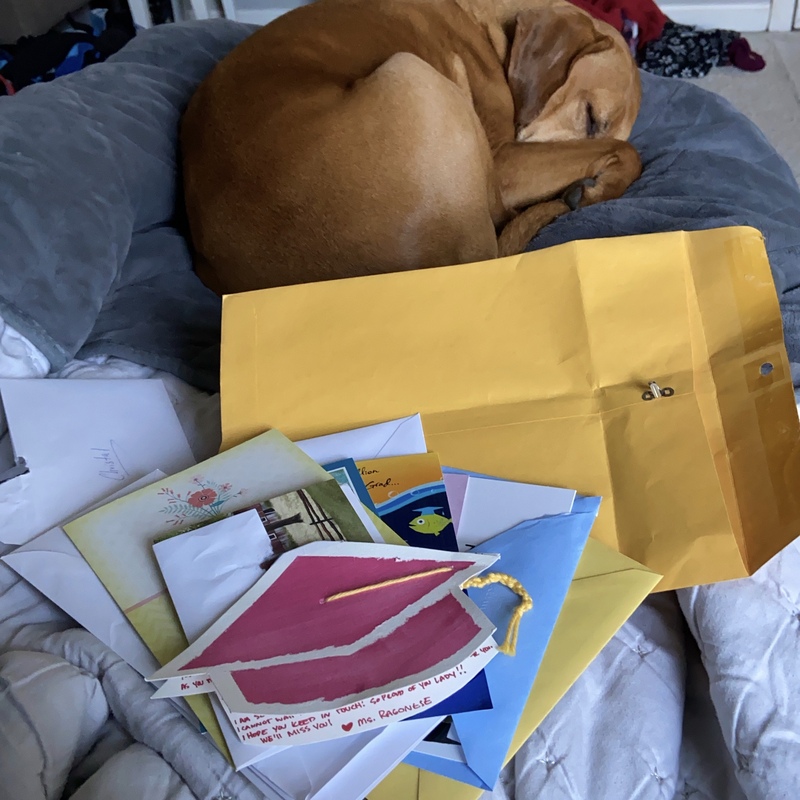
When my senior year was cut short by the pandemic, the local community rallied together to “adopt” seniors. A Facebook page was created where parents of seniors would post short bios of their children and other people would “adopt” the teens and get them graduation gifts. My adoptee was a faculty member who I was close with. They gathered letters from all of my favorite teachers from grades K-12, which are pictured above. The letters were heartwarming and helped me find closure in the fact that I may never be able to properly say goodbye to the people who molded me into who I am today.
-
2020-03-22
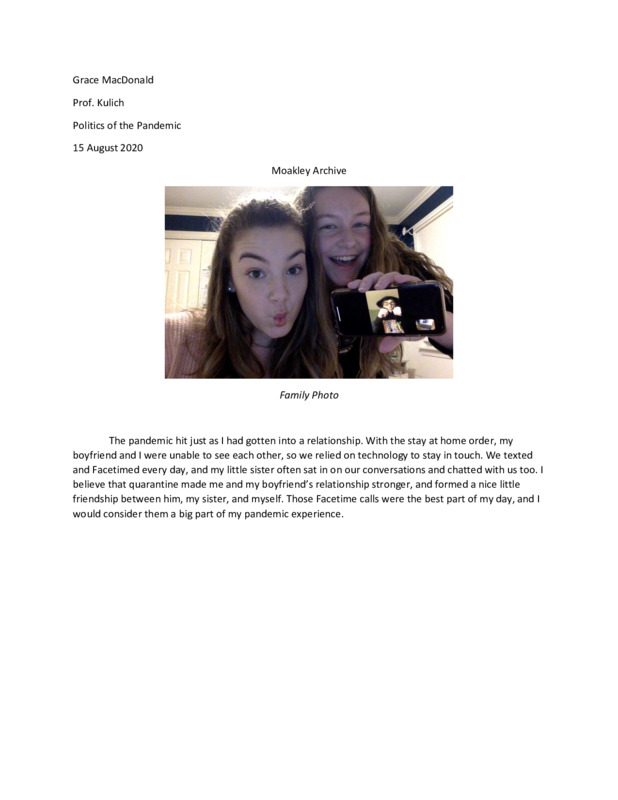
This photo is important to me because it shows how having to be at home forced me to communicate with my loved ones in different ways. I think the photo also represents a strengthened relationship between my boyfriend and I and my sister and I, and how the three of us became friends.
-
2020-08-16
Victoria Lee-Brewer
Professor Dominguez
Politics in a Global Pandemic
08/15/2020
Moakley Visual Memory: New York
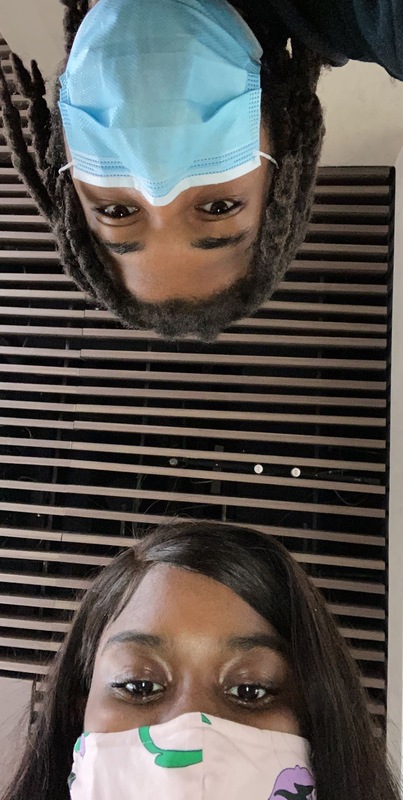
I went to New York for a day, which not only showed me how serious some states are
taking this but how officials in certain states are not enforcing some of the policies causing more
problems. From the Boston Lucky Star Train terminal, is where I started my adventure to
Manhattan, New York. As we got on board, they checked our temperatures I noticed the
mandatory mask wearing sign on our way there inside of the bus but not on the way back.
I stayed at the Courtyard Marriot in Midtown Manhattan on 34th street which not only
had the best stores but the best sales as well. As I walked down the strip shopping with my
boyfriend we notice, how all of the police officers are not wearing a mask while 75% of the
civilians had on a mask. Which creates answers to questions like, why is the virus still
spreading? Officials are not following the CDC and Health guidelines themselves, which
explains why the spread in New York is continuous. I even rode the train to the Bronx and observed how Hospitals are not making sure their Sanitizers are staying full and officers once
again were not wearing a protective face mask.
Why should the citizens in New York wear a mask if the officers are not going to? Police
officers are supposed to set examples and protect the public, instead they seem like a danger to
public health.
-
2020-04-30
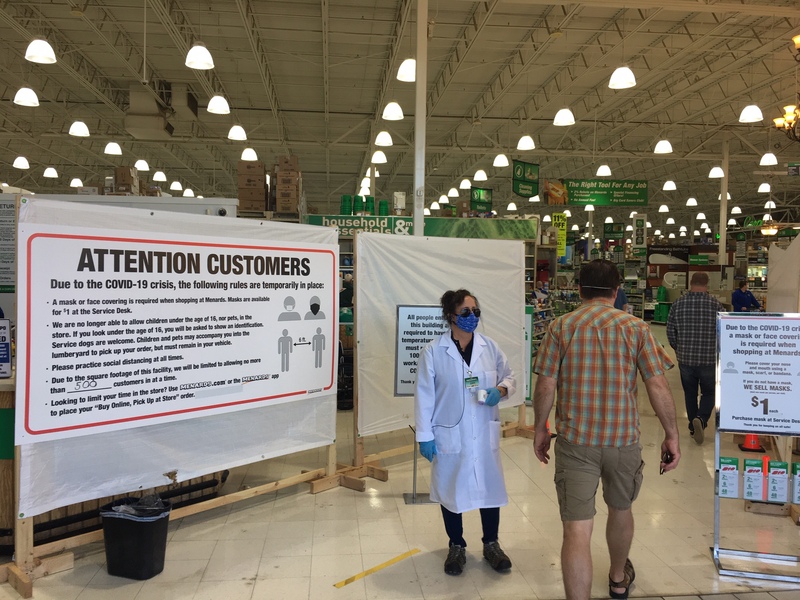
Menards is a home improvement store that primarily serves the Midwestern United States and has headquarters in Eau Claire, WI. Menards has mandated masks to enter the store since April. The representative in this image screened customers for heightened temperatures.
-
2020-08-17
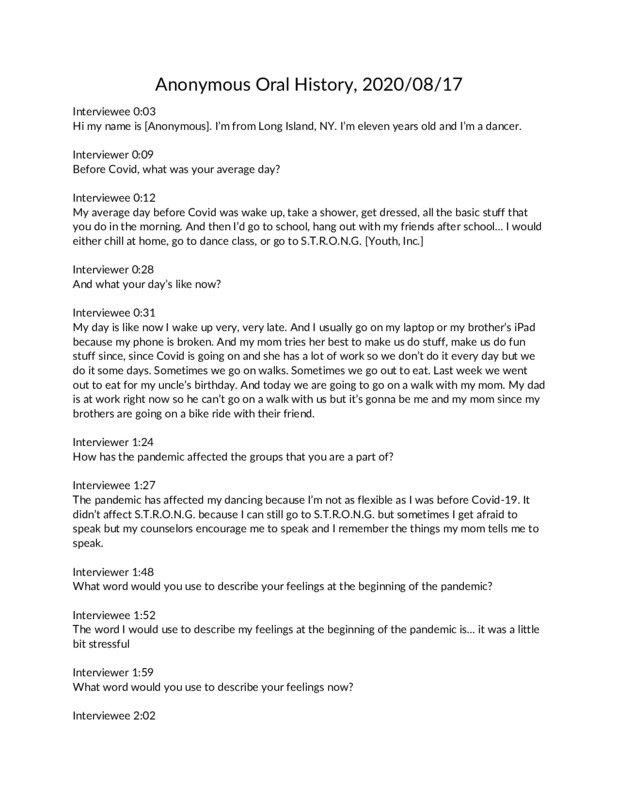
This story shares my experience during COVID and how my life was different after COVID.
-
2020-08-18
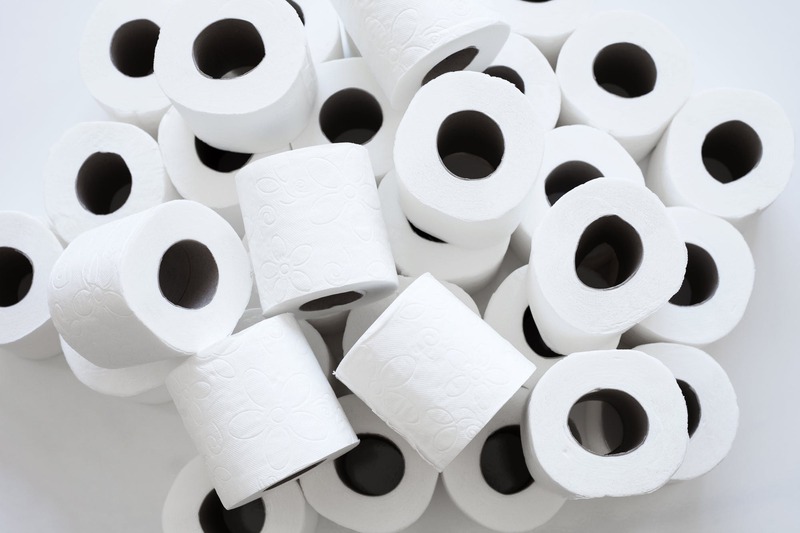
Although this pile of toilet paper may seem insignificant to most, it actually represents a time of struggle and perseverance. During the pandemic, some household necessities become scarce such as hand soap, hand sanitizer, and most importantly toilet paper. "The great shortage of toilet paper" was a common joke used during the early days of the virus. I think it represents the lack of materials and resources that we had during this pandemic.
-
2020-08-18
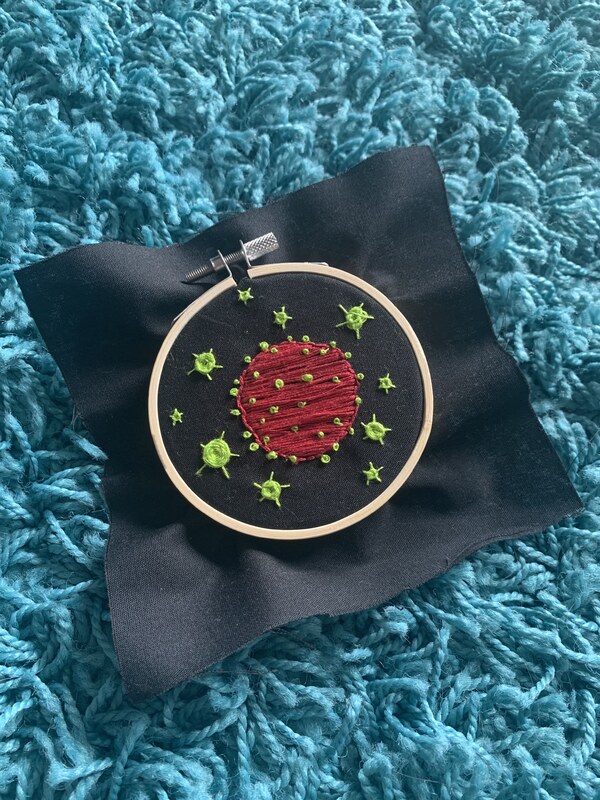
Every New Year, I make a promise to myself to try my hand at a new skill. In 2020 I was eager to learn how to embroider. Of course, only a few months into this year, we were slammed with the reality of Covid-19. Many of us felt depressed and isolated. I know that I was feeling especially guilty about all the extra time I had at home but felt no motivation to try and achieve goals that I had set earlier in the year. One day in April I was scrolling Reddit and came across an embroidery group. Suddenly it dawned on me that I had not even attempted to try my hand at embroidery! Lucky for me, I already had the supplies. I sat there a while wondering what to stich. Then the image, we all know so well by now, of the Coronavirus molecule popped up on the Nightly News. I knew that would be my pattern for my first ever attempt at needlepoint. It quickly became a small project that I am very proud of and it is my little souvenir from this crazy year.
-
2020-03-18
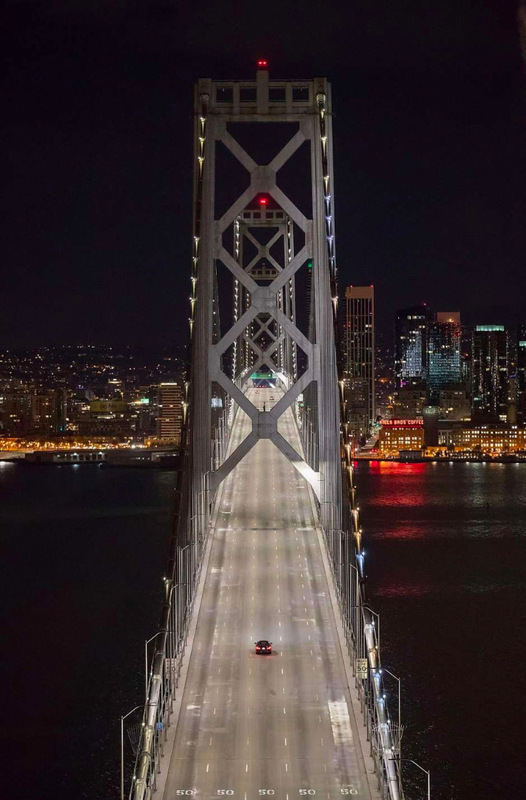
This is a picture of the Oakland Bridge in the Bay Area, California, while completely empty due to the initial Covid-19 lockdown. This bridge normally has thousands and thousands of people crossing it on any given day, and at any given moment it will typically be packed with commuters. In the photo, it's almost completely empty. This uncanny image was the first thing that made me, living in a city on the opposite side of the country, realize just how serious the virus would be. At this point in time, most of my friends and family still believed we would be going back to school within the month of March. It was unimaginable that we would still be dealing with the pandemic in August, when I am writing this, and that we probably will be dealing with this for the foreseeable future. The response to this pandemic was quite obviously botched by the US and its institutions that are supposed to protect us, and by the end of this hundreds of thousands of people will be dead as a result. I fear a lot of people in the future will blame this tragedy on everyday people's failure to lockdown, and I think this image serves as an essential reminder that when we were first told to lock down, the American people locked down.
-
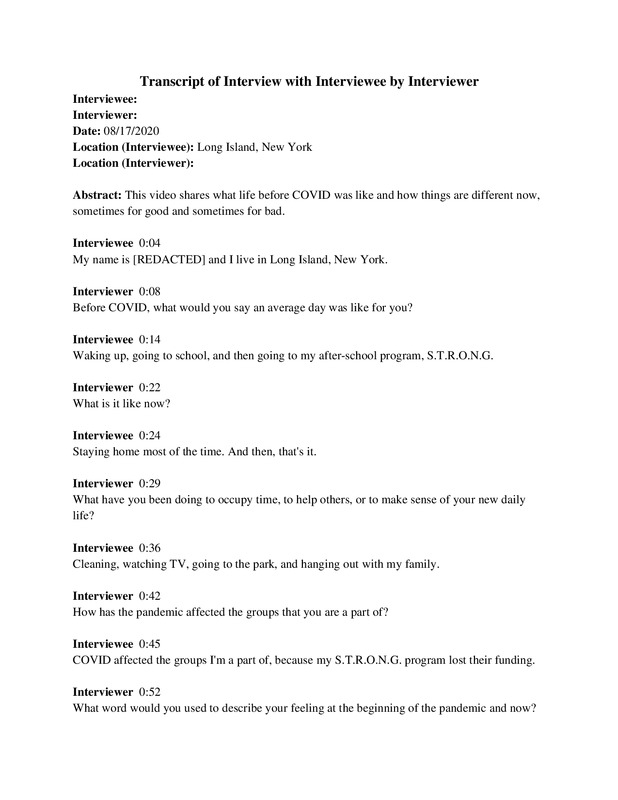
2020-08-17
This video shares what life before COVID was like and how things are different now, sometimes for good and sometimes for bad.
-
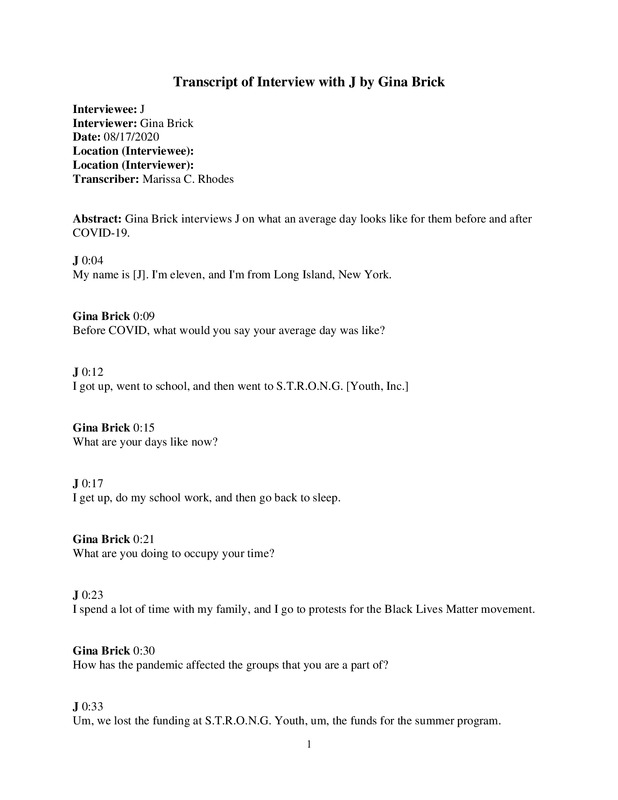
2020-08-17
This video explains a typical day during the pandemic and what life is like now.
-
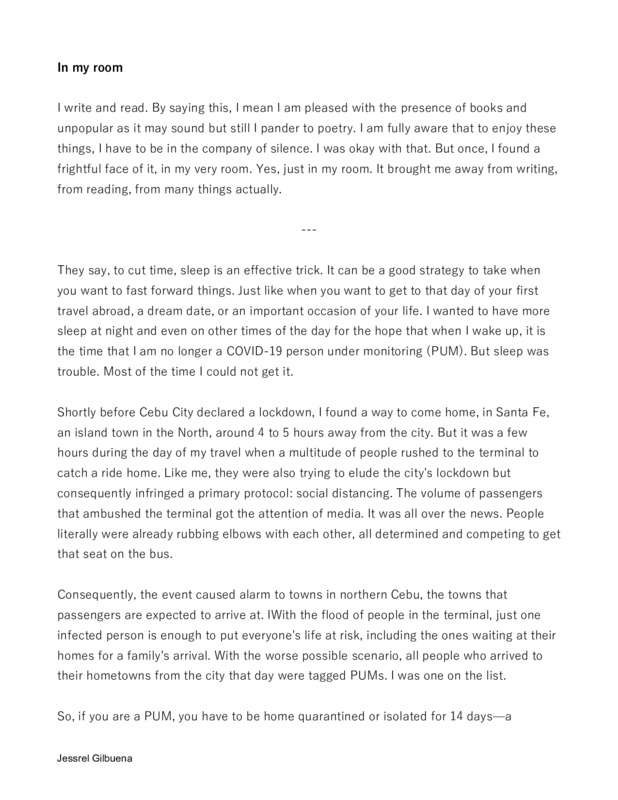
2020-08-13
This written material tells about a personal narrative of a Covid-19 PUM [Persons Under Monitoring]
-
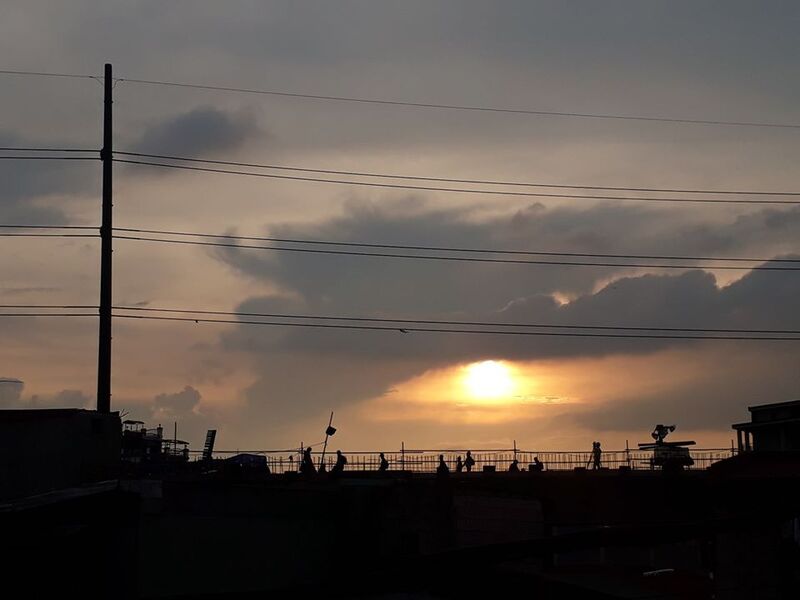
2020-05-19
On May 19, while Metro Manila was already on its 4th day under the Modified Enhanced Community Quarantine (MECQ), our neighborhood (Barangay 156, Caloocan City) was enduring the 7th day of our 8-day total lockdown. From our 3rd floor terrace, at the close of day, I chanced upon these construction workers atop the Skyway Stage 3, still keeping their noses to the grindstone, despite the risk of getting COVID-19.
-
2020-03-22
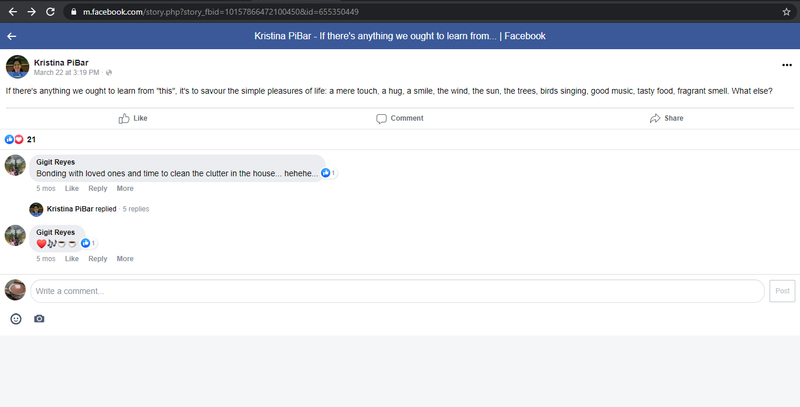
It was a reflection/realization when we Philippines was still on Enhanced Community Quarantine (ECQ). Something I believe, that is a takeaway from all these crazy things we are going through, to savour these when things get back to "normal".
-
2020-04-22
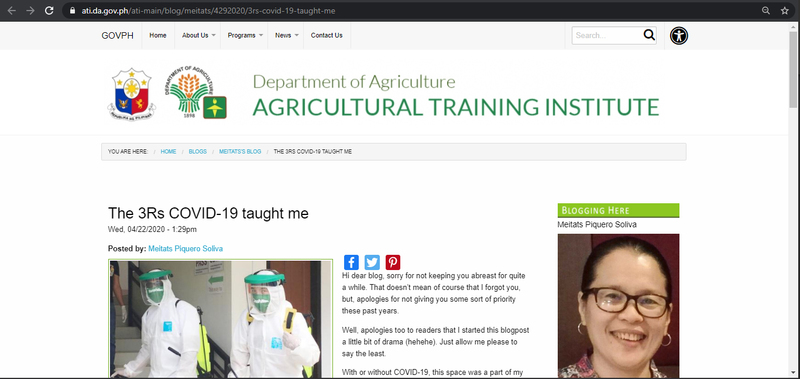
COVID-19 pandemic shakes the entire human race and how the disease triggered the press button to let us all “slow-down” or “pause” to almost our entire usual goings remains an enigma to one and all
-
2020-03-21
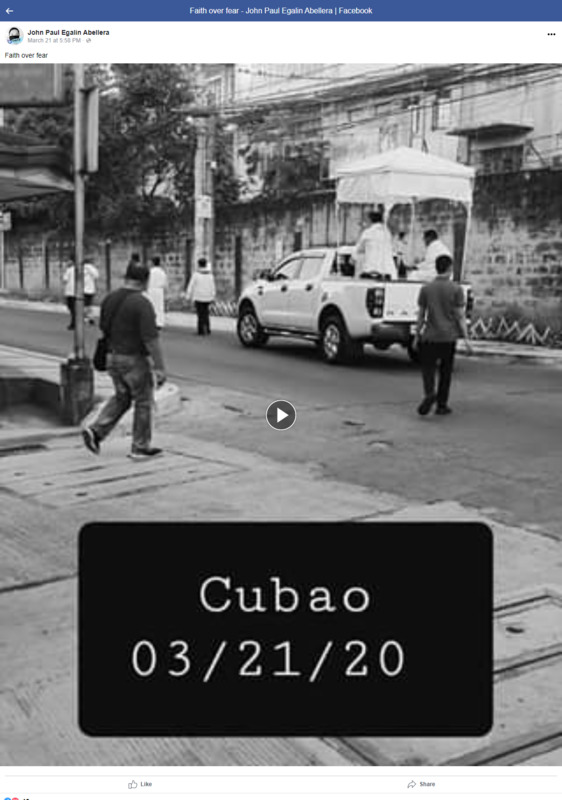
The lockdown caused by COVID-19 pandemic banned religious gatherings, including hearing the mass. Determined not to deny the faithful a chance to venerate the Blessed Sacrament, the parish priest of Cubao, Quezon City conducted a motorcade that carried him and the Blessed Sacrament.
-
2020-08-17
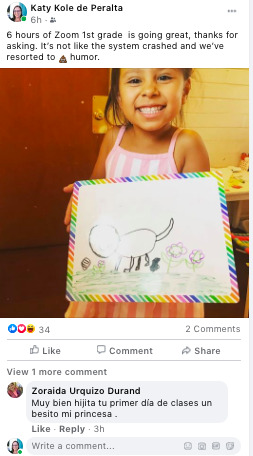
Distance learning started for my 1st grader. After seeing the schedule, I could tell it was going to be rough. She’s supposed to be in class just under 6 hours a day. 6 hours on Zoom M-F. I couldn’t handle that as an adult, so why would I expect a 6yo to do it? The district handed out Chromebooks, which are fun for the 6yo because you can touch the screen or click the track pad, but ultimately the processors are too slow. It took so long to load Google classroom that I gave her my laptop, even though I really needed it to get my own work done.
Most of the day was spent listening and trying to get the technology to work. If other students are loud or disruptive on Zoom it’s a lot harder to ignore them because they can directly compete with the teacher if they’re unmuted on the screen.
The online learning program crashed for over an hour, so she sat and colored while we waited to reconnect. Maya drew this picture of our dog, yes pooping on a flower, but whatever. We resorted to bathroom humor to make light of the moment.
The whole time I felt so stressed because the first day was uncomfortable and a bit boring. By the end of the afternoon she was supposed to transition into “special areas.” Today was music, but she didn’t want to stay in class. She was sick of learning on the computer. I’ll also say that the music teacher was a bit obnoxious asking for introductions and really digging in deep to people’s summer activities. I was over it at that point too. I really don’t care if a classmate is at a cabin, why does she need to sit there and listen to all of this? It was already a long day, and she wanted to quit. I logged her out of Zoom early and we’ll try again tomorrow.
-
2020-08-17
2020 was supposed to be a year of exciting events for my family. My brother and I did not get to experience what formal graduation would feel like. A milestone in our lives will forever be missed. My sweet and loving grandfather said to me “I am trying to stay alive to watch you walk across that stage”, did not get to witness his youngest son’s kids graduate high school. On top of that, my parents were broken because they did not get to see their only son and daughter walk the stage. When I say COVID-19 has really impacted my family emotionally, it really did. An opportunity to say to my family that I am so thankful for them for being super supportive and being able to hear them cheer for me as I walk the stage will forever be missed. I remember the moment I received the email that I had gotten accepted into Suffolk. I had just got out of work and in the car on the way home I showed my dad the email and he was jumping with excitement. Due to the pandemic, my parents and I were not given the opportunity to attend a face to face orientation for Suffolk and not having the opportunity to tour Suffolk to be able to get to know my way around the school was really misfortunate. Hopefully, as time goes on and when there is no more COVID-19, we will get a chance to get to know home for the next 4 years.
-
2020-07-23
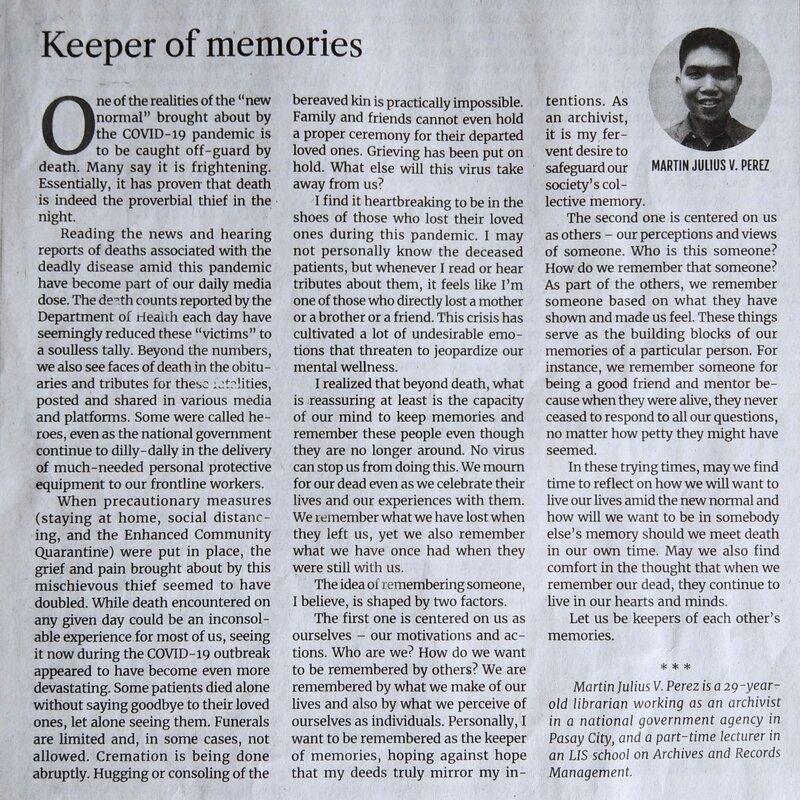
During the pandemic, I decided to reflect on the deaths and the tributes given to deceased friends and [well-known] personalities. This article is the output of this process.
-
2020-08-03
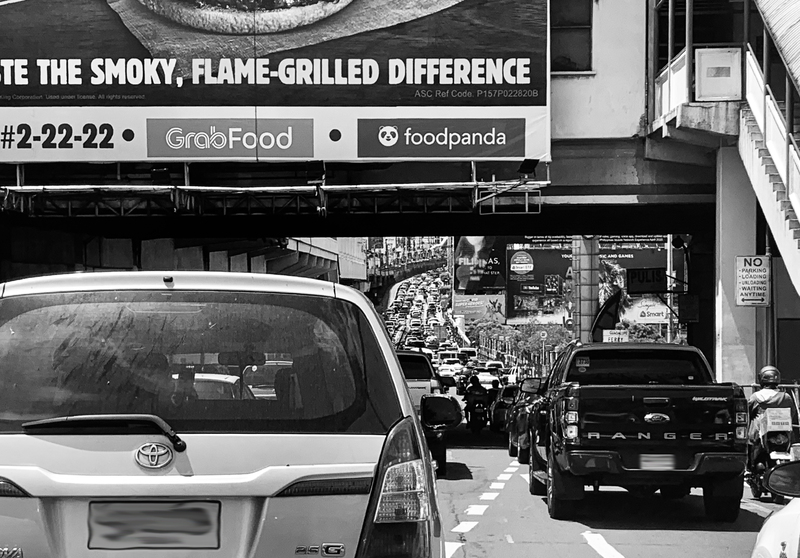
Lost in a maze of traffic a day before the second wave of the Modified Enhanced Community Quarantine takes effect..stuck in traffic..outside my car window is a man on the sidewalk intently reading a magazine...he mirrors the state of the city before lockdown ..lost in COVID 19 statistics..we are all at a loss on how the gov’t handles the pandemic.
-
2020
This article tells a similar story of many that I have recently heard, the story of renters purchasing homes in order to take advantage of the low interest rates that were a result of the global pandemic. This article details that the estimate of about a 3% average interest rate will remain the same until the end of the year! Despite this, because of many Americans having less than reliable jobs through this pandemic era, banks are not giving out loans to just anyone, and it has been difficult to qualify for a home loan. Lower income households are still having difficult acquiring property, possibly even more difficulty than before the pandemic.
-
2020
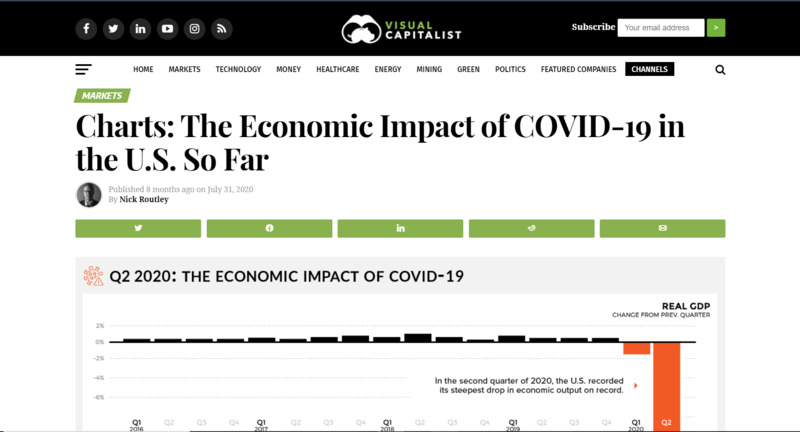
This article provides a break down of the big picture of United States economics in the past few months. This break down includes simplistic graphs of the following: consumer spending, national debt, U.S. money supply, consumer sentiment, fed balance sheet, U.S. dollar, fiscal expenditures, inflation rate, and loans to the private sector. These grids provide a representation of how COVID-19 has impacted the United States in a variety of different ways. The article also has short descriptions of each segment that provides the reader with more detailed information. This article provides statistical analysis and quantitative evidence depicting the economic downfall that the United States has faced due to this global pandemic.
-
2020
This image shows the different economic impacts of each state in comparison with one another. It is interesting that Alaska has been moderately affected and that Florida, New York and Washington state have the highest risk for exposure. This image shows that many middle states have had low exposure when it comes to the economy.
-
2020-08-17
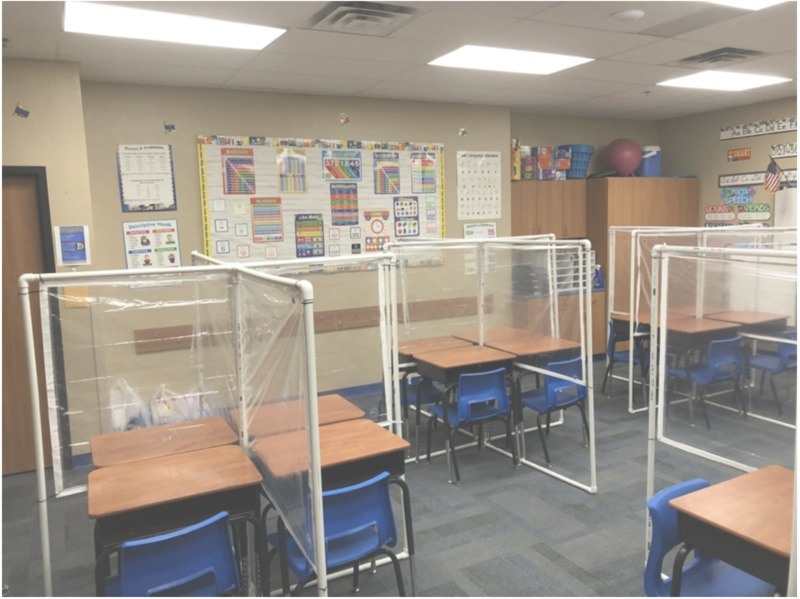
I joined the Journal of the Plague Year Covid-19 archive before the internship experience began. I contacted Dr. Tebeau and asked how I could contribute to the archive to develop a K-12 teaching experience. I quite literally hit the ground running. I had imagined slowly starting the work; however, I quickly realized it was like drinking from a firehose, and I loved it. Before this experience, I hadn't had much interaction with rapid response archives. They were a new concept to me, and the internship is where I learned what they were and how they functioned. As a student sitting in a history class, I think it's easy to see history as systematic and well planned because, by the time we are reviewing it, there has been some organization. Being part of the rapid response archive shows the exceptional amount of work it takes to archive history.
While there is never a good time for a global pandemic to strike, this pandemic started during a beautiful place in my graduate studies. I had taken two of my core courses and a methods class. So, I felt prepared when discussing silences in the archive, biases, and other responsibilities held by the archive. This internship was a great way to use what I had learned over the last nine months and apply it rather than waiting until I had graduated to apply these skills. This application of expertise is something that doesn't usually occur during courses of study. I have also found that the internship has helped me shape my virtual class schedule as we head into the fall. While my district presented me with a virtual bell schedule to follow, it seemed like a lot to wrap my mind around, but I applied Dr. Kole's model for the internship to my class, sent it off to my instructional coach, and she loves it! While it's not directly related to the archive, the online pedagogy has been helpful.
My favorite thing about working with the archive was curating. I just loved seeing all of the items come through and reading the stories attached to them. Beyond that, I feel like I have a great base of people I can now lean on through the rest of my time at ASU. I now have teacher friends in California with whom I am now sharing distance learning ideas. I hope these are the things that stand out when people think back to the Covid-19 pandemic. While it seems to be tearing through our country and pulling us apart, there's been a lot of good to come. I'm eternally grateful to have been presented with this opportunity, and I cannot wait to see how large this archive grows.
-
2020-08-13
Vandana Ravikumar/Luce Foundation: Southwest Stories Fellowship
-
2020-08-17
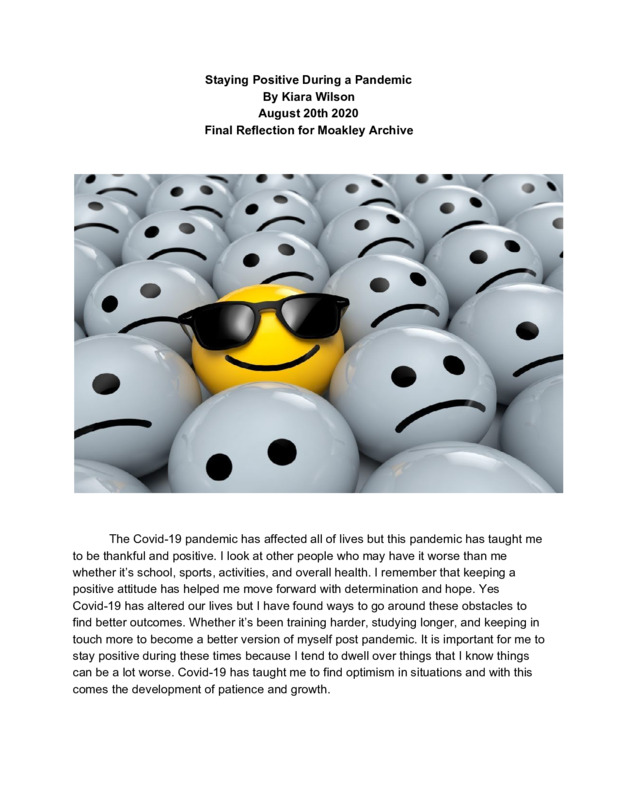
I remember when quarantine first started, I was miserable. I hated the idea of being stuck in the house. But I used quarantine as a time for me to stay positive and work on becoming a better me. With staying positive I had a better mindset throughout the day and found ways to keep me motivated. I was upset at first with a bunch of my activities being cancelled but I did find positive alternatives. With this it has definitely lifted my spirits and made me have more of a positive outlook on the cancellation of certain things and on life moving forward.
-
2020-06-16
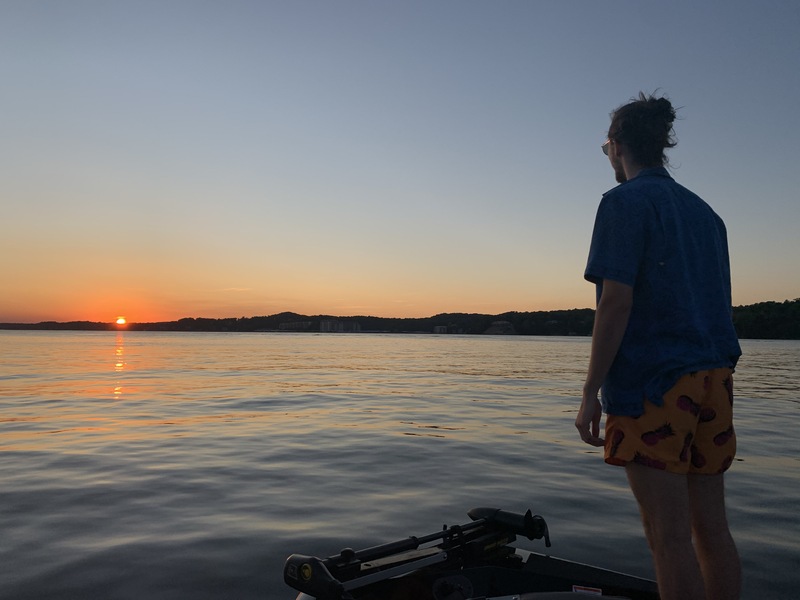
The reason this photo is so important to me, and could be meaningful to others, is because this was when my mental health began to recover. Many people like myself struggled with mental health issues throughout the pandemic, and this picture was a massive turning point for my well-being.
-
2020-05-02
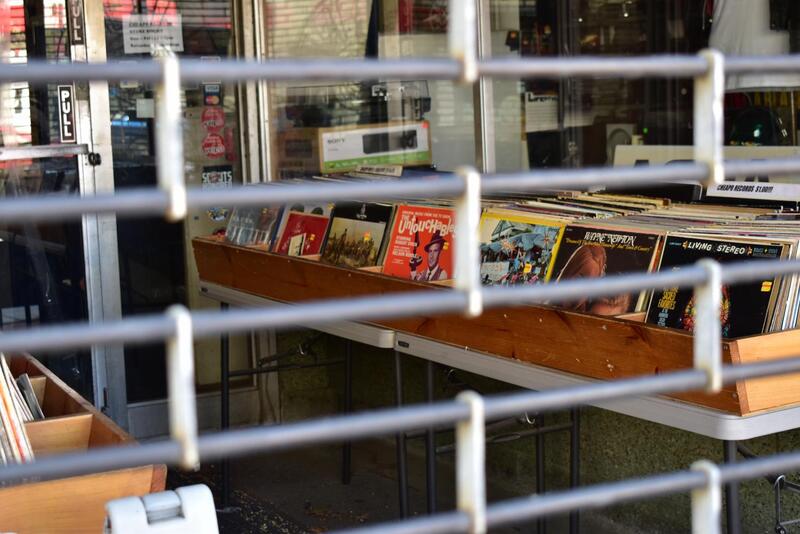
In Cambridge, MA, we depend on small businesses, whether they’re corner stores, beauty parlors, restaurants, or specialized outlets. This picture is the lattermost, a music store called Cheapo Records, which I visited often before quarantine. Places like this are extremely important for both conserving history and discovering new music (without algorithms).
COVID-19 has only exacerbated the danger Cheapo and others are facing due to rising rents. This picture I took before they reopened spoke to me because it shows how the hiatus wasn’t expected to be this long; the merchandise is left outside, behind an iron curtain, in uncertain indefinance.
-
2020-05-29
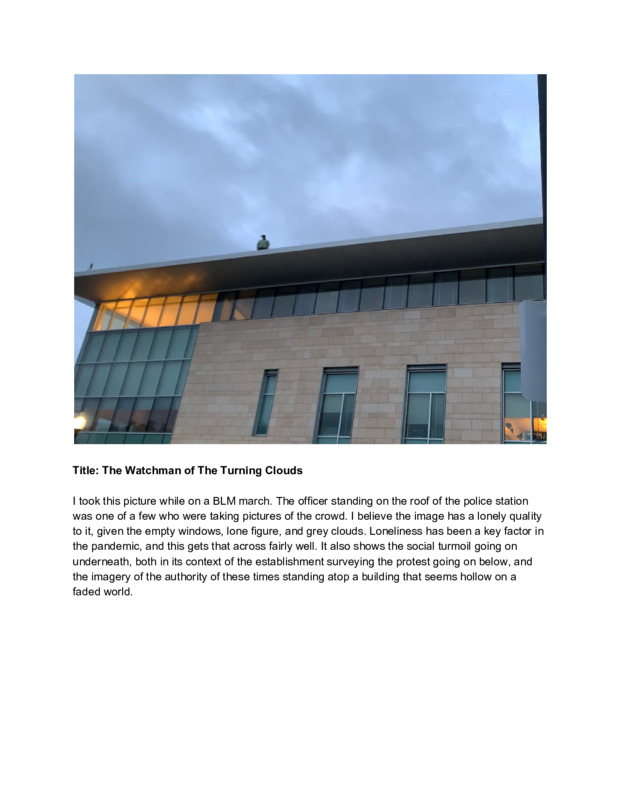
I took this picture while on a BLM march. The officer standing on the roof of the police station
was one of a few who were taking pictures of the crowd. I believe the image has a lonely quality
to it, given the empty windows, lone figure, and grey clouds. Loneliness has been a key factor in
the pandemic, and this gets that across fairly well. It also shows the social turmoil going on
underneath, both in its context of the establishment surveying the protest going on below, and
the imagery of the authority of these times standing atop a building that seems hollow on a
faded world.
-
2020-08-17
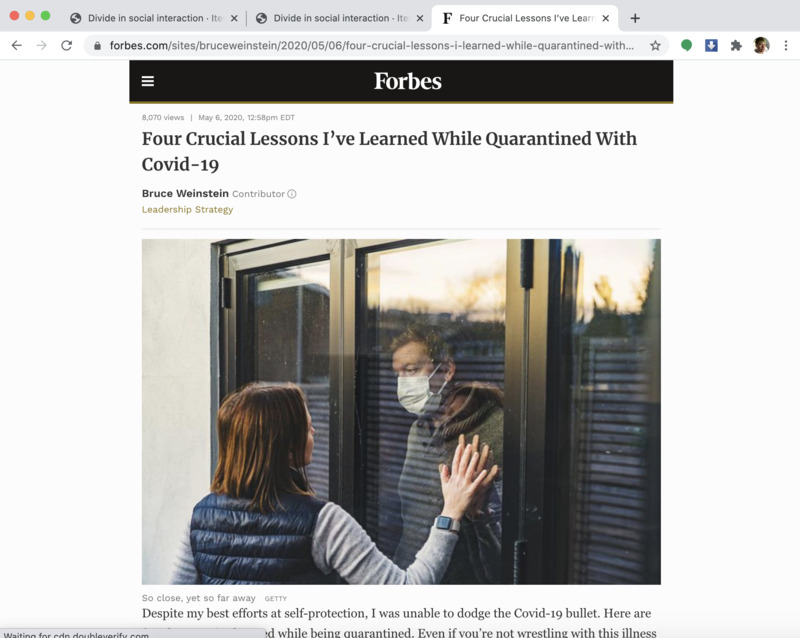
This photo speaks a lot about the current pandemic that is rapidly spreading among the world. I chose this photo because it represents how much we have taken seeing our loved ones and friends everyday to totally not seeing them at all in an instant. This photo I personally can relate to in a way. While I have been fortunate to not have any family members contract this virus, I still was not able to see any family or friends for months! This photo speaks for the pandemic because so many people are stuck in hospitals and they aren’t allowed any visitors. I feel we have all taken life a little bit for granted before this pandemic came along, but I also feel we have all learned more about our selves, lessons about life, and to always cherish time with family and friends because you never know what could happen.
-
2020-08-16
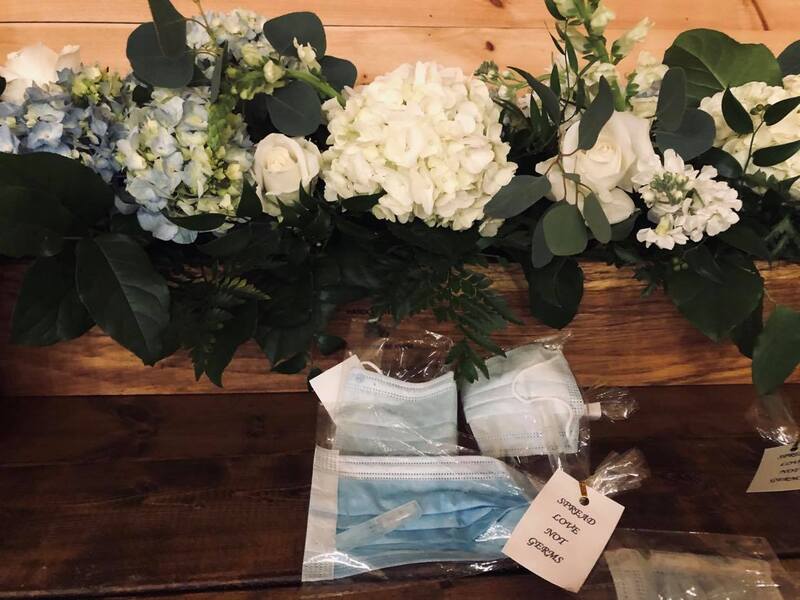
This is a photo I took at a wedding I directed this weekend. The bride had me place a bag on each individual chair. The bags contained mask and hand sanitizers. The little tags read "Spread Love Not Germs". This has been a popular response to the pandemic.
-
2020-07-25
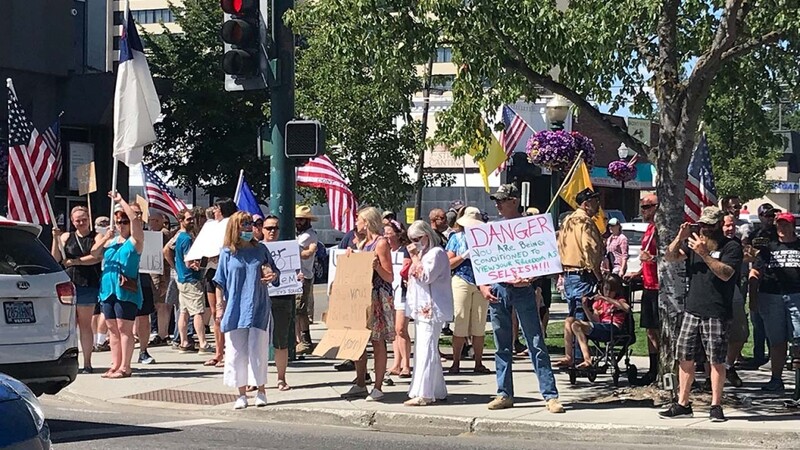
After living in Massachusetts throughout the emergence of COVID-19, and watching the state promptly implement and obey lockdown restrictions and mask mandates, traveling to north Idaho in mid-July was a complete culture shock. Less than a week after I arrived back to my hometown of Coeur d’Alene, Idaho to visit my family, Kootenai County finally passed a mask mandate. As a result, a huge portion of the city’s population protested the simple act of wearing a face mask, claiming it was a complete violation of their freedom. The protesters threatened those who did obey the mandate. The difference in reactions by the people in Idaho vs. Massachusetts as a result of something so simple as a mask mandate was shocking to me. It is a completely different world than what I had gotten used to in Massachusetts, and I’ll never forget the hostile feeling that filled the small town of Coeur d’Alene, for the first time that I can ever remember.
-
2020-08-16
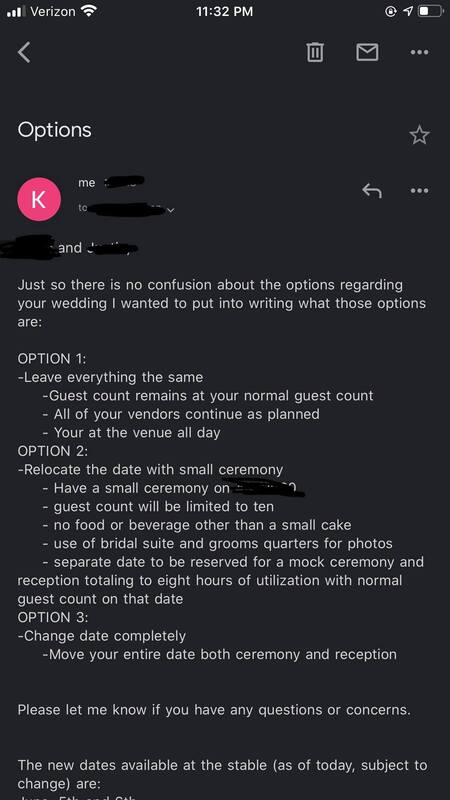
This is an email I had to send to a bride who was upset over COVID-19 ruining her wedding plans. These options were developed after deciding what was doable under mandates at the time. The bride ended up moving her wedding to 2021 and had an intimate ceremony in her home.
-
2020-08-09
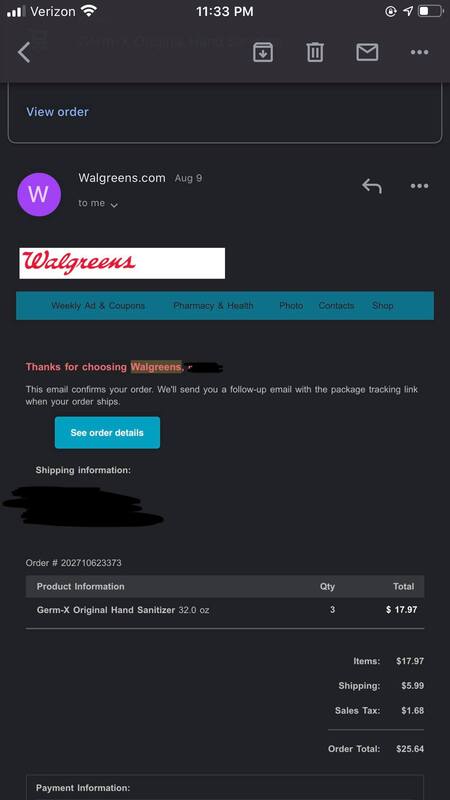
This email depicts the main purchases made by myself and other brides fro their wedding. Finding sanitizer in bulk has been a challenge, but a must for those continuing with wedding receptions.
-
2020-08-15
(note: nothing written here represents the views of the candidates or parties represented here - this is solely the personal memoir of one Nick Cook)
Volunteering for a political campaign even during the best of times is a weird experience. Your day to day mission is to knock on the doors of—or call on—complete strangers (or at best someone you have a vague memory of seeing at a rally some time ago) and ask them if they can take a moment out of their complicated and hectic lives to hear from the gospel of whichever chosen candidate you're preaching, in the hope that, in about a week or two they'll still remember enough of your spiel to fill in that person's bubble. The coronavirus has not made that any easier. I do feel, however, that it has created a weird sense of camaraderie in those of us who are still trying to push the gears of democracy in this plague year, or whatever name you media types have christened it.
I personally am not the type of person who supports campaigns that can afford to have their faces splashed across TV screens and names plastered on billboards. Doorknocking and trying to love thy neighbor is—to me—still the best way to do the business of democracy. I entered politics because I wanted to have some sense of control of my life and community. To make the lives of the people around me just a little easier and a little less anxiety free. So that maybe one day no kid is going to have to come home to an empty refrigerator and no one will ever have to experience the pain of living paycheck by paycheck again. Seeing that lightbulb on people's faces when I talk to them about a candidate or that little smile on their face as I wave goodbye and thank them for their time is why I do this. It's knowing that maybe I made a little change for the day. So coronavirus taking that away from me was hard.
I'd like to say that my doubts about campaigning digitally were actually wrong and one day I had a really fulfilling phone call with a voter where we both connected with each other in these lonely times or I had an incredibly amazing Zoom session that changed everything. But I didn't. It's just been a very taxing time that I'm pushing through because I can't stand sitting alone at the house with my thoughts anymore.
In the week or so leading up to the election, I got the chance to do at least a little in-person campaigning. Waving and holding signs on street corners, putting literature in doorways, that kind of thing. As well as the chance to stand socially-distanced outside of polling places on primary election day. The people I met on the campaign trail here were just as tired and ready for things to change as I was. One State House candidate compared this campaign season to running for office in a cave and that about summed it up for me. Seeing Tanya Vyhovsky, a social worker and therapist, win her primary election to represent my neighboring town of Essex was also the first real-time I felt joy. Someone who comes from that background and experience and isn't just another lawyer or landlord and has a truly transformative vision for society winning is always great to see. Similarly my home state of Vermont also likely elected Taylor Small, our first transgender lawmaker, and someone who shares that vision. Seeing these victories and meeting everyone who pushed for them along the way has renewed me with a new sense of life in the political realm. Campaigning in the age of COVID has also begun to truly impart on me the lesson that democracy doesn't just come from the ballot box but needs to be expanded into our workplaces, community gatherings, and social lives. However, this is a story for another time.
(Join your local union and mutual aid society!)
-

2020-08-16
In the heat of one of the most consequential Presidential Campaigns, both President Trump and Vice President Biden still have to get their deliver their messages of the future to the American people. Vice President Biden has headed warning of the virus and switched to a campaign that mitigates the risk of spreading the virus: online events and restricted in-person events that follow social distancing and mask rules for the speakers and news there. Meanwhile, President Trump has insisted on holding his rallies with no precautions in place, thus resulting in lower than expected turnout.
For the average American, who sees campaigns as a race to kiss the most babies and shake the most hands, this race is far from normal. However, both of the candidates have still been getting extreme news coverage, and many people are seeing more to politics as a result of staying home.
-
2020-04-20
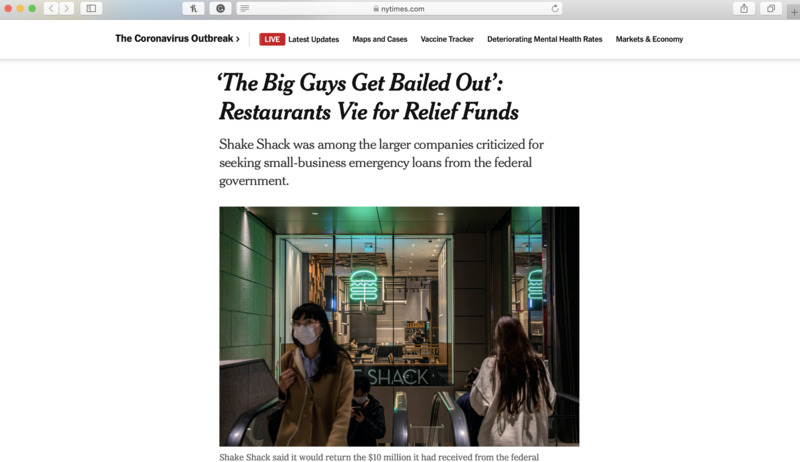
In the restaurant world, there are the big boys and the ma-and-pa restaurants. Shake Shack is one of the big boys, founded by Danny Meyer, so why did it receive 10 million dollars of the Small Business Relief Money? Glitches, confusion, and fine print. National Restaurant Association lobbyists fought for a provision that would allow funding to go to chain restaurants with fewer than 500 employees per location. The relief money now exhausted many independent and small restaurant owners were left out while chains got millions.
-
2020-07-21
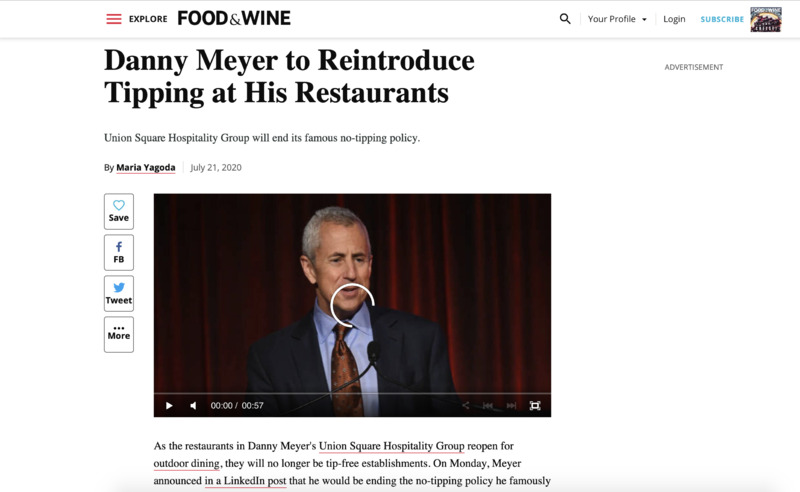
Danny Meyer, one of the biggest names in the restaurant industry backs out of the No Tipping Movement. The No Tipping Movement advocates ending tipping culture in the US to create an equitable working environment and curve the harassment servers can suffer from customers. Due to the pandemic, Danny Meyer chose to allow his servers to make more money by eliminating no tipping from his restaurants and serving a hit to the movement as others panic to follow suit.
-
2020-08-11
Food workers share their experiences in this Bon Appetit article on how the industry is dealing with the events of 2020 from the pandemic to the protests. Each story is unique and covers almost every aspect of the industry.
-
2020-06-12
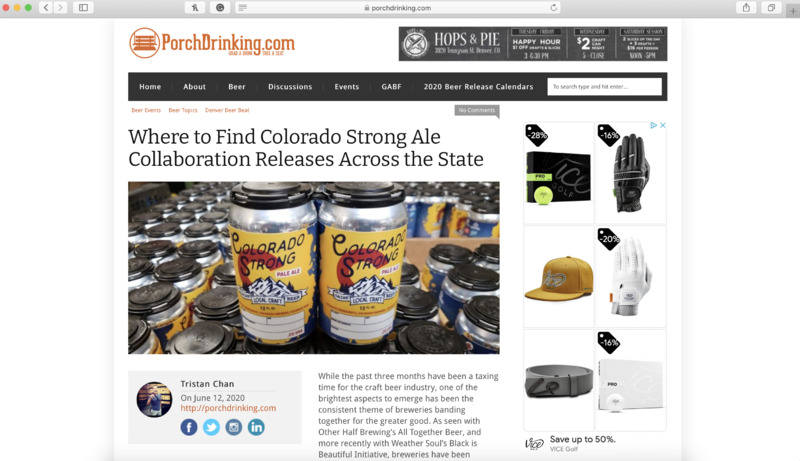
This is a follow-up to the first article featuring the collaboration of Colorado breweries to support each other as well as healthcare, hospitality, gig, and service workers. This article lists all breweries with current release dates of the collaborative beer, Colorado Strong Pale Ale.
-
2020-04-08
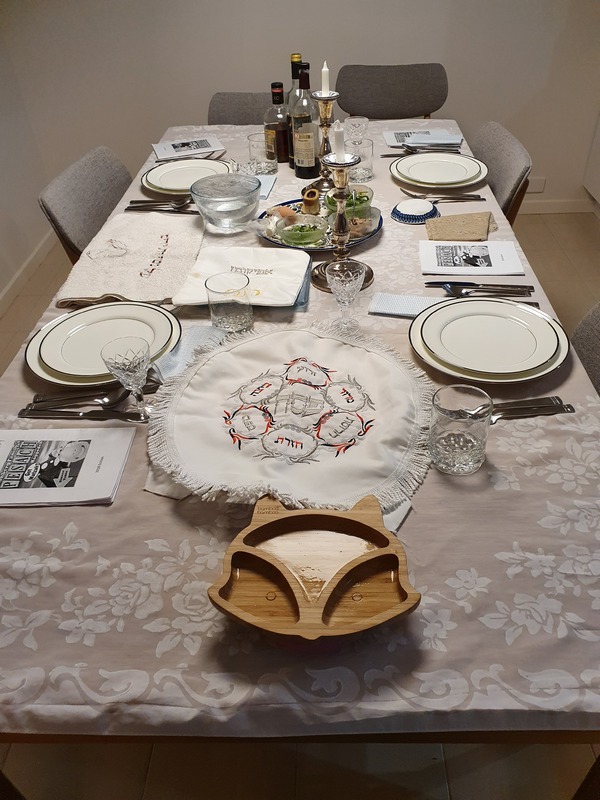
Pesakh was going to be a large family event. We had people coming from London, Canberra, Sydney and of course, Melbourne. Then the pandemic hit. No-one could travel, and we were not allowed any visitors in our house. So, we set up a zoom Seyder. We had members of the family join Zoom from London, Lund (Sweden), Canberra, Sydney and Melbourne. It was a huge success.
-
08/16/2020
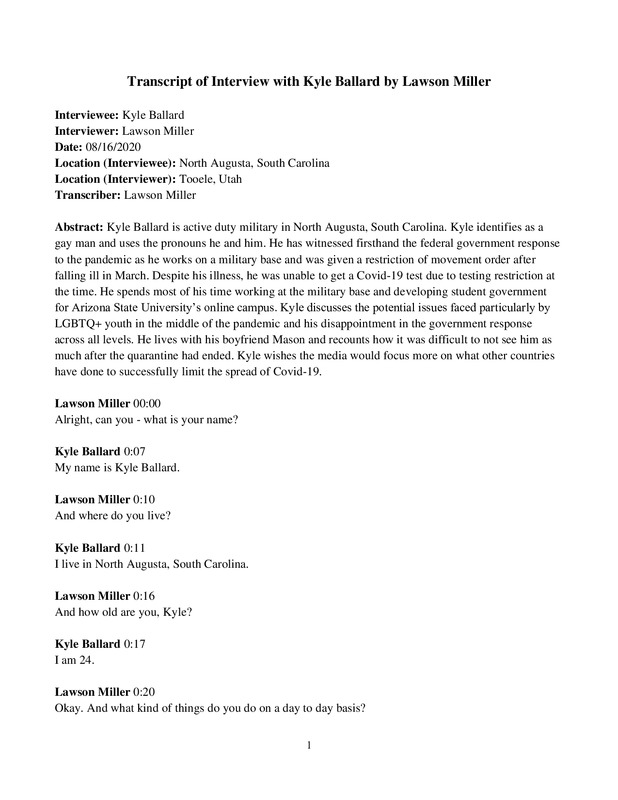
Kyle Ballard is active duty military in North Augusta, South Carolina. Kyle identifies as a gay man and uses the pronouns he and him. He has witnessed firsthand the federal government response to the pandemic as he works on a military base and was given a restriction of movement order after falling ill in March. Despite his illness, he was unable to get a Covid-19 test due to testing restriction at the time. He spends most of his time working at the military base and developing student government for Arizona State University’s online campus. Kyle discusses the potential issues faced particularly by LGBTQ+ youth in the middle of the pandemic and his disappointment in the government response across all levels. He lives with his boyfriend Mason and recounts how it was difficult to not see him as much after the quarantine had ended. Kyle wishes the media would focus more on what other countries have done to successfully limit the spread of Covid-19.